The Housing Slowdown Buyers Welcomed Is Building Canada's Next Supply Shortage
Some of the calm buyers felt in 2026 was paid for with homes that never got started. Bidding wars eased in plenty of markets. Prices flattened in places that had run hot for years. After the stretch of high rates that ran through 2024 and into 2025, a quieter market felt like relief, and for many families it was. A pause gives buyers time to save and lets wages catch up a little.
That relief has a source, and the source is the problem. In October 2026, CMHC's chief economist, Mathieu Laberge, warned that slowing construction could reverse recent affordability gains, and he called for changes to how Canada builds and finances housing. If you set policy, build homes, or plan to buy one, the useful habit is simple: judge the market by how many homes are being started, and treat this month's prices as old news.
Prices tell you about decisions made years ago
A home that a family moves into this fall was financed, permitted and planned well before that. The gap between a developer getting a loan and someone getting keys runs into years. So when rates stayed high for longer and construction costs kept climbing, many projects were paused or cancelled. Those cancellations don't hurt anyone yet. They show up as missing homes around 2027 and 2028, when the people who would have lived in them start looking.
Canada started 259,028 homes back in 2025, according to CMHC. CMHC's own work says the country needs up to 4.69 million new homes by 2036 to restore affordability. A pipeline that shrinks now makes that target harder to reach, and the stable prices in between can make the gap look smaller than it is.
Demand keeps its own clock
A slowdown in building does nothing to slow the number of people who need a place to live. Alberta shows this plainly. Population growth, from international arrivals and from people moving here from Ontario and BC, continues to outpace new completions. Edmonton still offers benchmark prices roughly half of Toronto's or Vancouver's, which keeps drawing people in. Inventory in Edmonton sits above long-term averages, and well-priced starter homes still sell quickly.
When new supply thins out, rentals tighten first. Higher rents make existing homes more attractive to investors, and every home bought as a rental is one fewer for a first-time buyer. That chain runs quietly in the background while headline prices look steady.
Keep the crews working
Edmonton has advantages many cities lack. There's room to grow, and the city has led the country in upzoning, allowing suites and townhomes on lots that used to hold a single house. Those rules help. They don't pour foundations. Labour shortages and material costs still cap how fast builders can work, and when projects stop, skilled trades move to other work or other provinces. Getting them back takes longer than letting them go.
That's why the financing piece matters most. A project only proceeds if the numbers work at current rates and costs. The federal government and CMHC are exploring ways to make it cheaper to finance high-density housing, and new incentives could arrive before year end. Policy that keeps projects viable through a soft patch protects the people and companies who will be needed when demand comes back.
The risks cut both ways. A real economic downturn could weaken demand enough to keep prices flat despite thin supply, and a strong incentive package could restart building faster than expected. Neither changes the core math. Homes not started this year cannot be finished in 2028.
When someone tells you the housing market has cooled, ask one follow-up question: how many homes were started this quarter, compared with how many people arrived?


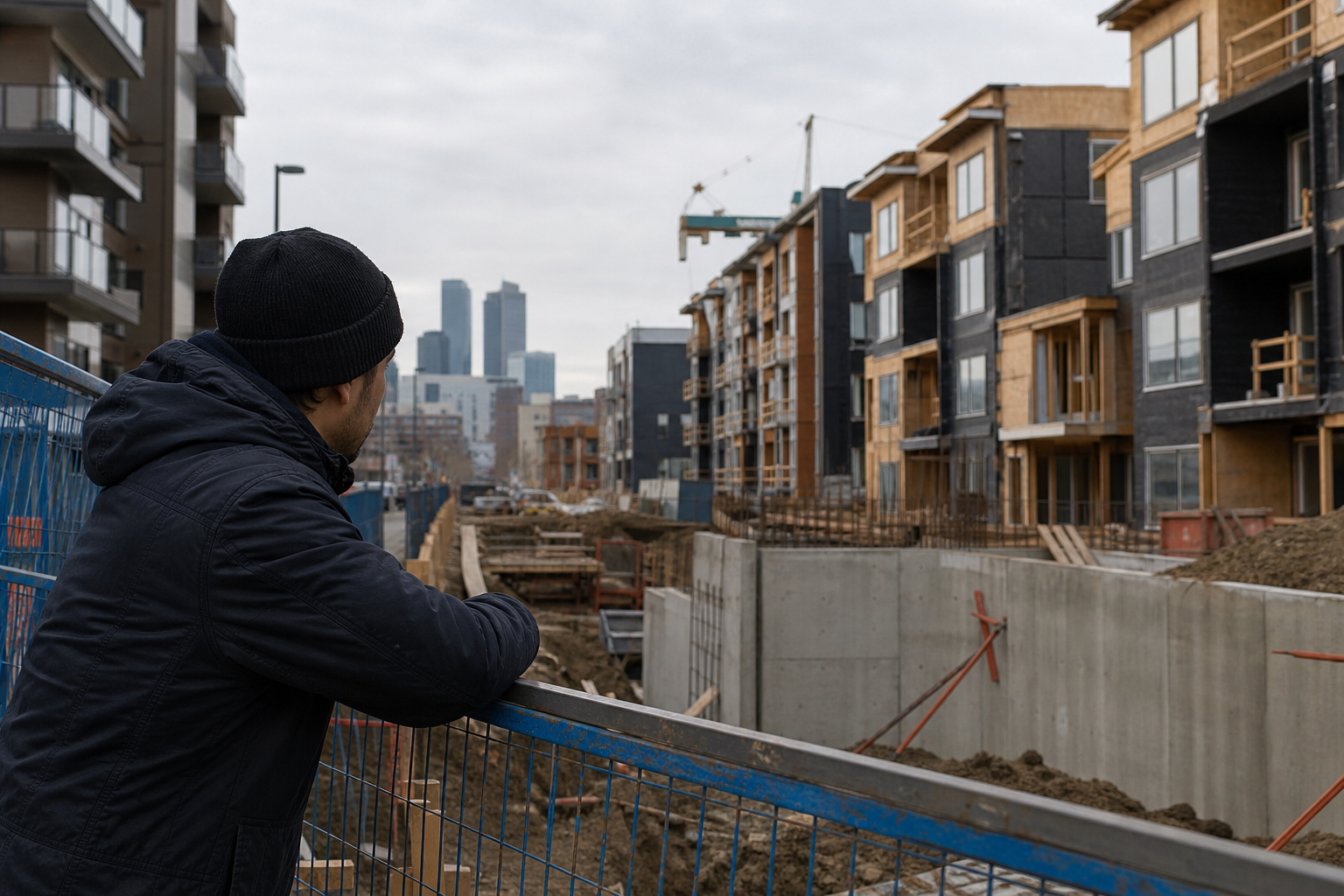

Some of the calm buyers felt in 2026 was paid for with homes that never got started. Bidding wars eased in plenty of markets. Prices flattened in places that had run hot for years. After the stretch of high rates that ran through 2024 and into 2025, a quieter market felt like relief, and for many families it was. A pause gives buyers time to save and lets wages catch up a little.
That relief has a source, and the source is the problem. In October 2026, CMHC's chief economist, Mathieu Laberge, warned that slowing construction could reverse recent affordability gains, and he called for changes to how Canada builds and finances housing. If you set policy, build homes, or plan to buy one, the useful habit is simple: judge the market by how many homes are being started, and treat this month's prices as old news.
Prices tell you about decisions made years ago
A home that a family moves into this fall was financed, permitted and planned well before that. The gap between a developer getting a loan and someone getting keys runs into years. So when rates stayed high for longer and construction costs kept climbing, many projects were paused or cancelled. Those cancellations don't hurt anyone yet. They show up as missing homes around 2027 and 2028, when the people who would have lived in them start looking.
Canada started 259,028 homes back in 2025, according to CMHC. CMHC's own work says the country needs up to 4.69 million new homes by 2036 to restore affordability. A pipeline that shrinks now makes that target harder to reach, and the stable prices in between can make the gap look smaller than it is.
Demand keeps its own clock
A slowdown in building does nothing to slow the number of people who need a place to live. Alberta shows this plainly. Population growth, from international arrivals and from people moving here from Ontario and BC, continues to outpace new completions. Edmonton still offers benchmark prices roughly half of Toronto's or Vancouver's, which keeps drawing people in. Inventory in Edmonton sits above long-term averages, and well-priced starter homes still sell quickly.
When new supply thins out, rentals tighten first. Higher rents make existing homes more attractive to investors, and every home bought as a rental is one fewer for a first-time buyer. That chain runs quietly in the background while headline prices look steady.
Keep the crews working
Edmonton has advantages many cities lack. There's room to grow, and the city has led the country in upzoning, allowing suites and townhomes on lots that used to hold a single house. Those rules help. They don't pour foundations. Labour shortages and material costs still cap how fast builders can work, and when projects stop, skilled trades move to other work or other provinces. Getting them back takes longer than letting them go.
That's why the financing piece matters most. A project only proceeds if the numbers work at current rates and costs. The federal government and CMHC are exploring ways to make it cheaper to finance high-density housing, and new incentives could arrive before year end. Policy that keeps projects viable through a soft patch protects the people and companies who will be needed when demand comes back.
The risks cut both ways. A real economic downturn could weaken demand enough to keep prices flat despite thin supply, and a strong incentive package could restart building faster than expected. Neither changes the core math. Homes not started this year cannot be finished in 2028.
When someone tells you the housing market has cooled, ask one follow-up question: how many homes were started this quarter, compared with how many people arrived?
Sources
Read Next
Five Money Checks Canadian Snowbirds Should Finish Before Heading South
Canadian Bank Security Assumes a Human Is Logging In. AI Agents Break That
Before Storm Winds Arrive, Turn 5 Yard Hazards Into Protective Buffers
A 25 Basis Point Hike Doesn't Erase Variable's Long-Run Edge Over Fixed