Five Money Checks Canadian Snowbirds Should Finish Before Heading South
Booking the winter rental is the easy part. The harder part is that your Edmonton house, your Alberta bills and your Canadian pension all keep running while you're paying for groceries, gas and doctor visits in U.S. dollars. Five checks before you leave can protect your retirement budget from a surprise tax filing, quiet exchange costs and a medical bill nobody agreed to pay.
If you've ever locked in your winter stay and then wondered how far your Canadian pension will actually stretch south of the border, you know how unfinished money decisions can hang over the trip. A winter budget is complete only when you know which costs and obligations follow you across the border. Here's how to find them.
How to keep your U.S. days and dollar costs from surprising you
1. Count your U.S. days across three calendar years. Most snowbirds watch the six-month mark and stop there. The IRS uses a weighted formula called the substantial presence test. You generally meet it if you spend at least 31 days in the U.S. this calendar year and your weighted total reaches 183 days. That total counts every day this year, one-third of last year's days and one-sixth of the year before.
Here's an illustrative example. Spend 120 days in each of 2024, 2025 and 2026, and your 2026 total is 120 + 40 + 20 = 180. Stretch this winter by one week to 127 days and you reach 187. That can make you a U.S. resident for tax purposes unless you qualify for an exception such as the closer connection exception, which has its own conditions and filing steps. This tax test is separate from how long border officials let you stay. If your numbers sit near 183, confirm your position with a cross-border tax professional before you extend.
2. Price your winter in the Canadian dollars you'll actually spend. The exchange rate in the news differs from the one your bank or card gives you, and conversion fees stack on top. Add up rent, utilities, car costs and food in U.S. dollars, then convert them at your provider's real rate with fees included. Put your continuing Alberta bills beside that total. The combined figure is your true winter cost.
Which insurance and property gaps could leave you paying the bill
3. Read your travel medical policy and your Alberta coverage separately. Many travellers assume their Alberta health card has them covered abroad. The Alberta Health Care Insurance Plan offers only limited out-of-country benefits, and those benefits depend on staying eligible for the length of your absence. Confirm that eligibility for this winter's dates. Then read your travel medical policy for three things people skip because the brochure looks reassuring: exclusions, the pre-existing condition stability period (how long your health and medications must stay unchanged before departure) and the maximum trip length. A medication change a few weeks before you leave can void coverage for that condition. Phone the insurer and ask directly.
4. Confirm what your home insurer expects while you're away. Most Alberta home policies set conditions for an empty house, such as regular checks or keeping the heat on. Those rules vary by policy, and missing one can weaken a claim after a burst pipe in January. Ask your insurer what applies to your home, arrange someone who can meet it and set up automatic payments for utilities, property tax and insurance so nothing lapses.
5. If you own U.S. property, check the costs beyond the purchase price. Renting it out can bring U.S. reporting requirements. Selling usually triggers withholding under FIRPTA, generally 15% of the gross sale price, with some exceptions and reduced-rate rules. That money is held against your tax bill and is separate from the final amount you owe. U.S. property can also create estate tax or filing exposure, so have a cross-border professional review your ownership structure against current thresholds before any sale, rental or change in title.
Being ready for winter doesn't mean predicting every expense. It means knowing what your budget and insurance cover, and where they stop. Start small: before you book any extra days, pull together your U.S. travel dates for 2024, 2025 and 2026 and add them up.


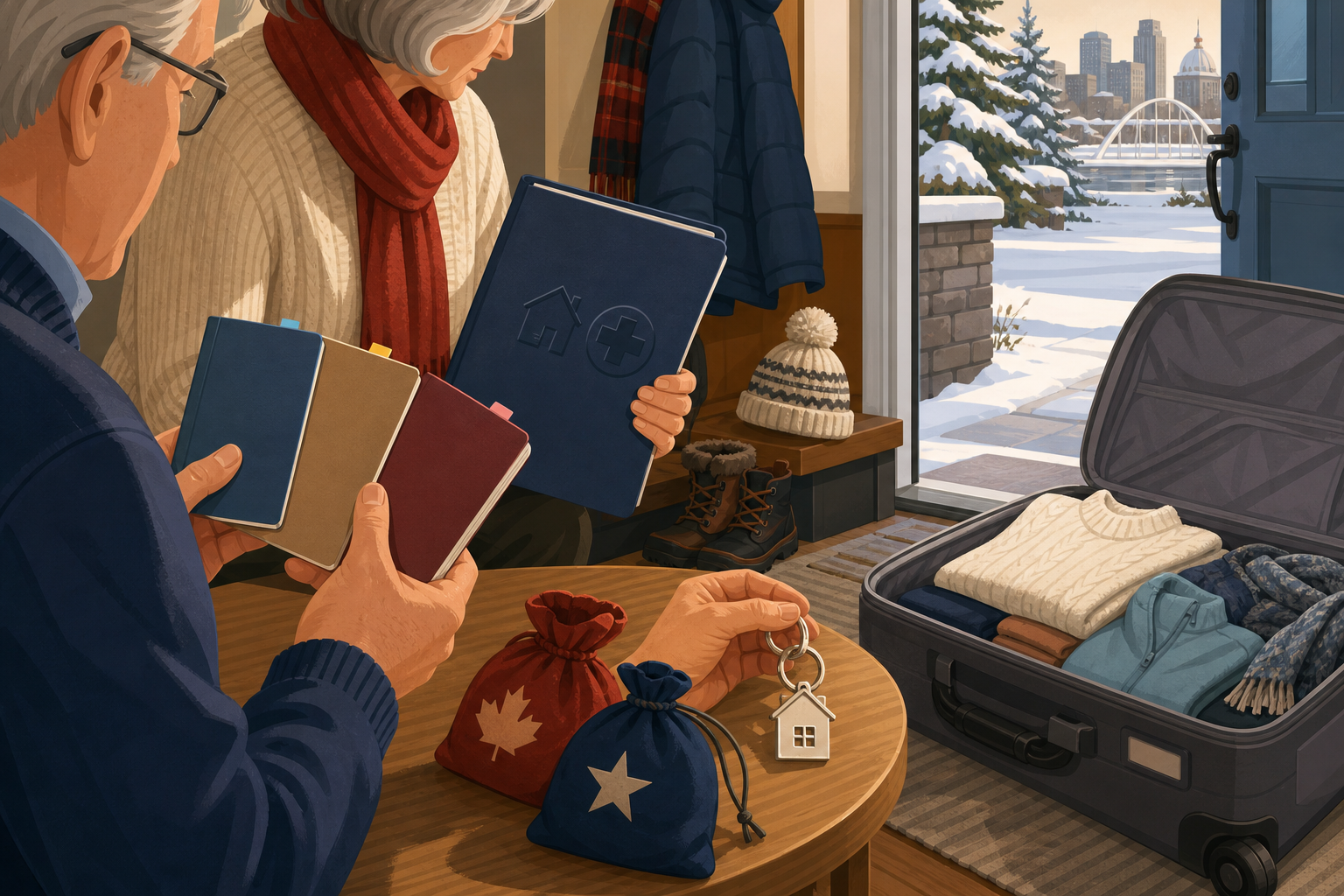

Booking the winter rental is the easy part. The harder part is that your Edmonton house, your Alberta bills and your Canadian pension all keep running while you're paying for groceries, gas and doctor visits in U.S. dollars. Five checks before you leave can protect your retirement budget from a surprise tax filing, quiet exchange costs and a medical bill nobody agreed to pay.
If you've ever locked in your winter stay and then wondered how far your Canadian pension will actually stretch south of the border, you know how unfinished money decisions can hang over the trip. A winter budget is complete only when you know which costs and obligations follow you across the border. Here's how to find them.
How to keep your U.S. days and dollar costs from surprising you
1. Count your U.S. days across three calendar years. Most snowbirds watch the six-month mark and stop there. The IRS uses a weighted formula called the substantial presence test. You generally meet it if you spend at least 31 days in the U.S. this calendar year and your weighted total reaches 183 days. That total counts every day this year, one-third of last year's days and one-sixth of the year before.
Here's an illustrative example. Spend 120 days in each of 2024, 2025 and 2026, and your 2026 total is 120 + 40 + 20 = 180. Stretch this winter by one week to 127 days and you reach 187. That can make you a U.S. resident for tax purposes unless you qualify for an exception such as the closer connection exception, which has its own conditions and filing steps. This tax test is separate from how long border officials let you stay. If your numbers sit near 183, confirm your position with a cross-border tax professional before you extend.
2. Price your winter in the Canadian dollars you'll actually spend. The exchange rate in the news differs from the one your bank or card gives you, and conversion fees stack on top. Add up rent, utilities, car costs and food in U.S. dollars, then convert them at your provider's real rate with fees included. Put your continuing Alberta bills beside that total. The combined figure is your true winter cost.
Which insurance and property gaps could leave you paying the bill
3. Read your travel medical policy and your Alberta coverage separately. Many travellers assume their Alberta health card has them covered abroad. The Alberta Health Care Insurance Plan offers only limited out-of-country benefits, and those benefits depend on staying eligible for the length of your absence. Confirm that eligibility for this winter's dates. Then read your travel medical policy for three things people skip because the brochure looks reassuring: exclusions, the pre-existing condition stability period (how long your health and medications must stay unchanged before departure) and the maximum trip length. A medication change a few weeks before you leave can void coverage for that condition. Phone the insurer and ask directly.
4. Confirm what your home insurer expects while you're away. Most Alberta home policies set conditions for an empty house, such as regular checks or keeping the heat on. Those rules vary by policy, and missing one can weaken a claim after a burst pipe in January. Ask your insurer what applies to your home, arrange someone who can meet it and set up automatic payments for utilities, property tax and insurance so nothing lapses.
5. If you own U.S. property, check the costs beyond the purchase price. Renting it out can bring U.S. reporting requirements. Selling usually triggers withholding under FIRPTA, generally 15% of the gross sale price, with some exceptions and reduced-rate rules. That money is held against your tax bill and is separate from the final amount you owe. U.S. property can also create estate tax or filing exposure, so have a cross-border professional review your ownership structure against current thresholds before any sale, rental or change in title.
Being ready for winter doesn't mean predicting every expense. It means knowing what your budget and insurance cover, and where they stop. Start small: before you book any extra days, pull together your U.S. travel dates for 2024, 2025 and 2026 and add them up.
Read Next
Canadian Bank Security Assumes a Human Is Logging In. AI Agents Break That
Before Storm Winds Arrive, Turn 5 Yard Hazards Into Protective Buffers
A 25 Basis Point Hike Doesn't Erase Variable's Long-Run Edge Over Fixed
Macklem's Warning: U.S. Deficits Could Keep Canadian Fixed Rates Higher Than Cuts Suggest