Before Storm Winds Arrive, Turn 5 Yard Hazards Into Protective Buffers
The trees, garden beds and patio furniture that make a yard pleasant on a July evening are the same things that can scratch siding, crack a window or leave you a long cleanup when a summer storm rolls through Edmonton. Most homeowners only look at their yard this way once a warning is already on their phone. By then there's time for the quick jobs, and the bigger ones, like the cracked limb over the garage, have been sitting there all season.
If you've ever looked outside after a wind warning and wondered whether the loose planter or the branch over your roof needed attention first, you know that pressure. You have limited time, and you're not sure which jobs are safe for you and which aren't. A tidy yard can still hide trouble. The five checks below start overhead and work down to the ground. Some belong in calm weather, months ahead. Others take ten minutes and are only safe before the wind picks up. The idea behind all five is simple: a storm-ready yard gives water somewhere safe to go and leaves wind fewer things to break or carry.
How to stop trees, shrubs and patio items from damaging your home
1. Look up at every tree near the house, garage and fence line. Watch for broken or hanging limbs, deep cracks, dead sections and branches reaching over the roof. People skip this because a tree that has stood for 30 years feels permanent, and aging elms and ash across Edmonton's older neighbourhoods do drop branches in high wind. For anything large, damaged or overhanging, book a qualified arborist. Stay well clear of power lines and leave overhead cutting to professionals. If you own an elm, Alberta bans pruning it from April 1 to September 30 to slow Dutch elm disease, so plan that work for fall or winter.
2. Walk the exposed planting areas and note what's struggling. Brittle shrubs on the windy side of the house can split or tear loose. Ask a local garden centre or landscaper which plants suit your site, how big they'll get and where they belong. Well-chosen planting can shelter a yard over years. A shrub you put in this fall won't protect anything during next summer's storm.
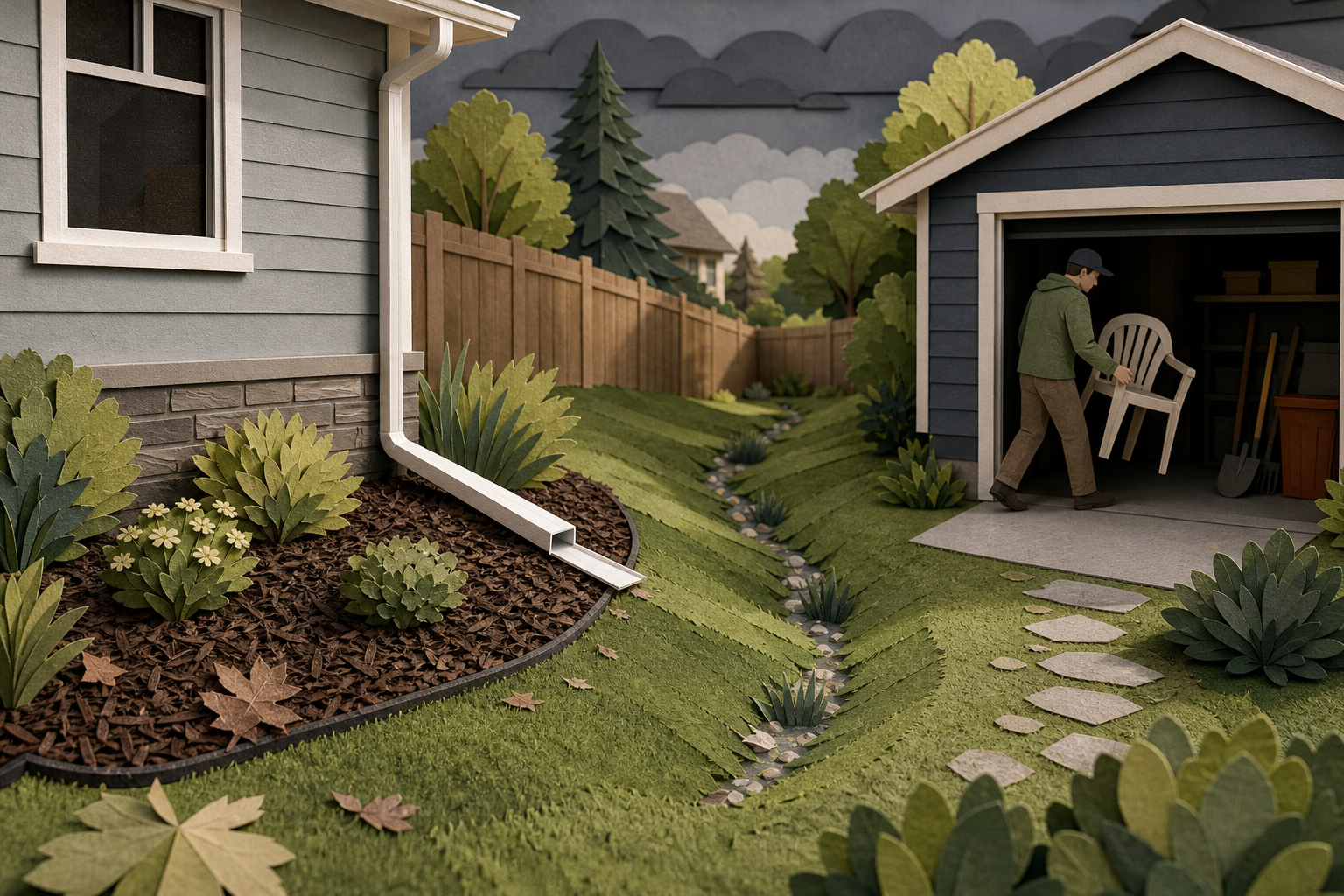
3. Put away anything the wind can lift before it arrives. Pots, ornaments, solar lights, tools and light chairs belong in the garage or shed. This is the quick job, and it's only safe while conditions are still calm. For trampolines, gazebos and other larger equipment, follow the manufacturer's instructions on securing them rather than trusting a few bricks or sandbags.
How to keep heavy rain from pooling against your foundation
4. Cover bare soil in beds and along the house. Exposed dirt washes out fast in a downpour, and in Alberta's swings from dry spells to sudden heavy rain, hard-baked soil sheds water instead of absorbing it. Groundcover plants or mulch slow that runoff and hold the soil in place. Keep mulch out of the paths water uses to drain, because loose material can wash away in concentrated flow and end up blocking those same paths.
5. Clear downspout outlets and the drainage routes beside your home. Check that each downspout extension is attached and points away from the house, then clear leaves and debris from swales and the low channels between lots. Walk the foundation after a rain and note any spot where water sits. The City of Edmonton requires lots to be graded so water moves away from the foundation and along approved drainage routes, and those routes often run between neighbouring properties. Keep them open, and don't redirect runoff toward the house next door. If you find a low spot, have it assessed before anyone starts digging or regrading.
No yard is stormproof, and none of this promises otherwise. A storm-ready yard gives water a safer route and leaves wind fewer loose targets. On the next calm, dry afternoon, walk the property with your phone and photograph anything overhead, anything loose and anything wet against the foundation. Pick the first one worth fixing, and book it before the next warning arrives.



The trees, garden beds and patio furniture that make a yard pleasant on a July evening are the same things that can scratch siding, crack a window or leave you a long cleanup when a summer storm rolls through Edmonton. Most homeowners only look at their yard this way once a warning is already on their phone. By then there's time for the quick jobs, and the bigger ones, like the cracked limb over the garage, have been sitting there all season.
If you've ever looked outside after a wind warning and wondered whether the loose planter or the branch over your roof needed attention first, you know that pressure. You have limited time, and you're not sure which jobs are safe for you and which aren't. A tidy yard can still hide trouble. The five checks below start overhead and work down to the ground. Some belong in calm weather, months ahead. Others take ten minutes and are only safe before the wind picks up. The idea behind all five is simple: a storm-ready yard gives water somewhere safe to go and leaves wind fewer things to break or carry.
How to stop trees, shrubs and patio items from damaging your home
1. Look up at every tree near the house, garage and fence line. Watch for broken or hanging limbs, deep cracks, dead sections and branches reaching over the roof. People skip this because a tree that has stood for 30 years feels permanent, and aging elms and ash across Edmonton's older neighbourhoods do drop branches in high wind. For anything large, damaged or overhanging, book a qualified arborist. Stay well clear of power lines and leave overhead cutting to professionals. If you own an elm, Alberta bans pruning it from April 1 to September 30 to slow Dutch elm disease, so plan that work for fall or winter.
2. Walk the exposed planting areas and note what's struggling. Brittle shrubs on the windy side of the house can split or tear loose. Ask a local garden centre or landscaper which plants suit your site, how big they'll get and where they belong. Well-chosen planting can shelter a yard over years. A shrub you put in this fall won't protect anything during next summer's storm.
3. Put away anything the wind can lift before it arrives. Pots, ornaments, solar lights, tools and light chairs belong in the garage or shed. This is the quick job, and it's only safe while conditions are still calm. For trampolines, gazebos and other larger equipment, follow the manufacturer's instructions on securing them rather than trusting a few bricks or sandbags.
How to keep heavy rain from pooling against your foundation
4. Cover bare soil in beds and along the house. Exposed dirt washes out fast in a downpour, and in Alberta's swings from dry spells to sudden heavy rain, hard-baked soil sheds water instead of absorbing it. Groundcover plants or mulch slow that runoff and hold the soil in place. Keep mulch out of the paths water uses to drain, because loose material can wash away in concentrated flow and end up blocking those same paths.
5. Clear downspout outlets and the drainage routes beside your home. Check that each downspout extension is attached and points away from the house, then clear leaves and debris from swales and the low channels between lots. Walk the foundation after a rain and note any spot where water sits. The City of Edmonton requires lots to be graded so water moves away from the foundation and along approved drainage routes, and those routes often run between neighbouring properties. Keep them open, and don't redirect runoff toward the house next door. If you find a low spot, have it assessed before anyone starts digging or regrading.
No yard is stormproof, and none of this promises otherwise. A storm-ready yard gives water a safer route and leaves wind fewer loose targets. On the next calm, dry afternoon, walk the property with your phone and photograph anything overhead, anything loose and anything wet against the foundation. Pick the first one worth fixing, and book it before the next warning arrives.
Read Next
Five Money Checks Canadian Snowbirds Should Finish Before Heading South
Canadian Bank Security Assumes a Human Is Logging In. AI Agents Break That
A 25 Basis Point Hike Doesn't Erase Variable's Long-Run Edge Over Fixed
Macklem's Warning: U.S. Deficits Could Keep Canadian Fixed Rates Higher Than Cuts Suggest