The Bank of Canada's Rate Hike Squeezes Buyers and Builders at Once
Every household budget starts with a monthly payment, and when borrowing gets more expensive, the same payment supports a smaller mortgage. Builders are feeling a version of that squeeze. The lumber, concrete and skilled trades they need still cost a lot, and the money they borrow to put up homes now costs more too. Buyers and builders are paying more for money at the same time.
If you've checked what you can afford in Edmonton, then scrolled listings and wondered why prices haven't fallen enough to help, that frustration has a cause. Higher borrowing costs can weaken demand without making housing affordable, because they also make new homes harder to finance and deliver. So whether you're buying your first place, moving up, investing or advising clients in Alberta, the useful question is what payment you can carry. Waiting for a price drop to rescue the numbers is a gamble.
Why a higher rate can shrink your budget before prices change
When the Bank of Canada raises its policy rate, lenders usually raise their prime rate. Variable-rate mortgages and lines of credit tied to prime follow. Fixed rates are different. They move with bond yields, which often shift before an announcement, so a fixed rate may have already risen or may barely move.
Then there's the stress test. Under OSFI rules, you must qualify at the higher of your contract rate plus 2 percentage points or 5.25%. If the rate you're offered goes up, the rate you have to qualify at usually goes up with it, and the largest mortgage a lender will approve can shrink, even if your income hasn't changed. A rate hold on an existing pre-approval may protect you for a while, so ask what yours covers.
Qualifying is only half the check. The lender's maximum is the most you can borrow. It says nothing about property tax, heating bills, condo fees or what you still want to save each month. Ask for two numbers: an updated qualification and a comfortable payment you'd be happy to make for years.
While you're at it, find out how your mortgage reacts when rates move. With some variable mortgages, the payment rises right away. Others keep the payment steady and send less of it toward principal, so the change shows up later in your balance.
Why slower sales do not guarantee cheaper homes
A quieter market tempts people to expect bargains. Look at what's happening on the supply side. Materials and labour in Edmonton and Calgary remain expensive. Builders typically borrow to fund construction, so higher rates raise their carrying costs at the same moment buyers can afford less. Some projects stop making sense on paper and get delayed or scaled back. That doesn't mean every builder pauses or every price holds. But homes that don't get started now can't ease supply later, and CMHC had already estimated back in 2023 that Canada needs about 3.5 million additional homes by 2030.
So slower activity can coexist with prices that stay stubborn. What a calmer market does offer is room: time for an inspection, a proper look at the numbers, less pressure to bid blind.
Use that room on the decisions you control. If you're moving up, compare the full change in financing, including any penalty for breaking your current mortgage. Sale price against purchase price tells only part of the story. If you're buying a new build, confirm the possession date and how long your rate commitment lasts. Financing arranged today may not reach a completion that's well over a year away. If you're investing, test whether the rent covers ownership costs at today's rates, not the rates you bought on before.
You don't need to predict the next rate announcement to know your own limit. Before you change the price range in your search, update your comfortable monthly housing budget. Every other number follows from that one.


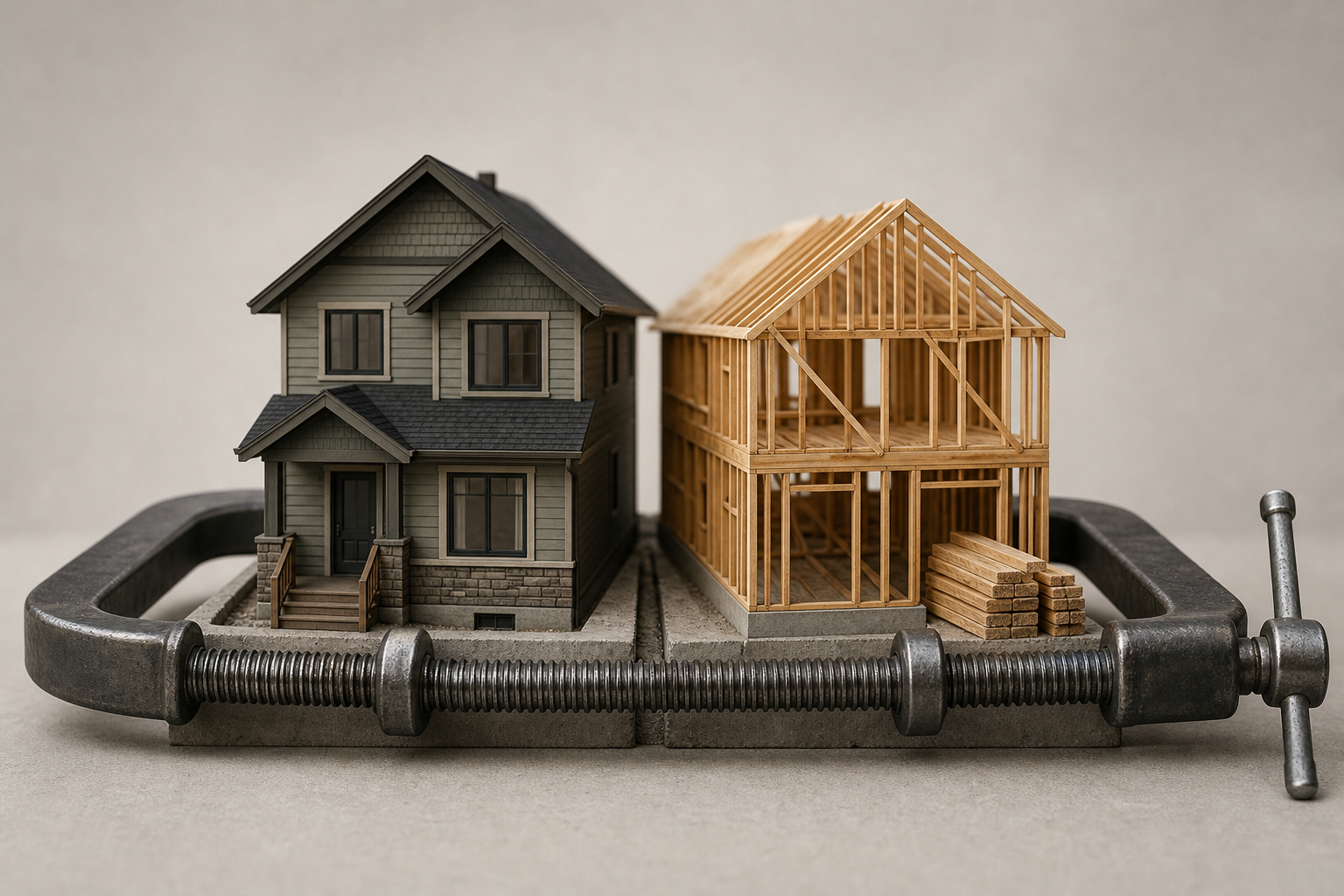

Every household budget starts with a monthly payment, and when borrowing gets more expensive, the same payment supports a smaller mortgage. Builders are feeling a version of that squeeze. The lumber, concrete and skilled trades they need still cost a lot, and the money they borrow to put up homes now costs more too. Buyers and builders are paying more for money at the same time.
If you've checked what you can afford in Edmonton, then scrolled listings and wondered why prices haven't fallen enough to help, that frustration has a cause. Higher borrowing costs can weaken demand without making housing affordable, because they also make new homes harder to finance and deliver. So whether you're buying your first place, moving up, investing or advising clients in Alberta, the useful question is what payment you can carry. Waiting for a price drop to rescue the numbers is a gamble.
Why a higher rate can shrink your budget before prices change
When the Bank of Canada raises its policy rate, lenders usually raise their prime rate. Variable-rate mortgages and lines of credit tied to prime follow. Fixed rates are different. They move with bond yields, which often shift before an announcement, so a fixed rate may have already risen or may barely move.
Then there's the stress test. Under OSFI rules, you must qualify at the higher of your contract rate plus 2 percentage points or 5.25%. If the rate you're offered goes up, the rate you have to qualify at usually goes up with it, and the largest mortgage a lender will approve can shrink, even if your income hasn't changed. A rate hold on an existing pre-approval may protect you for a while, so ask what yours covers.
Qualifying is only half the check. The lender's maximum is the most you can borrow. It says nothing about property tax, heating bills, condo fees or what you still want to save each month. Ask for two numbers: an updated qualification and a comfortable payment you'd be happy to make for years.
While you're at it, find out how your mortgage reacts when rates move. With some variable mortgages, the payment rises right away. Others keep the payment steady and send less of it toward principal, so the change shows up later in your balance.
Why slower sales do not guarantee cheaper homes
A quieter market tempts people to expect bargains. Look at what's happening on the supply side. Materials and labour in Edmonton and Calgary remain expensive. Builders typically borrow to fund construction, so higher rates raise their carrying costs at the same moment buyers can afford less. Some projects stop making sense on paper and get delayed or scaled back. That doesn't mean every builder pauses or every price holds. But homes that don't get started now can't ease supply later, and CMHC had already estimated back in 2023 that Canada needs about 3.5 million additional homes by 2030.
So slower activity can coexist with prices that stay stubborn. What a calmer market does offer is room: time for an inspection, a proper look at the numbers, less pressure to bid blind.
Use that room on the decisions you control. If you're moving up, compare the full change in financing, including any penalty for breaking your current mortgage. Sale price against purchase price tells only part of the story. If you're buying a new build, confirm the possession date and how long your rate commitment lasts. Financing arranged today may not reach a completion that's well over a year away. If you're investing, test whether the rent covers ownership costs at today's rates, not the rates you bought on before.
You don't need to predict the next rate announcement to know your own limit. Before you change the price range in your search, update your comfortable monthly housing budget. Every other number follows from that one.
Read Next
Five Money Checks Canadian Snowbirds Should Finish Before Heading South
Canadian Bank Security Assumes a Human Is Logging In. AI Agents Break That
Before Storm Winds Arrive, Turn 5 Yard Hazards Into Protective Buffers
A 25 Basis Point Hike Doesn't Erase Variable's Long-Run Edge Over Fixed