The Alberta Properties Americans Can Still Buy Under Canada's Foreign Buyer Ban
Alberta isn't closed to you. The Prohibition on the Purchase of Residential Property by Non-Canadians Act has been extended to January 1, 2027, and it covers "residential property," meaning buildings with three or fewer homes, plus condo units and semi-detached houses. Plenty sits outside that definition or outside the mapped areas. Whether you can buy comes down to three checks: who you are, where the property is, and whether the money works.
Who you are
Confirm your immigration status before you look at listings. If you're an American with Canadian permanent residency, the ban doesn't apply to you at all, and you buy under the same rules as a citizen. People skip this because they assume a U.S. passport settles the question.
Count the days left on your work permit. If you've moved to Edmonton on a work permit, you can buy one home as long as the permit has at least 183 days of validity remaining and you haven't already bought a home in Canada during the ban. A permit that renews in four months may need renewing before you write an offer.
Where the property sits
Look up the exact census boundary for the address. The Edmonton area is a census metropolitan area, and so is Calgary, and both reach past the city edge. An acreage that feels rural can still be inside. Ask for the boundary check in writing before any deposit leaves your account. This is the step people skip most, because the drive out of town makes it feel obvious.
Search recreational areas outside the mapped zones. Lake and mountain properties in parts of Alberta that fall outside any census metropolitan area or agglomeration are exempt from the federal ban. For a cabin or retreat, this is where you can legally buy.
Check the property type. Commercial space and multi-family buildings with four or more units fall outside the residential definition. An investor eyeing a fourplex in Edmonton is in a different position than a buyer eyeing a downtown condo.
Whether the money works
Plan for roughly 35% down. Even when the purchase is legal, Canadian lenders often ask non-residents for a much larger down payment because there's no Canadian credit history behind the application. Your U.S. credit score doesn't carry over. People find this out at approval stage, after they've already fallen for a property.
Budget for annual tax filing. Non-Canadian owners previously faced the federal Underused Housing Tax, which was eliminated effective 2025. However, Alberta has no provincial equivalent surcharge on foreign-owned properties. Even owners who live in the home have had to file a return each year with the Canada Revenue Agency to claim an exemption, and missed filings bring penalties. Have a cross-border accountant confirm what applies to your tax year, because U.S. citizens also report to the IRS.
Credit Alberta's lack of a provincial surcharge. British Columbia and Ontario add their own taxes on foreign buyers. Alberta doesn't, which keeps your closing costs lower once you're eligible to buy.
Plan as if the January 2027 date could move. The ban has already been extended once. If your plan only works if it expires on schedule, build a version that also works if it gets extended again.
Before you fall for any property, get the census boundary answer in writing. That afternoon of checking decides whether the rest of your plan is legal.
Sources
CMHC - Prohibition on the Purchase of Residential Property by Non-Canadians Act - 2023-01-01. https://www.cmhc-schl.gc.ca/


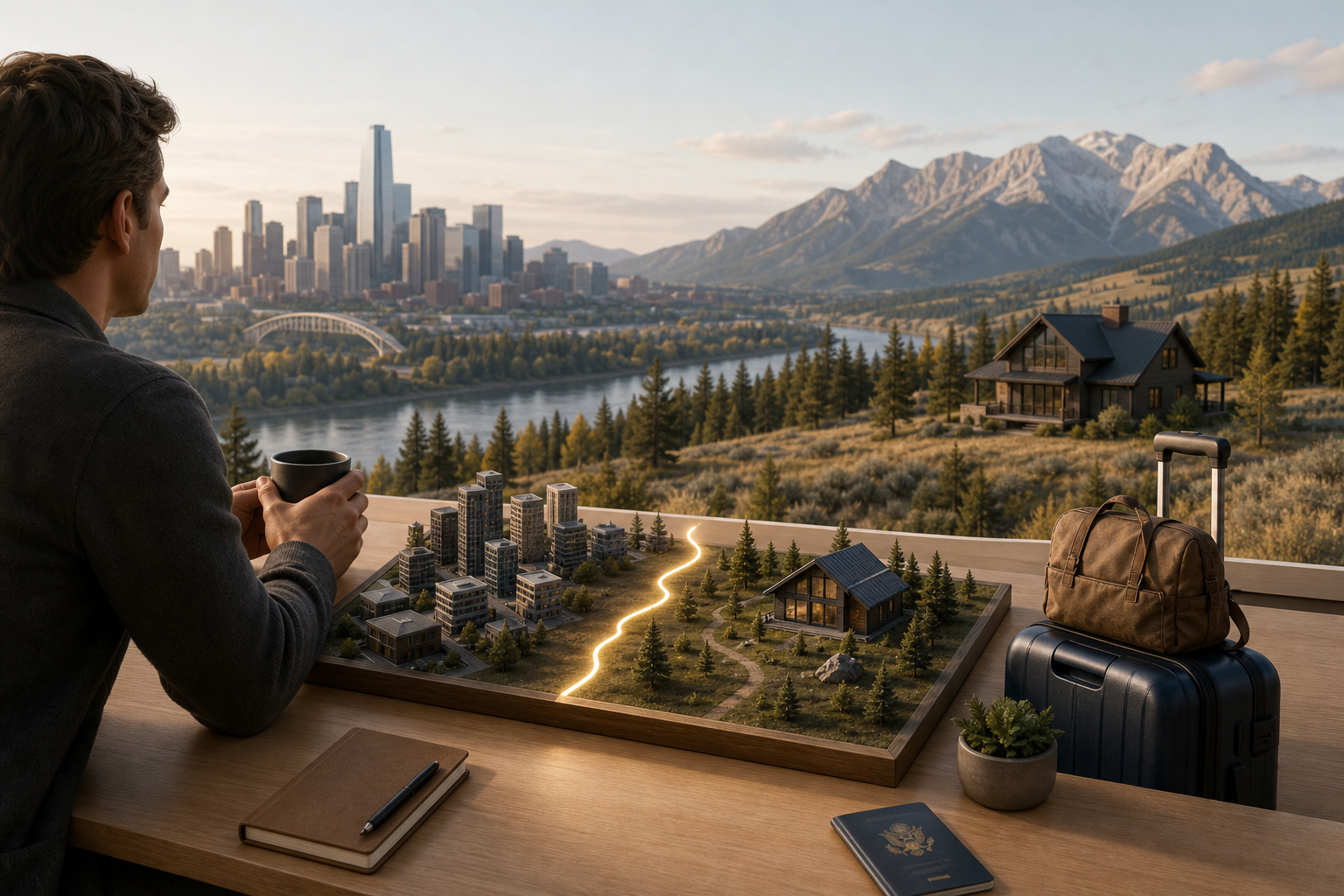

Alberta isn't closed to you. The Prohibition on the Purchase of Residential Property by Non-Canadians Act has been extended to January 1, 2027, and it covers "residential property," meaning buildings with three or fewer homes, plus condo units and semi-detached houses. Plenty sits outside that definition or outside the mapped areas. Whether you can buy comes down to three checks: who you are, where the property is, and whether the money works.
Who you are
Confirm your immigration status before you look at listings. If you're an American with Canadian permanent residency, the ban doesn't apply to you at all, and you buy under the same rules as a citizen. People skip this because they assume a U.S. passport settles the question.
Count the days left on your work permit. If you've moved to Edmonton on a work permit, you can buy one home as long as the permit has at least 183 days of validity remaining and you haven't already bought a home in Canada during the ban. A permit that renews in four months may need renewing before you write an offer.
Where the property sits
Look up the exact census boundary for the address. The Edmonton area is a census metropolitan area, and so is Calgary, and both reach past the city edge. An acreage that feels rural can still be inside. Ask for the boundary check in writing before any deposit leaves your account. This is the step people skip most, because the drive out of town makes it feel obvious.
Search recreational areas outside the mapped zones. Lake and mountain properties in parts of Alberta that fall outside any census metropolitan area or agglomeration are exempt from the federal ban. For a cabin or retreat, this is where you can legally buy.
Check the property type. Commercial space and multi-family buildings with four or more units fall outside the residential definition. An investor eyeing a fourplex in Edmonton is in a different position than a buyer eyeing a downtown condo.
Whether the money works
Plan for roughly 35% down. Even when the purchase is legal, Canadian lenders often ask non-residents for a much larger down payment because there's no Canadian credit history behind the application. Your U.S. credit score doesn't carry over. People find this out at approval stage, after they've already fallen for a property.
Budget for annual tax filing. Non-Canadian owners previously faced the federal Underused Housing Tax, which was eliminated effective 2025. However, Alberta has no provincial equivalent surcharge on foreign-owned properties. Even owners who live in the home have had to file a return each year with the Canada Revenue Agency to claim an exemption, and missed filings bring penalties. Have a cross-border accountant confirm what applies to your tax year, because U.S. citizens also report to the IRS.
Credit Alberta's lack of a provincial surcharge. British Columbia and Ontario add their own taxes on foreign buyers. Alberta doesn't, which keeps your closing costs lower once you're eligible to buy.
Plan as if the January 2027 date could move. The ban has already been extended once. If your plan only works if it expires on schedule, build a version that also works if it gets extended again.
Before you fall for any property, get the census boundary answer in writing. That afternoon of checking decides whether the rest of your plan is legal.
Sources
Read Next
Five Money Checks Canadian Snowbirds Should Finish Before Heading South
Canadian Bank Security Assumes a Human Is Logging In. AI Agents Break That
Before Storm Winds Arrive, Turn 5 Yard Hazards Into Protective Buffers
A 25 Basis Point Hike Doesn't Erase Variable's Long-Run Edge Over Fixed