Ignoring Some Interest Groups Is the Most Responsible Thing a Budget Can Do
Every federal budget arrives after months of asking. Builders, manufacturers, provinces, parent groups, retirees and banks each make a case for public money, and each case sounds fair when you hear it alone. Learning to tell useful spending from a political giveaway is how you judge what your tax dollars actually buy, beyond whatever benefit lands in your own lap. That matters because the bill for every yes comes back to the rest of us as taxes, borrowing, or other programs that quietly get less, and the announcement almost never says which.
If you've ever scanned a budget for help with your down payment or your business costs, you know the mix of hope and doubt. A line looks promising. Then you wonder whether it makes an Edmonton home or next year's payroll any easier to carry, or whether it just moves the bill somewhere you can't see. That doubt is healthy. The test that settles it is simple: a budget should fund a clear public purpose, and how loudly someone asked should count for nothing. Growth, in plain terms, means producing more homes, goods and services with the people and money we already have. Spending that helps with that, or protects people from real hardship, earns its place.
Why more down-payment help does not build more homes
In 2024, Ottawa raised the Home Buyers' Plan withdrawal limit from $35,000 to $60,000 per eligible person. The money is the buyer's own RRSP savings, and it generally has to be paid back into the plan over time. For an Alberta buyer with healthy RRSP savings and a thin down payment, that can be genuinely useful. It can mean a larger down payment, a smaller mortgage, or simply getting into the market a bit sooner.
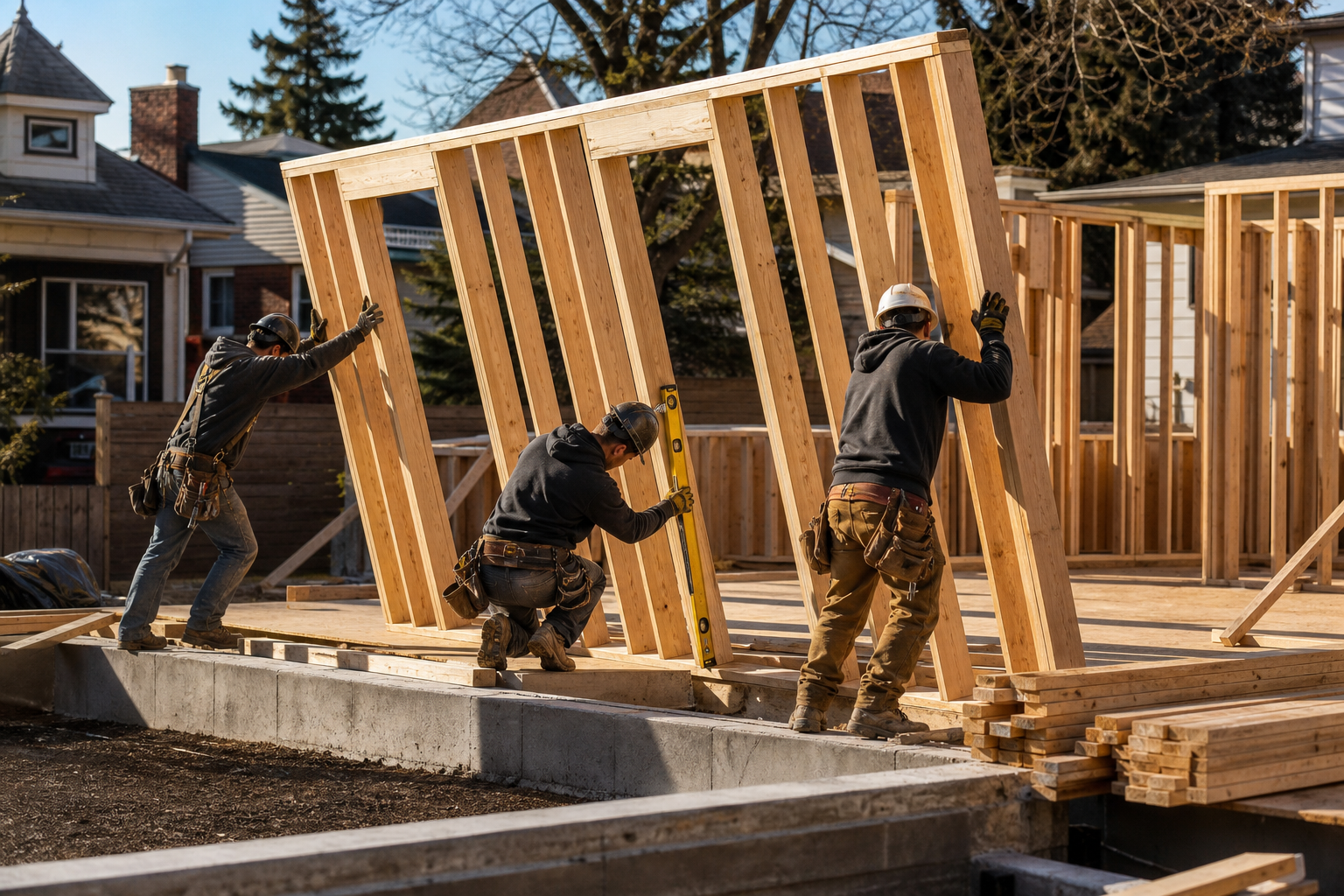
Look at what the measure changes, though. It improves access to money. It doesn't add a single framer, permit or serviced lot. When buyers gain purchasing power and the supply of homes can't respond quickly, that extra money can push on prices instead of turning into new doors. Whether that happens depends on how fast builders can keep up.
So the first two questions for any housing promise are: what does this actually change, and what limit on the problem is it aimed at? Down-payment help addresses one buyer's access. The wider problem is how many homes get built. Both can be worth funding. They should be judged honestly as different things.
Why business incentives need the same test as household benefits
It's tempting to assume anything handed to business creates growth and anything handed to households is consumption. Neither holds up. A tax credit for an industry that would have expanded anyway buys nothing new. Childcare support, often filed under social spending, can help parents stay in work, and that's about as direct a boost to output as a budget gets. Protecting people from hardship is a legitimate purpose in its own right and needs no growth excuse.
For discretionary business incentives, ask for three things. Evidence of a real constraint the money removes. A measurable public result, such as homes started, jobs filled or plants built. A review date, so the program ends if the result never shows up. Then ask who benefits, what the public gives up, and how success will be counted. You don't need a finance degree for any of that. A weak promise usually falls apart at the second question.
The hardest part is applying it evenly. You may have personally benefited from a targeted measure, and you may want the next one. A responsible budget refuses requests impartially, including the ones that would have helped you. A "growth" label doesn't prove public value, and neither does a measure feeling good to your own household.
A responsible budget still says yes often. The difference is that it can explain each yes and the public purpose behind it. Try this with the next announcement you like. Ask what it changes beyond your own immediate benefit, and what everyone else gives up to pay for it. If the answer holds, support it with a clear conscience.



Every federal budget arrives after months of asking. Builders, manufacturers, provinces, parent groups, retirees and banks each make a case for public money, and each case sounds fair when you hear it alone. Learning to tell useful spending from a political giveaway is how you judge what your tax dollars actually buy, beyond whatever benefit lands in your own lap. That matters because the bill for every yes comes back to the rest of us as taxes, borrowing, or other programs that quietly get less, and the announcement almost never says which.
If you've ever scanned a budget for help with your down payment or your business costs, you know the mix of hope and doubt. A line looks promising. Then you wonder whether it makes an Edmonton home or next year's payroll any easier to carry, or whether it just moves the bill somewhere you can't see. That doubt is healthy. The test that settles it is simple: a budget should fund a clear public purpose, and how loudly someone asked should count for nothing. Growth, in plain terms, means producing more homes, goods and services with the people and money we already have. Spending that helps with that, or protects people from real hardship, earns its place.
Why more down-payment help does not build more homes
In 2024, Ottawa raised the Home Buyers' Plan withdrawal limit from $35,000 to $60,000 per eligible person. The money is the buyer's own RRSP savings, and it generally has to be paid back into the plan over time. For an Alberta buyer with healthy RRSP savings and a thin down payment, that can be genuinely useful. It can mean a larger down payment, a smaller mortgage, or simply getting into the market a bit sooner.
Look at what the measure changes, though. It improves access to money. It doesn't add a single framer, permit or serviced lot. When buyers gain purchasing power and the supply of homes can't respond quickly, that extra money can push on prices instead of turning into new doors. Whether that happens depends on how fast builders can keep up.
So the first two questions for any housing promise are: what does this actually change, and what limit on the problem is it aimed at? Down-payment help addresses one buyer's access. The wider problem is how many homes get built. Both can be worth funding. They should be judged honestly as different things.
Why business incentives need the same test as household benefits
It's tempting to assume anything handed to business creates growth and anything handed to households is consumption. Neither holds up. A tax credit for an industry that would have expanded anyway buys nothing new. Childcare support, often filed under social spending, can help parents stay in work, and that's about as direct a boost to output as a budget gets. Protecting people from hardship is a legitimate purpose in its own right and needs no growth excuse.
For discretionary business incentives, ask for three things. Evidence of a real constraint the money removes. A measurable public result, such as homes started, jobs filled or plants built. A review date, so the program ends if the result never shows up. Then ask who benefits, what the public gives up, and how success will be counted. You don't need a finance degree for any of that. A weak promise usually falls apart at the second question.
The hardest part is applying it evenly. You may have personally benefited from a targeted measure, and you may want the next one. A responsible budget refuses requests impartially, including the ones that would have helped you. A "growth" label doesn't prove public value, and neither does a measure feeling good to your own household.
A responsible budget still says yes often. The difference is that it can explain each yes and the public purpose behind it. Try this with the next announcement you like. Ask what it changes beyond your own immediate benefit, and what everyone else gives up to pay for it. If the answer holds, support it with a clear conscience.
Read Next
Five Money Checks Canadian Snowbirds Should Finish Before Heading South
Canadian Bank Security Assumes a Human Is Logging In. AI Agents Break That
Before Storm Winds Arrive, Turn 5 Yard Hazards Into Protective Buffers
A 25 Basis Point Hike Doesn't Erase Variable's Long-Run Edge Over Fixed