Canada's Resource Advantage: What Global Investors Are Betting On in 2026
The Trans Mountain Expansion delivered something beyond pipeline capacity when it opened in 2024. It narrowed the Western Canadian Select discount from roughly $15 per barrel to single digits, fundamentally rewriting the economics for Canadian crude at a moment when the United States is importing over 6 million barrels per day of crude oil and looking for alternatives to offshore supply chains vulnerable to geopolitical shocks.
That shift explains part of what global institutional capital is chasing in Canada right now, but the deeper story sits in the minerals underneath the rock, not the oil flowing through the pipes.
The Critical Mineral Equation
Canada's federal government has designated 31 minerals as "critical," with six earning priority status: lithium, graphite, nickel, cobalt, copper, and rare earth elements. The label matters less than the policy attached to it. A 30% non-refundable investment tax credit is available for exploration expenses through March 2027, and the Clean Technology Investment Tax Credit is rolling out across 2024, 2026 to incentivize domestic processing, battery-grade lithium hydroxide production in Quebec and Ontario, refined nickel shipped to the U.S., cobalt processed for EV batteries here rather than shipped raw to Asia.
Canada has historically been strong on extraction and weak on the midstream, shipping raw material to Asia for refining and then buying back the processed product. The tax structure is designed to reverse that flow, and early capital commitments suggest the incentive is working. Battery-grade lithium hydroxide production in Quebec and Ontario is expanding ahead of demand curves, a bet that North American automakers will prioritize supply chains within friendly jurisdictions over the lowest-cost option available.
The term for this is "friend-shoring," and it is not rhetorical. Western allies are decoupling critical mineral supply from China and Russia. Canada accounts for roughly 20% of global uranium production, centered in Saskatchewan, and is leading the development of Small Modular Reactors at a time when nuclear is no longer treated as a fringe energy source. The uranium play alone justifies attention, but uranium is one commodity among thirty-one receiving similar treatment.
The Clean Resource Paradox
Canada's electricity grid is already approximately 80% non-emitting, which creates an advantage for energy-intensive processing that few resource-rich nations can match. Green aluminum, which requires vast amounts of electricity to smelt, can carry a "clean" label in Canada that it cannot carry in most competing jurisdictions. The same logic applies to hydrogen production, where access to hydroelectric power in Quebec and British Columbia lowers the carbon intensity of the output.
The irony is that Canada remains a major oil producer while positioning itself as a green transition leader. Institutional investors are betting Canada will solve it through Carbon Capture, Utilization, and Storage. The federal government has committed subsidies, and the first large-scale CCUS projects are moving from pilot to commercial deployment. Whether the technology scales at the required pace is the open question, but the capital is flowing as if it will.
What Slows the Play
Two constraints temper the momentum. The first is permitting. The average time from discovery to production for a new mine in Canada exceeds 10, 15 years, a function of overlapping federal and provincial jurisdictions and the requirement for Indigenous consent. The second constraint is the roads, rail, and grid connections that remote deposits lack. Many critical mineral deposits sit in remote regions without access to transportation or power. The "Ring of Fire" chromite deposit in Northern Ontario has been known since 2007, but commercial viability still depends on the highway, the rail line, and the power supply that do not yet exist.
Higher interest rates across 2024-2026 have made the capital-intensive nature of resource development more expensive, slowing the speed of the pivot from oil to minerals. The cost of borrowing matters when you are financing a decade-long build with no revenue until year eight.
Institutional investors are betting that Canada's combination of geopolitical stability, resource endowment, and policy alignment creates a margin wide enough to absorb the delays and still deliver inflation-plus returns over the next cycle. The resources are in the ground. The question is how fast they move from there to market.


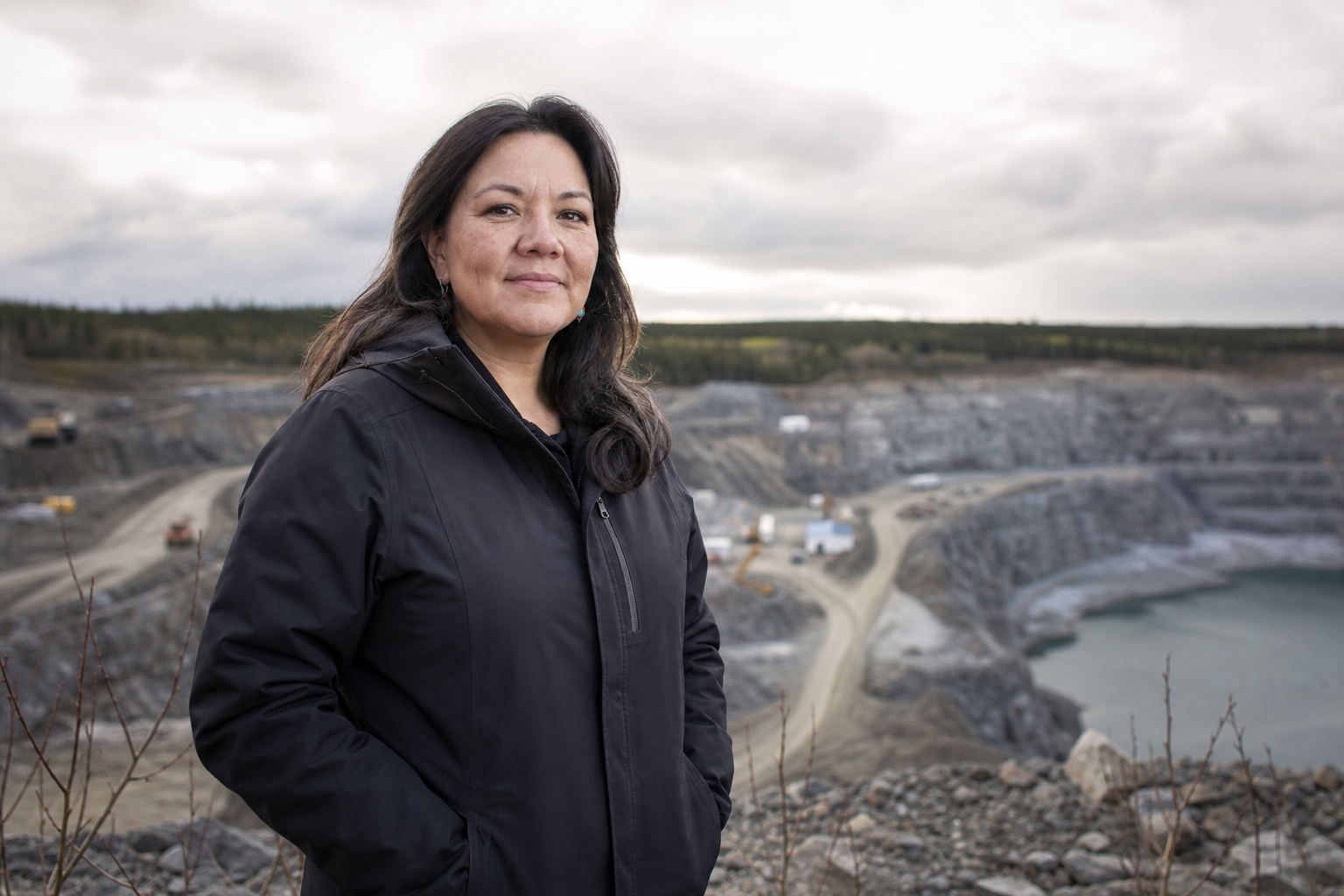

The Trans Mountain Expansion delivered something beyond pipeline capacity when it opened in 2024. It narrowed the Western Canadian Select discount from roughly $15 per barrel to single digits, fundamentally rewriting the economics for Canadian crude at a moment when the United States is importing over 6 million barrels per day of crude oil and looking for alternatives to offshore supply chains vulnerable to geopolitical shocks.
That shift explains part of what global institutional capital is chasing in Canada right now, but the deeper story sits in the minerals underneath the rock, not the oil flowing through the pipes.
The Critical Mineral Equation
Canada's federal government has designated 31 minerals as "critical," with six earning priority status: lithium, graphite, nickel, cobalt, copper, and rare earth elements. The label matters less than the policy attached to it. A 30% non-refundable investment tax credit is available for exploration expenses through March 2027, and the Clean Technology Investment Tax Credit is rolling out across 2024, 2026 to incentivize domestic processing, battery-grade lithium hydroxide production in Quebec and Ontario, refined nickel shipped to the U.S., cobalt processed for EV batteries here rather than shipped raw to Asia.
Canada has historically been strong on extraction and weak on the midstream, shipping raw material to Asia for refining and then buying back the processed product. The tax structure is designed to reverse that flow, and early capital commitments suggest the incentive is working. Battery-grade lithium hydroxide production in Quebec and Ontario is expanding ahead of demand curves, a bet that North American automakers will prioritize supply chains within friendly jurisdictions over the lowest-cost option available.
The term for this is "friend-shoring," and it is not rhetorical. Western allies are decoupling critical mineral supply from China and Russia. Canada accounts for roughly 20% of global uranium production, centered in Saskatchewan, and is leading the development of Small Modular Reactors at a time when nuclear is no longer treated as a fringe energy source. The uranium play alone justifies attention, but uranium is one commodity among thirty-one receiving similar treatment.
The Clean Resource Paradox
Canada's electricity grid is already approximately 80% non-emitting, which creates an advantage for energy-intensive processing that few resource-rich nations can match. Green aluminum, which requires vast amounts of electricity to smelt, can carry a "clean" label in Canada that it cannot carry in most competing jurisdictions. The same logic applies to hydrogen production, where access to hydroelectric power in Quebec and British Columbia lowers the carbon intensity of the output.
The irony is that Canada remains a major oil producer while positioning itself as a green transition leader. Institutional investors are betting Canada will solve it through Carbon Capture, Utilization, and Storage. The federal government has committed subsidies, and the first large-scale CCUS projects are moving from pilot to commercial deployment. Whether the technology scales at the required pace is the open question, but the capital is flowing as if it will.
What Slows the Play
Two constraints temper the momentum. The first is permitting. The average time from discovery to production for a new mine in Canada exceeds 10, 15 years, a function of overlapping federal and provincial jurisdictions and the requirement for Indigenous consent. The second constraint is the roads, rail, and grid connections that remote deposits lack. Many critical mineral deposits sit in remote regions without access to transportation or power. The "Ring of Fire" chromite deposit in Northern Ontario has been known since 2007, but commercial viability still depends on the highway, the rail line, and the power supply that do not yet exist.
Higher interest rates across 2024-2026 have made the capital-intensive nature of resource development more expensive, slowing the speed of the pivot from oil to minerals. The cost of borrowing matters when you are financing a decade-long build with no revenue until year eight.
Institutional investors are betting that Canada's combination of geopolitical stability, resource endowment, and policy alignment creates a margin wide enough to absorb the delays and still deliver inflation-plus returns over the next cycle. The resources are in the ground. The question is how fast they move from there to market.
Sources
Read Next
August Sales Fell 6.9%: What CREA's Numbers Actually Reveal About Buyer Hesitation
Ohio Lost $4.8 Billion to Trump's Tariffs in 90 Days
How Much Identity Theft Coverage Your Family Needs, Based on Who's Actually at Risk
CMHC's Latest Housing Supply Gap Report Shows Construction Slowing Faster Than Demand