Canada Lost 55,025 People This Quarter: Why Home Prices Aren't Falling Everywhere
Statistics Canada recorded a population drop of 55,025 people in the first quarter of 2026, the third consecutive decline after years of record growth. The figure surprised no one tracking immigration policy, but it did revive a question buyers have been asking since late 2025: if fewer people are entering the country, shouldn't home prices fall?
They should. In some places, they will. But the mechanism connecting population to price is indirect, delayed, and entirely dependent on what happens to housing supply at the same time.
Why Population Drops Don't Automatically Lower Prices
A smaller population reduces demand for housing. That part is straightforward. What complicates the forecast is that Canada still faces a structural housing shortage measured in the millions of units. The country added 1.8% in 2021/2022, 2.9% in 2022/2023, and 3.0% in 2023/2024 to its population, while housing starts failed to keep pace. Construction costs rose, interest rates climbed, and builders slowed. By early 2026, the gap between households that need housing and units available to them had widened, not closed.
When population growth slows by 0.1% but the supply deficit remains in the high six figures, the net effect on price depends entirely on whether builders respond by adding inventory faster than demand continues to fall. In markets where supply was already extremely tight, a modest population dip barely registers. In markets where supply was looser and driven heavily by temporary residents, the effect shows up faster.
Where the Decline Hits First
The 55,025-person drop is not evenly distributed. Most of it comes from a reduction in non-permanent residents: international students, temporary foreign workers, and other visa holders whose numbers the federal government capped deliberately in late 2024 and 2025. Permanent immigration targets were lowered to 380,000 for 2026, down from over 500,000 in prior years, but that cohort still represents net inflow.
Non-permanent residents concentrate in rental markets near universities and in sectors with large temporary workforces. A rental landlord in a city with three post-secondary institutions will feel a vacancy increase before a homeowner in a suburb thirty kilometres out. The resale market for single-family homes, especially in regions with strong interprovincial migration, remains insulated by a different dynamic entirely.
Alberta's Position as a Counter-Example
Alberta continues to see interprovincial migration gains. Residents priced out of other provinces are moving to Edmonton and Calgary for lower housing costs and energy-sector employment. The "Alberta is Calling" campaign, launched by the provincial government to attract skilled workers, has historically succeeded even when federal immigration slows. Edmonton's benchmark home price remains significantly lower than major centres elsewhere, which creates a floor under local demand that national population statistics do not capture.
Lower interest rates increase affordability for every household with a mortgage pre-approval. A modest population decline, spread across ten provinces, moves the needle much more slowly.
The Timing Lag
Population changes take months to show up in "Sold" prices. A student who leaves in April does not immediately put a rental vacancy into the resale market. A family that delays immigration by six months does not cancel a purchase they were not yet making. The effect, when it arrives, shows up first in rental vacancy rates, then in investor appetite for rental properties, and only later, if supply stays flat, in resale price growth.
Buyers waiting for a price crash tied to this quarter's population drop are making a bet that supply will rise faster than demand continues to fall, and that interest rates will not drop in the interim. Both assumptions require ignoring what has happened over the prior 24 months. Inventory remains the variable that matters most, and it is still historically low.


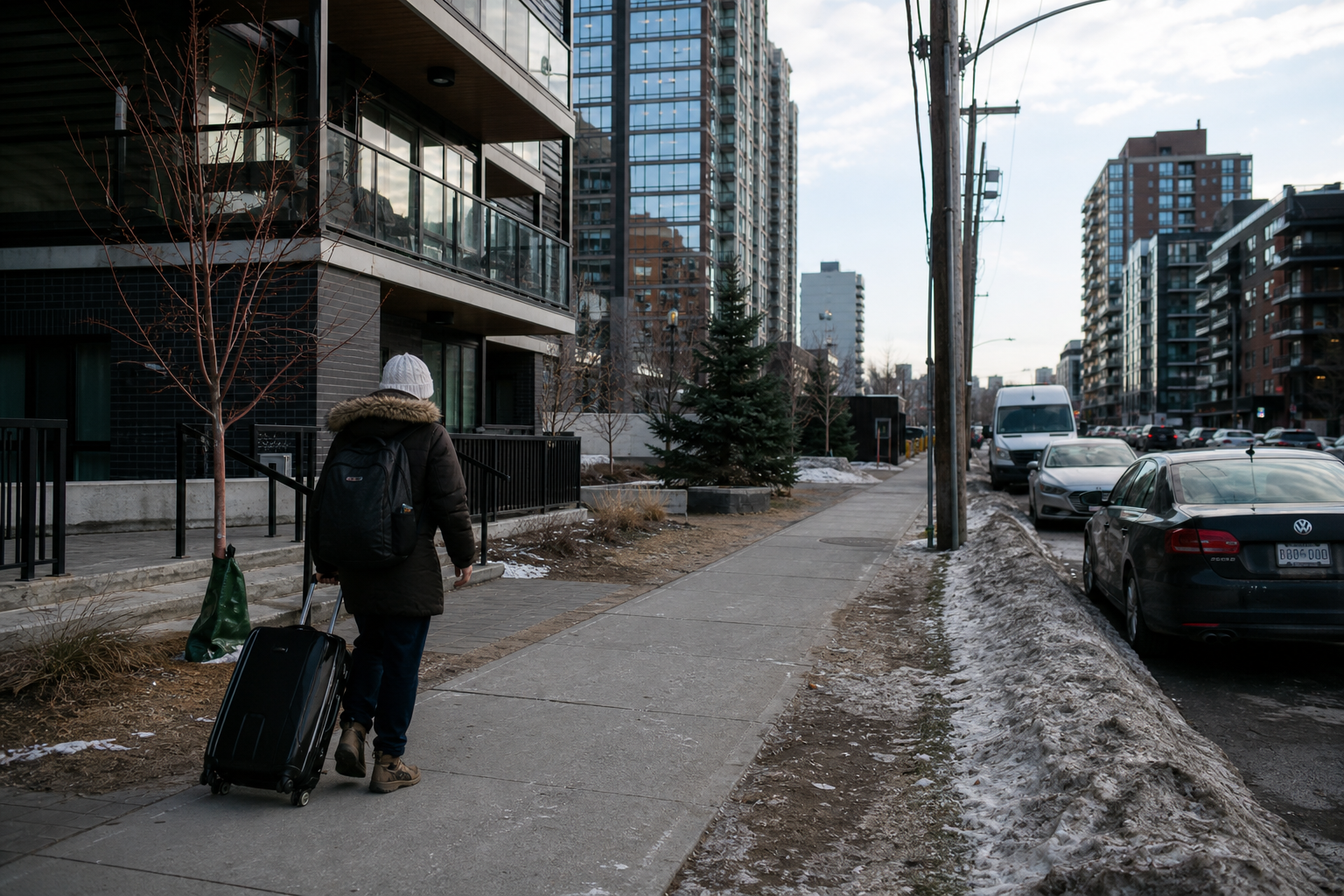

Statistics Canada recorded a population drop of 55,025 people in the first quarter of 2026, the third consecutive decline after years of record growth. The figure surprised no one tracking immigration policy, but it did revive a question buyers have been asking since late 2025: if fewer people are entering the country, shouldn't home prices fall?
They should. In some places, they will. But the mechanism connecting population to price is indirect, delayed, and entirely dependent on what happens to housing supply at the same time.
Why Population Drops Don't Automatically Lower Prices
A smaller population reduces demand for housing. That part is straightforward. What complicates the forecast is that Canada still faces a structural housing shortage measured in the millions of units. The country added 1.8% in 2021/2022, 2.9% in 2022/2023, and 3.0% in 2023/2024 to its population, while housing starts failed to keep pace. Construction costs rose, interest rates climbed, and builders slowed. By early 2026, the gap between households that need housing and units available to them had widened, not closed.
When population growth slows by 0.1% but the supply deficit remains in the high six figures, the net effect on price depends entirely on whether builders respond by adding inventory faster than demand continues to fall. In markets where supply was already extremely tight, a modest population dip barely registers. In markets where supply was looser and driven heavily by temporary residents, the effect shows up faster.
Where the Decline Hits First
The 55,025-person drop is not evenly distributed. Most of it comes from a reduction in non-permanent residents: international students, temporary foreign workers, and other visa holders whose numbers the federal government capped deliberately in late 2024 and 2025. Permanent immigration targets were lowered to 380,000 for 2026, down from over 500,000 in prior years, but that cohort still represents net inflow.
Non-permanent residents concentrate in rental markets near universities and in sectors with large temporary workforces. A rental landlord in a city with three post-secondary institutions will feel a vacancy increase before a homeowner in a suburb thirty kilometres out. The resale market for single-family homes, especially in regions with strong interprovincial migration, remains insulated by a different dynamic entirely.
Alberta's Position as a Counter-Example
Alberta continues to see interprovincial migration gains. Residents priced out of other provinces are moving to Edmonton and Calgary for lower housing costs and energy-sector employment. The "Alberta is Calling" campaign, launched by the provincial government to attract skilled workers, has historically succeeded even when federal immigration slows. Edmonton's benchmark home price remains significantly lower than major centres elsewhere, which creates a floor under local demand that national population statistics do not capture.
Lower interest rates increase affordability for every household with a mortgage pre-approval. A modest population decline, spread across ten provinces, moves the needle much more slowly.
The Timing Lag
Population changes take months to show up in "Sold" prices. A student who leaves in April does not immediately put a rental vacancy into the resale market. A family that delays immigration by six months does not cancel a purchase they were not yet making. The effect, when it arrives, shows up first in rental vacancy rates, then in investor appetite for rental properties, and only later, if supply stays flat, in resale price growth.
Buyers waiting for a price crash tied to this quarter's population drop are making a bet that supply will rise faster than demand continues to fall, and that interest rates will not drop in the interim. Both assumptions require ignoring what has happened over the prior 24 months. Inventory remains the variable that matters most, and it is still historically low.
Sources
Read Next
A One-Time Capital Gain Can Trigger Alternative Minimum Tax Even for Average Canadians
The S&P Looks Stable Because You're Measuring the Wrong Volatility
Clearwater Seafoods Family Backs Prefab Housing as Construction Speed Solution
South Bow sees private equity interest in Prairie Connector following Carney's new mega-deduction announcement