B.C. jobs at risk as Eby warns retaliatory tariffs mark new phase in U.S. trade war
The premier stood in front of cameras earlier this week and said aloud what B.C.'s resource sector has known privately for months: layoffs are coming, and the province cannot stop them. David Eby's acknowledgment that job losses are "likely unavoidable" marks a shift from diplomatic optimism to defensive posture, a recognition that C$27.6 billion in Canadian retaliatory tariffs, announced by Ottawa on August 25, 2026, have moved the trade war from threat to reality.
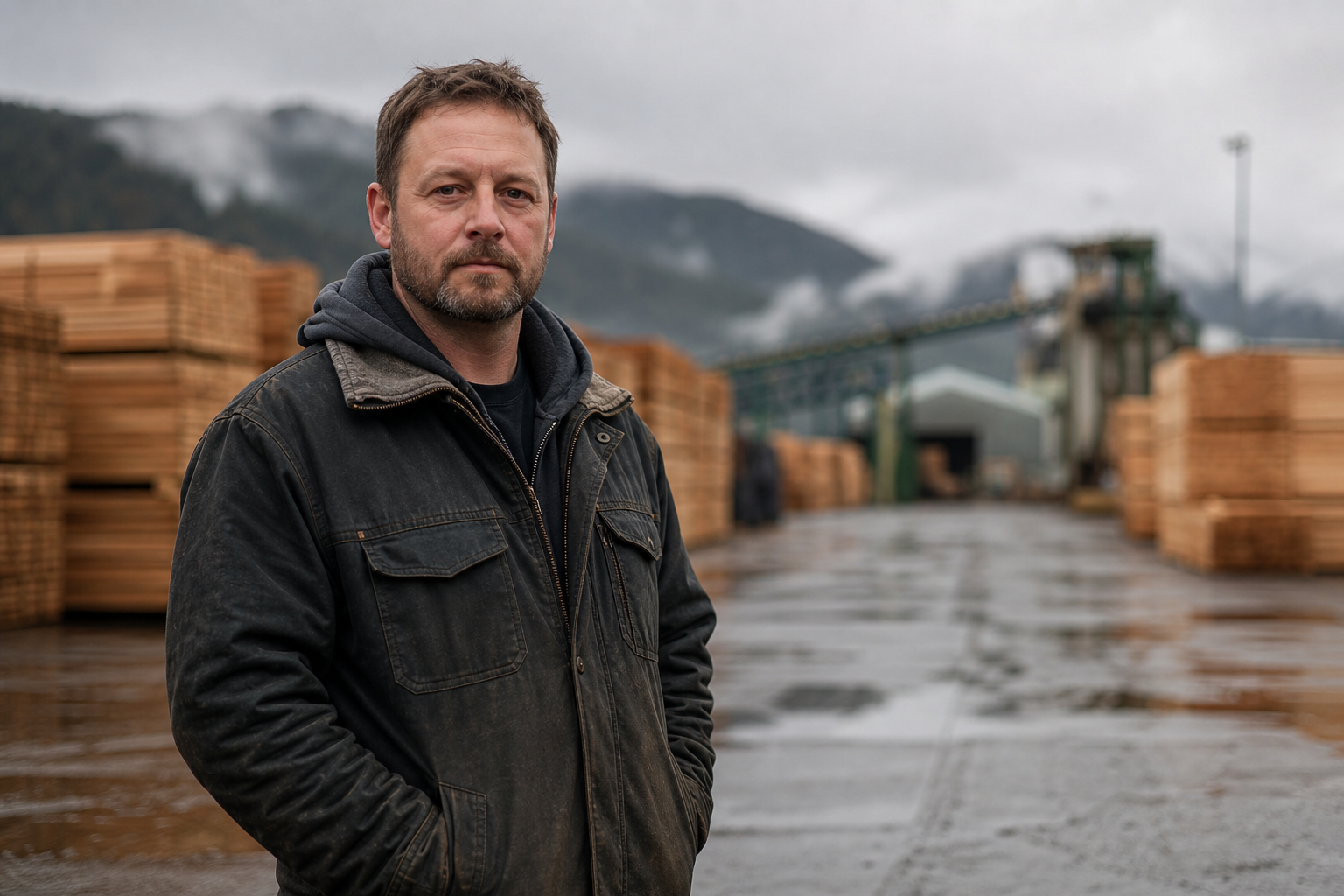
The forestry sector will absorb the worst of it. Softwood lumber has been the central dispute between B.C. and the United States for decades, and current U.S. duties on Canadian exports remain high enough to erase profit margins for Interior producers operating on thin cash flow. Unlike Metro Vancouver's tech corridor or the film industry, which generate revenue largely insulated from physical goods tariffs, the mills and logging operations in Prince George, Kamloops, and the Kootenays are directly in the crosshairs. When a 50% U.S. tariff lands on steel and a retaliatory package hits U.S. consumer goods, the companies hurt first are the ones shipping dimensional lumber south by rail.
Why the "Team Canada" framing matters
Eby's repeated emphasis on alignment with the federal government is not rhetorical decoration. B.C. sends roughly 53% of its total commodity exports to the United States, making it one of the most trade-dependent provinces in the federation. Alberta ships 89% of its exports south. Energy products like oil and gas can weather tariffs better than wood because they move through pipelines and long-term contracts that are harder to interrupt. Mills in the Interior have no such protection.
The "Team Canada" posture also signals that Eby expects Victoria to need Ottawa's fiscal capacity. Provincial programs can subsidize retraining or extend EI-equivalent benefits, but they cannot replace the revenue a shuttered mill generated for a town of 8,000 people. If the Interior's tax base collapses, the federal government will have to backstop it, and Eby is setting the political groundwork for that ask now.
The double-edged retaliation
Canadian tariffs are designed to pressure U.S. policymakers by targeting politically sensitive districts. The C$15.6 billion in earlier tariffs went after steel, aluminum, and consumer products. The recent expansion follows the same playbook. The problem is that retaliation also raises costs for British Columbians who buy those goods, compounding the cost-of-living crisis the province is already managing. A tariff on U.S. machinery means B.C. manufacturers pay more for equipment they cannot source domestically.
This is the trap Eby is acknowledging without stating plainly: retaliatory tariffs are simultaneously economic defense and regressive taxation. They hurt the U.S., but they also hurt here, and the people who feel it first are not the ones who can absorb the shock.
Where the political risk actually sits
The Interior is where this gets complicated for Eby. Urban ridings along the coast are cushioned by service-sector employment and international investment that does not move through U.S. customs. Rural ridings built on resource extraction have no such buffer. If job losses concentrate in the Interior while Vancouver Island tech workers see raises, the province's existing urban-rural divide sharpens into a knife edge.
The political narrative Eby needs is one where the crisis was unavoidable, the response was coordinated, and Ottawa stepped up. The narrative he cannot afford is one where the Interior was sacrificed while the coast stayed comfortable. That is why his public statements this month have been unusually explicit about the pain and unusually vague about solutions.
Cross-border goods trade averages C$3.6 billion daily. When tariffs hit, jobs disappear. The real question is how many disappear, how fast they vanish, and who pays the bill afterward.



The premier stood in front of cameras earlier this week and said aloud what B.C.'s resource sector has known privately for months: layoffs are coming, and the province cannot stop them. David Eby's acknowledgment that job losses are "likely unavoidable" marks a shift from diplomatic optimism to defensive posture, a recognition that C$27.6 billion in Canadian retaliatory tariffs, announced by Ottawa on August 25, 2026, have moved the trade war from threat to reality.
The forestry sector will absorb the worst of it. Softwood lumber has been the central dispute between B.C. and the United States for decades, and current U.S. duties on Canadian exports remain high enough to erase profit margins for Interior producers operating on thin cash flow. Unlike Metro Vancouver's tech corridor or the film industry, which generate revenue largely insulated from physical goods tariffs, the mills and logging operations in Prince George, Kamloops, and the Kootenays are directly in the crosshairs. When a 50% U.S. tariff lands on steel and a retaliatory package hits U.S. consumer goods, the companies hurt first are the ones shipping dimensional lumber south by rail.
Why the "Team Canada" framing matters
Eby's repeated emphasis on alignment with the federal government is not rhetorical decoration. B.C. sends roughly 53% of its total commodity exports to the United States, making it one of the most trade-dependent provinces in the federation. Alberta ships 89% of its exports south. Energy products like oil and gas can weather tariffs better than wood because they move through pipelines and long-term contracts that are harder to interrupt. Mills in the Interior have no such protection.
The "Team Canada" posture also signals that Eby expects Victoria to need Ottawa's fiscal capacity. Provincial programs can subsidize retraining or extend EI-equivalent benefits, but they cannot replace the revenue a shuttered mill generated for a town of 8,000 people. If the Interior's tax base collapses, the federal government will have to backstop it, and Eby is setting the political groundwork for that ask now.
The double-edged retaliation
Canadian tariffs are designed to pressure U.S. policymakers by targeting politically sensitive districts. The C$15.6 billion in earlier tariffs went after steel, aluminum, and consumer products. The recent expansion follows the same playbook. The problem is that retaliation also raises costs for British Columbians who buy those goods, compounding the cost-of-living crisis the province is already managing. A tariff on U.S. machinery means B.C. manufacturers pay more for equipment they cannot source domestically.
This is the trap Eby is acknowledging without stating plainly: retaliatory tariffs are simultaneously economic defense and regressive taxation. They hurt the U.S., but they also hurt here, and the people who feel it first are not the ones who can absorb the shock.
Where the political risk actually sits
The Interior is where this gets complicated for Eby. Urban ridings along the coast are cushioned by service-sector employment and international investment that does not move through U.S. customs. Rural ridings built on resource extraction have no such buffer. If job losses concentrate in the Interior while Vancouver Island tech workers see raises, the province's existing urban-rural divide sharpens into a knife edge.
The political narrative Eby needs is one where the crisis was unavoidable, the response was coordinated, and Ottawa stepped up. The narrative he cannot afford is one where the Interior was sacrificed while the coast stayed comfortable. That is why his public statements this month have been unusually explicit about the pain and unusually vague about solutions.
Cross-border goods trade averages C$3.6 billion daily. When tariffs hit, jobs disappear. The real question is how many disappear, how fast they vanish, and who pays the bill afterward.
Sources
Read Next
August Sales Fell 6.9%: What CREA's Numbers Actually Reveal About Buyer Hesitation
Canada's Resource Advantage: What Global Investors Are Betting On in 2026
Ohio Lost $4.8 Billion to Trump's Tariffs in 90 Days
How Much Identity Theft Coverage Your Family Needs, Based on Who's Actually at Risk