August GDP Will Show Growth, but Captures Only Ten Days of 50% Tariffs
Economists expect Canada's August GDP figure to show slight growth. That's welcome news, and it will be widely read as a sign the economy is holding up. But if you're weighing a hire, a lease, an equipment purchase or a new investment, that number can't tell you the thing you most need to know: whether your customers will keep buying at prices that work for you.
If you've ever read an encouraging economic headline while still wondering whether a key customer will renew an order or accept your next price increase, you know how little reassurance a national average offers. Growth measured mostly before a new trade barrier cannot tell you how well businesses will withstand it. Keeping that in mind protects you from committing cash on half a picture.
Why ten days of tariffs can't tell you how businesses will hold up
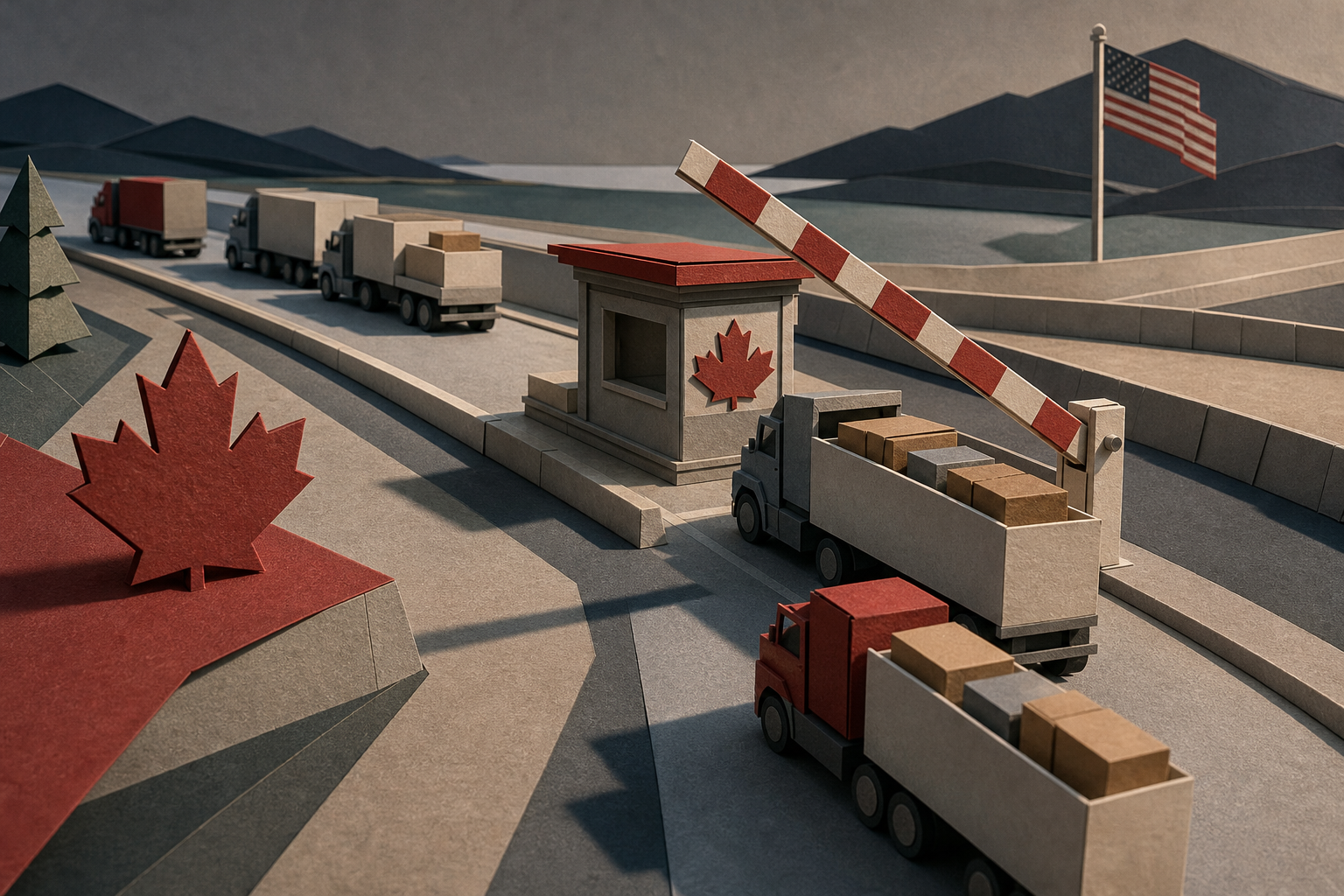
New U.S. tariffs on a broad range of Canadian goods took effect on August 22, 2026. The headline rate is 50%, though the actual rate varies by product, with some goods facing 10%, 15% or 25%. August 22 to August 31 is ten calendar days. The other three weeks of the month happened under the old rules.
Even those ten days don't represent ten days of full effects. Goods already in transit still crossed. Contracts priced earlier still had to be honoured. Buyers who saw the deadline coming may have ordered ahead, pulling sales into early August and making the month look stronger than the conditions that followed it. Statistics Canada reports that retail sales volume rose 1.2% in August. That's a healthy figure, and it describes a month spent mostly before the tariffs bit.
The bigger effects tend to arrive later. A U.S. buyer finishes the current contract, then sources elsewhere. A supplier absorbs the cost for a quarter, then raises prices. Hiring slows months after the order book thins. A national total can also rise while particular industries shrink, because strength in one part of the economy covers weakness in another.
So the useful question for you is which of your customers, suppliers or investments depend on trade that these tariffs actually cover. An Alberta business doesn't need to ship across the border to feel this. A customer who exports covered goods may cut back on what they buy from you, or start paying slower.
How to protect a commitment from risks the August number can't settle
The threat from tariffs works through three channels: margins, customer relationships and investment. Each one moves slowly, which is why a single month says so little about it.
Start with coverage. Find out whether the products your business or your customers' businesses sell fall under the 50% rate, a lower one, or none. The headline rate isn't the rate on every Canadian export, and the difference changes the math entirely.
Then watch your own early signals alongside GDP. New orders, cancellations and how quickly customers pay will show pressure on your cash flow long before a national report does. If a reliable customer who paid in 30 days starts taking 50, that tells you more than any monthly total.
Before signing a large commitment, run it against weaker sales or thinner margins. This doesn't assume a downturn is coming. It shows whether you'd still have room to manoeuvre if one arrived. If an Edmonton company's new lease only works at this year's sales level, that's worth knowing before the ink dries.
Finally, separate a temporary dip from a lasting change. A slow month is recoverable. A customer who moves their supply chain, or an industry that shelves expansion plans, changes the long-term value of a business or an investment.
August can offer evidence of growth without offering evidence of resilience. Those are different things, and only the second should carry the weight of a major commitment. This week, pick one pending investment or business decision and name the customer-demand assumption it rests on. Then check whether that assumption still holds after August 22.



Economists expect Canada's August GDP figure to show slight growth. That's welcome news, and it will be widely read as a sign the economy is holding up. But if you're weighing a hire, a lease, an equipment purchase or a new investment, that number can't tell you the thing you most need to know: whether your customers will keep buying at prices that work for you.
If you've ever read an encouraging economic headline while still wondering whether a key customer will renew an order or accept your next price increase, you know how little reassurance a national average offers. Growth measured mostly before a new trade barrier cannot tell you how well businesses will withstand it. Keeping that in mind protects you from committing cash on half a picture.
Why ten days of tariffs can't tell you how businesses will hold up
New U.S. tariffs on a broad range of Canadian goods took effect on August 22, 2026. The headline rate is 50%, though the actual rate varies by product, with some goods facing 10%, 15% or 25%. August 22 to August 31 is ten calendar days. The other three weeks of the month happened under the old rules.
Even those ten days don't represent ten days of full effects. Goods already in transit still crossed. Contracts priced earlier still had to be honoured. Buyers who saw the deadline coming may have ordered ahead, pulling sales into early August and making the month look stronger than the conditions that followed it. Statistics Canada reports that retail sales volume rose 1.2% in August. That's a healthy figure, and it describes a month spent mostly before the tariffs bit.
The bigger effects tend to arrive later. A U.S. buyer finishes the current contract, then sources elsewhere. A supplier absorbs the cost for a quarter, then raises prices. Hiring slows months after the order book thins. A national total can also rise while particular industries shrink, because strength in one part of the economy covers weakness in another.
So the useful question for you is which of your customers, suppliers or investments depend on trade that these tariffs actually cover. An Alberta business doesn't need to ship across the border to feel this. A customer who exports covered goods may cut back on what they buy from you, or start paying slower.
How to protect a commitment from risks the August number can't settle
The threat from tariffs works through three channels: margins, customer relationships and investment. Each one moves slowly, which is why a single month says so little about it.
Start with coverage. Find out whether the products your business or your customers' businesses sell fall under the 50% rate, a lower one, or none. The headline rate isn't the rate on every Canadian export, and the difference changes the math entirely.
Then watch your own early signals alongside GDP. New orders, cancellations and how quickly customers pay will show pressure on your cash flow long before a national report does. If a reliable customer who paid in 30 days starts taking 50, that tells you more than any monthly total.
Before signing a large commitment, run it against weaker sales or thinner margins. This doesn't assume a downturn is coming. It shows whether you'd still have room to manoeuvre if one arrived. If an Edmonton company's new lease only works at this year's sales level, that's worth knowing before the ink dries.
Finally, separate a temporary dip from a lasting change. A slow month is recoverable. A customer who moves their supply chain, or an industry that shelves expansion plans, changes the long-term value of a business or an investment.
August can offer evidence of growth without offering evidence of resilience. Those are different things, and only the second should carry the weight of a major commitment. This week, pick one pending investment or business decision and name the customer-demand assumption it rests on. Then check whether that assumption still holds after August 22.
Read Next
Five Money Checks Canadian Snowbirds Should Finish Before Heading South
Canadian Bank Security Assumes a Human Is Logging In. AI Agents Break That
Before Storm Winds Arrive, Turn 5 Yard Hazards Into Protective Buffers
A 25 Basis Point Hike Doesn't Erase Variable's Long-Run Edge Over Fixed