A Frank Lloyd Wright Protégé Built This Half-Acre Bluffs House in 1957. It Just Hit the Market.
The architect was Charles McIlveen. That matters.
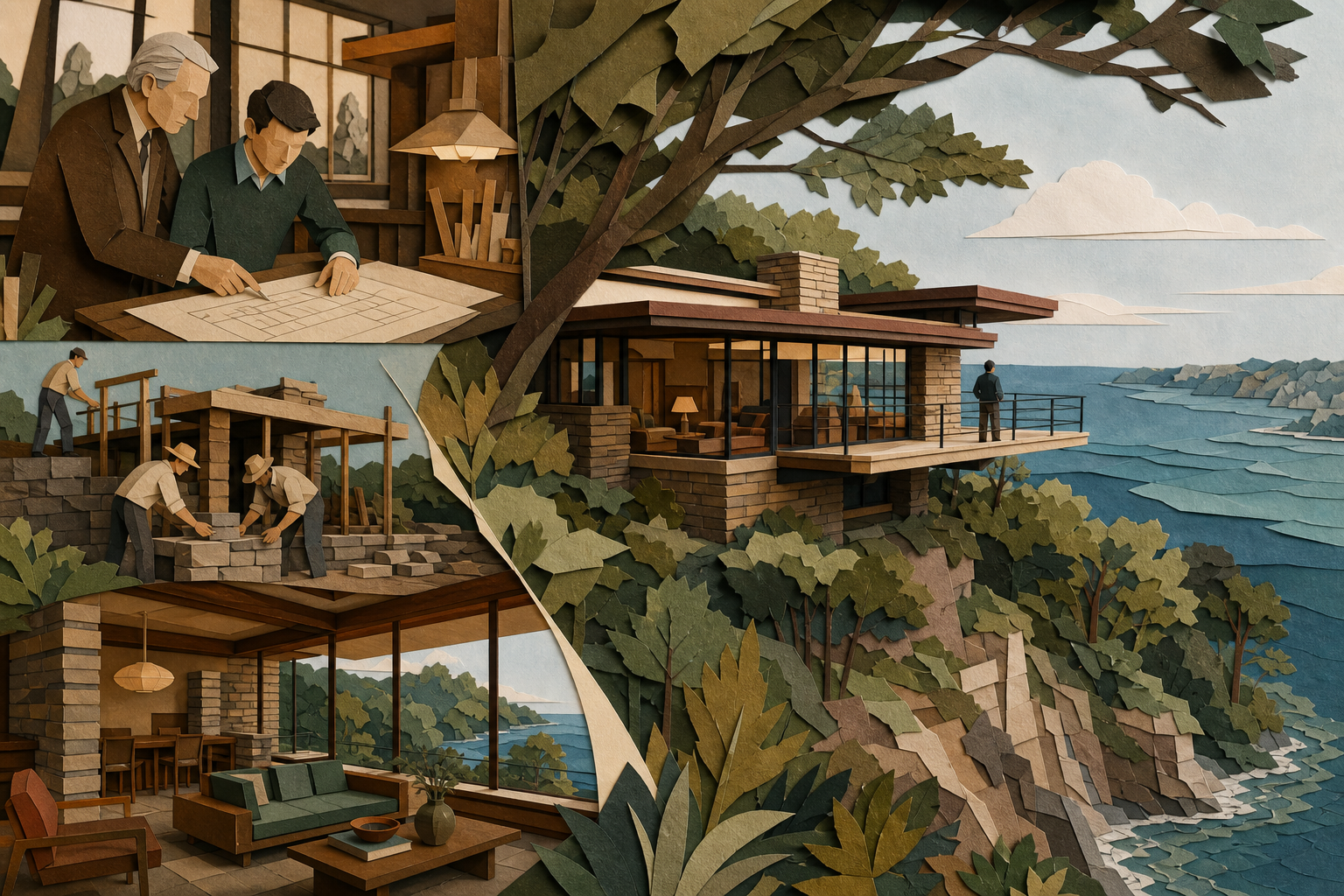
McIlveen trained under Frank Lloyd Wright at Taliesin, which means he didn't just admire Wright's principles from a distance. He worked inside them. When McIlveen designed 2 Ledge Road in 1957, on a half-acre ravine lot in Cliffcrest, he carried that influence into the bones of the structure. The home sits southeast-facing, surrounded by mature trees, with unobstructed water views across the bluffs. It just hit the market at $1,999,999.
What Wright's Training Actually Meant in Practice
Taliesin wasn't architecture school. It was something closer to an apprenticeship system, where students lived on-site, built structures by hand, and absorbed Wright's philosophy through daily practice rather than lectures. The core idea was integration: a building should grow out of its site, not sit on top of it. McIlveen applied that directly here. The house is oriented toward the water, deliberately embedded in the landscape rather than perched above it. Windows frame the ravine. The footprint respects the topography instead of flattening it.
This is not the same as "inspired by Wright," which is what most mid-century modern listings claim when they spot a horizontal roofline and some wood. McIlveen had the actual training, the actual exposure to Wright's obsessive attention to siting, materials, and how light moves through a room. That shows up in how the house sits on its lot, how the interior volumes relate to the exterior views, and in the restraint of the detailing.
Why Cliffcrest Matters More Than Most Buyers Realize
Cliffcrest doesn't get the same attention as the Beach or Leslieville, but its ravine properties have something increasingly scarce in Toronto: real distance between you and the next structure. The lot here is a full half-acre, which in a city where 25-foot lots are now standard, feels almost absurd. Mature tree cover. Actual seclusion. The kind of privacy that used to be baseline in midcentury suburban planning and is now a luxury good.
The bluffs themselves are a geological feature that predates the city. They run roughly 15 kilometers along Toronto's eastern waterfront, rising as high as 90 meters in places. Properties along this edge come with views that don't depend on which condo tower goes up next. They depend on Lake Ontario, which isn't going anywhere.
What You're Actually Buying
At just under $2 million, this is not priced as a teardown. The market is treating it as a functioning home with architectural credibility, which is the right read. The McIlveen connection gives it a claim that almost no other listing in this price band can make. Not "Wright-inspired." Not "reminiscent of." Designed by someone who actually learned how to draft under the man himself.
The bluffs location is the second asset. Cliffcrest hasn't seen the same price run-up as neighborhoods closer to downtown, but ravine properties with water views have held value through every correction since 2017. Scarcity has weight.
The house itself is mid-century modern done correctly: embedded in the site, designed around the view, proportioned to feel spacious without unnecessary square footage. If you're looking for Wright's fingerprints, they're in the siting, the horizontality, and the way the structure defers to the landscape rather than dominating it.
That's the proposition. Half an acre. Water views. A Wright protégé's name on the plans. In a market full of subdivision semis and stacked townhomes, this is a different category of asset entirely.



The architect was Charles McIlveen. That matters.
McIlveen trained under Frank Lloyd Wright at Taliesin, which means he didn't just admire Wright's principles from a distance. He worked inside them. When McIlveen designed 2 Ledge Road in 1957, on a half-acre ravine lot in Cliffcrest, he carried that influence into the bones of the structure. The home sits southeast-facing, surrounded by mature trees, with unobstructed water views across the bluffs. It just hit the market at $1,999,999.
What Wright's Training Actually Meant in Practice
Taliesin wasn't architecture school. It was something closer to an apprenticeship system, where students lived on-site, built structures by hand, and absorbed Wright's philosophy through daily practice rather than lectures. The core idea was integration: a building should grow out of its site, not sit on top of it. McIlveen applied that directly here. The house is oriented toward the water, deliberately embedded in the landscape rather than perched above it. Windows frame the ravine. The footprint respects the topography instead of flattening it.
This is not the same as "inspired by Wright," which is what most mid-century modern listings claim when they spot a horizontal roofline and some wood. McIlveen had the actual training, the actual exposure to Wright's obsessive attention to siting, materials, and how light moves through a room. That shows up in how the house sits on its lot, how the interior volumes relate to the exterior views, and in the restraint of the detailing.
Why Cliffcrest Matters More Than Most Buyers Realize
Cliffcrest doesn't get the same attention as the Beach or Leslieville, but its ravine properties have something increasingly scarce in Toronto: real distance between you and the next structure. The lot here is a full half-acre, which in a city where 25-foot lots are now standard, feels almost absurd. Mature tree cover. Actual seclusion. The kind of privacy that used to be baseline in midcentury suburban planning and is now a luxury good.
The bluffs themselves are a geological feature that predates the city. They run roughly 15 kilometers along Toronto's eastern waterfront, rising as high as 90 meters in places. Properties along this edge come with views that don't depend on which condo tower goes up next. They depend on Lake Ontario, which isn't going anywhere.
What You're Actually Buying
At just under $2 million, this is not priced as a teardown. The market is treating it as a functioning home with architectural credibility, which is the right read. The McIlveen connection gives it a claim that almost no other listing in this price band can make. Not "Wright-inspired." Not "reminiscent of." Designed by someone who actually learned how to draft under the man himself.
The bluffs location is the second asset. Cliffcrest hasn't seen the same price run-up as neighborhoods closer to downtown, but ravine properties with water views have held value through every correction since 2017. Scarcity has weight.
The house itself is mid-century modern done correctly: embedded in the site, designed around the view, proportioned to feel spacious without unnecessary square footage. If you're looking for Wright's fingerprints, they're in the siting, the horizontality, and the way the structure defers to the landscape rather than dominating it.
That's the proposition. Half an acre. Water views. A Wright protégé's name on the plans. In a market full of subdivision semis and stacked townhomes, this is a different category of asset entirely.
Read Next
GIC rates stall as bonds retreat: why deposit accounts still lag
Why Your Employer's Life Insurance Probably Covers Less Than You Think
August Sales Fell 6.9%: What CREA's Numbers Actually Reveal About Buyer Hesitation
Canada's Resource Advantage: What Global Investors Are Betting On in 2026