Vancouver Home Sales Rose 10% in June. Here's What It Signals for Buyers and Sellers.
The Bank of Canada's easing cycle has pulled a specific cohort off the fence: households who spent the last eighteen months watching mortgage rates fall but waiting for proof the decline would stick. June's numbers suggest that proof arrived.
Greater Vancouver Realtors reported a 10% year-over-year increase in residential sales for June 2026, marking the first sustained uptick since the rate-shock period of 2023-2025. What matters is not the headline number, June is always active, but the composition. Detached homes, attached properties, and apartments all moved. When demand rises uniformly across housing types, the market is repricing the cost of waiting.
The Rate Effect Isn't Linear
Most buyers misread how rate changes affect behavior. A drop from 5.25% to 4.75% doesn't just reduce monthly carrying costs by $140 on a $600,000 mortgage. It signals that the pain threshold has passed. Buyers who were approved at stress-tested rates twelve months ago are still approved today, but the psychological barrier shifted. The question changed from "Can I afford this?" to "Will I regret waiting?"
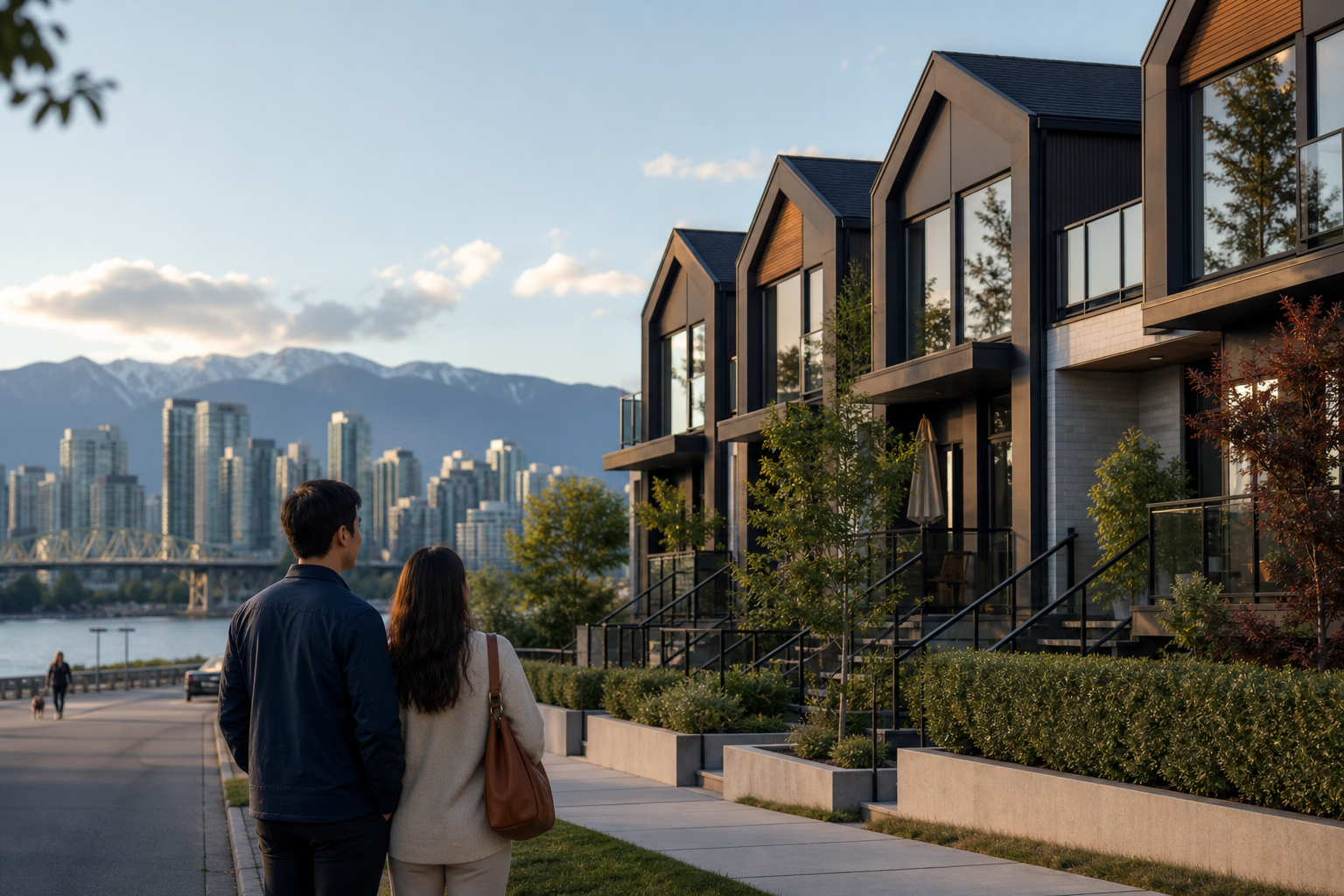
That shift shows up in townhome demand most clearly. Townhomes, the segment sitting between unaffordable detached houses and too-small apartments, saw the tightest sales-to-active-listings ratios in June. Families priced out of single-family homes have been renting larger apartments and waiting. They stopped waiting.
Inventory Finally Breathing
June's sales jump would have triggered bidding wars in 2021. It didn't in 2026 because new listings rose alongside demand. Not dramatically, supply remains structurally constrained across Metro Vancouver, but enough to prevent runaway price escalation in most sub-markets. The composite benchmark price held above $1.2 million without spiking higher.
This is what a balanced market looks like after a correction. Sales increase, listings increase, prices stabilize. Sellers aren't panicking into discounts. Buyers aren't submitting offers with no subjects. The fever broke, but the patient is still expensive.
The reason inventory improved has less to do with homeowner sentiment and more to do with forced moves. British Columbia's short-term rental restrictions, fully implemented in 2024-2025, converted a slice of investor-held condos back into long-term rental supply or sale inventory. Transit-oriented development legislation passed in the same window reshaped where speculative capital flows. Investors who bought pre-construction units betting on Airbnb income are now selling into a market where that income model is dead.
What the 10% Means for Timing
For buyers: the window where rates fall further without demand surging closed in June. The Bank of Canada's policy rate has stabilized in the mid-4% range. Another 50 basis points of cuts are possible, but expecting a return to the 1.79% fixed rates of 2021 is planning around fiction. If you are qualified today and find a property that works, the math will not improve meaningfully by waiting six months. It will get noisier.
For sellers: balanced does not mean easy. A 10% sales increase off a suppressed baseline still leaves transaction volumes below the 2015-2019 average. Properties that are priced correctly move. Properties priced at 2022 peaks sit. The stress test hasn't gone anywhere, buyers who qualified at higher rates are still disqualified today, which keeps the rental market under extreme pressure and limits who can bid on your listing.
The deeper reality is that Vancouver's affordability problem wasn't solved by the slowdown and won't be solved by this uptick. June's numbers show that the people who can buy are buying again. They don't show housing becoming accessible to the people who couldn't buy in the first place.



The Bank of Canada's easing cycle has pulled a specific cohort off the fence: households who spent the last eighteen months watching mortgage rates fall but waiting for proof the decline would stick. June's numbers suggest that proof arrived.
Greater Vancouver Realtors reported a 10% year-over-year increase in residential sales for June 2026, marking the first sustained uptick since the rate-shock period of 2023-2025. What matters is not the headline number, June is always active, but the composition. Detached homes, attached properties, and apartments all moved. When demand rises uniformly across housing types, the market is repricing the cost of waiting.
The Rate Effect Isn't Linear
Most buyers misread how rate changes affect behavior. A drop from 5.25% to 4.75% doesn't just reduce monthly carrying costs by $140 on a $600,000 mortgage. It signals that the pain threshold has passed. Buyers who were approved at stress-tested rates twelve months ago are still approved today, but the psychological barrier shifted. The question changed from "Can I afford this?" to "Will I regret waiting?"
That shift shows up in townhome demand most clearly. Townhomes, the segment sitting between unaffordable detached houses and too-small apartments, saw the tightest sales-to-active-listings ratios in June. Families priced out of single-family homes have been renting larger apartments and waiting. They stopped waiting.
Inventory Finally Breathing
June's sales jump would have triggered bidding wars in 2021. It didn't in 2026 because new listings rose alongside demand. Not dramatically, supply remains structurally constrained across Metro Vancouver, but enough to prevent runaway price escalation in most sub-markets. The composite benchmark price held above $1.2 million without spiking higher.
This is what a balanced market looks like after a correction. Sales increase, listings increase, prices stabilize. Sellers aren't panicking into discounts. Buyers aren't submitting offers with no subjects. The fever broke, but the patient is still expensive.
The reason inventory improved has less to do with homeowner sentiment and more to do with forced moves. British Columbia's short-term rental restrictions, fully implemented in 2024-2025, converted a slice of investor-held condos back into long-term rental supply or sale inventory. Transit-oriented development legislation passed in the same window reshaped where speculative capital flows. Investors who bought pre-construction units betting on Airbnb income are now selling into a market where that income model is dead.
What the 10% Means for Timing
For buyers: the window where rates fall further without demand surging closed in June. The Bank of Canada's policy rate has stabilized in the mid-4% range. Another 50 basis points of cuts are possible, but expecting a return to the 1.79% fixed rates of 2021 is planning around fiction. If you are qualified today and find a property that works, the math will not improve meaningfully by waiting six months. It will get noisier.
For sellers: balanced does not mean easy. A 10% sales increase off a suppressed baseline still leaves transaction volumes below the 2015-2019 average. Properties that are priced correctly move. Properties priced at 2022 peaks sit. The stress test hasn't gone anywhere, buyers who qualified at higher rates are still disqualified today, which keeps the rental market under extreme pressure and limits who can bid on your listing.
The deeper reality is that Vancouver's affordability problem wasn't solved by the slowdown and won't be solved by this uptick. June's numbers show that the people who can buy are buying again. They don't show housing becoming accessible to the people who couldn't buy in the first place.
Read Next
GIC rates stall as bonds retreat: why deposit accounts still lag
Why Your Employer's Life Insurance Probably Covers Less Than You Think
August Sales Fell 6.9%: What CREA's Numbers Actually Reveal About Buyer Hesitation
Canada's Resource Advantage: What Global Investors Are Betting On in 2026