The School District Premium Now Costs Halifax Buyers $87,000 More Than It Should
A 1,900-square-foot bungalow in Clayton Park lists at $487,000. Same house, same age, same condition, two kilometers south in the Mainland North catchment zone: $574,000. The difference isn't the house. It's the Fraser Institute ranking.
Halifax buyers in 2026 are paying premiums of 15-25% to land inside boundaries of schools that score in the top decile provincially. That's not new. What's new is the absolute dollar spread. At a $550,000 median, the premium runs roughly $87,000 for what is functionally the same housing stock. Five years ago, when the Halifax median sat closer to $360,000, the same percentage premium cost $58,000. The gap widened not because school quality changed, but because Halifax home prices rose 53% between 2020 and 2025 while inventory stayed flat.
The mechanics are straightforward. Fraser Institute rankings get published each fall. Realtors embed the data in listings. Parents sort by postal code. Demand concentrates. Sellers extract the premium because they can. The system prices public education the way private school tuition does, except the cost is hidden in the mortgage instead of an invoice.
Where the $87,000 Actually Goes
It doesn't go to the schools. Nova Scotia allocates per-student funding at the provincial level, so the "top" school gets roughly the same budget as the one two kilometers away. The premium flows entirely to the previous homeowner. You're buying their exit liquidity, not better teaching.
The causality is backward, anyway. Schools rank high because the parents are high-income, not because the teachers are better. A 2022 CMHC analysis of Ontario school catchments found that 68% of ranking variance correlated with median household income in the zone. The rankings measure the neighborhood's wealth. The education premium is a wealth tax with no public revenue.
Scenario A: Buy the Ranking
Mark and Lena make a combined $140,000. They have $95,000 saved and qualify for about $580,000. They buy the $574,000 home in the top-ranked zone at 4.6% fixed over 5 years. Monthly carrying cost: roughly $3,680 after property tax and insurance. Over five years, they pay about $109,000 in interest. Their child attends the high-ranked school. At sale, if the premium holds, they recoup the $87,000 spread. If the boundary gets redrawn or the ranking slips, they don't.
Scenario B: Skip the Ranking
They buy the $487,000 home in the adjacent zone. Same rate, same term. Monthly cost: $3,120. Over five years, interest totals about $92,000. The $560/month savings ($6,720/year) can pay for private tutoring, extracurriculars, or seed an RESP. Their child attends a school that, by provincial funding formulas, has the same teacher-to-student ratio and the same curriculum. If they invest the monthly difference at 5% in a TFSA, they clear $38,000 after five years. That's $38,000 they didn't have to borrow or pay interest on.
The spread narrows to near-zero if you're staying for 15+ years and plan to sell into the same market dynamics. It widens badly if Halifax's supply crunch eases. The city issued permits for 4,200 new units in 2025, most of them mid-density infill in historically single-family zones. If those units land inside top-ranked catchments, the scarcity premium evaporates. Buyers who paid $574,000 in 2026 will watch comparable homes list at $510,000 in 2029 as supply fills in.
The recommendation isn't universal. If resale is your primary concern and you're confident Halifax's inventory stays constrained, pay the premium. If your timeline is under 7 years or you think mid-density zoning will actually happen, the $87,000 is a bet you'll probably lose.
The ranking doesn't measure the school. It measures who can afford to live near it. You're not buying education. You're buying a lottery ticket on whether the next buyer will pay the same premium you did.


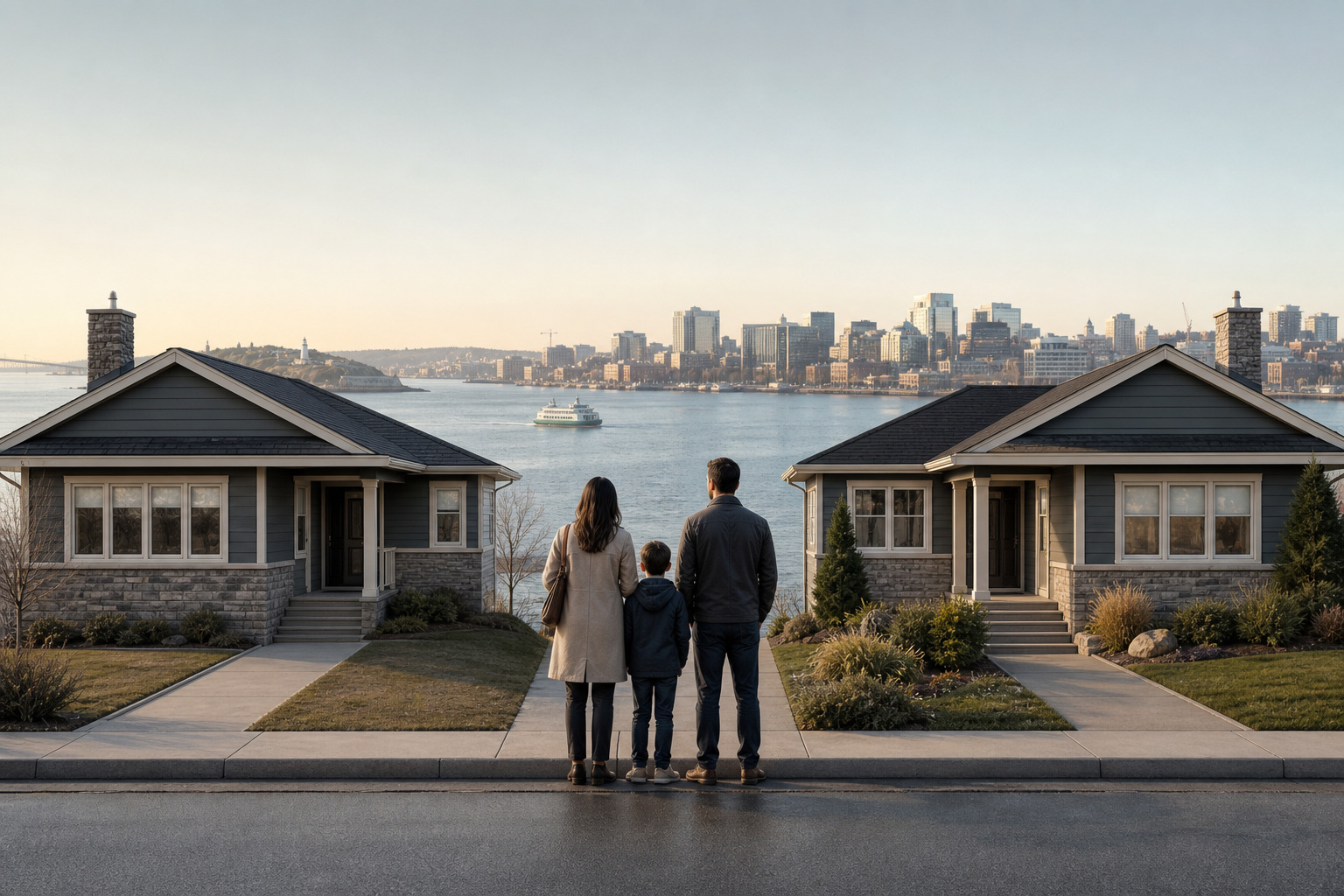

A 1,900-square-foot bungalow in Clayton Park lists at $487,000. Same house, same age, same condition, two kilometers south in the Mainland North catchment zone: $574,000. The difference isn't the house. It's the Fraser Institute ranking.
Halifax buyers in 2026 are paying premiums of 15-25% to land inside boundaries of schools that score in the top decile provincially. That's not new. What's new is the absolute dollar spread. At a $550,000 median, the premium runs roughly $87,000 for what is functionally the same housing stock. Five years ago, when the Halifax median sat closer to $360,000, the same percentage premium cost $58,000. The gap widened not because school quality changed, but because Halifax home prices rose 53% between 2020 and 2025 while inventory stayed flat.
The mechanics are straightforward. Fraser Institute rankings get published each fall. Realtors embed the data in listings. Parents sort by postal code. Demand concentrates. Sellers extract the premium because they can. The system prices public education the way private school tuition does, except the cost is hidden in the mortgage instead of an invoice.
Where the $87,000 Actually Goes
It doesn't go to the schools. Nova Scotia allocates per-student funding at the provincial level, so the "top" school gets roughly the same budget as the one two kilometers away. The premium flows entirely to the previous homeowner. You're buying their exit liquidity, not better teaching.
The causality is backward, anyway. Schools rank high because the parents are high-income, not because the teachers are better. A 2022 CMHC analysis of Ontario school catchments found that 68% of ranking variance correlated with median household income in the zone. The rankings measure the neighborhood's wealth. The education premium is a wealth tax with no public revenue.
Scenario A: Buy the Ranking
Mark and Lena make a combined $140,000. They have $95,000 saved and qualify for about $580,000. They buy the $574,000 home in the top-ranked zone at 4.6% fixed over 5 years. Monthly carrying cost: roughly $3,680 after property tax and insurance. Over five years, they pay about $109,000 in interest. Their child attends the high-ranked school. At sale, if the premium holds, they recoup the $87,000 spread. If the boundary gets redrawn or the ranking slips, they don't.
Scenario B: Skip the Ranking
They buy the $487,000 home in the adjacent zone. Same rate, same term. Monthly cost: $3,120. Over five years, interest totals about $92,000. The $560/month savings ($6,720/year) can pay for private tutoring, extracurriculars, or seed an RESP. Their child attends a school that, by provincial funding formulas, has the same teacher-to-student ratio and the same curriculum. If they invest the monthly difference at 5% in a TFSA, they clear $38,000 after five years. That's $38,000 they didn't have to borrow or pay interest on.
The spread narrows to near-zero if you're staying for 15+ years and plan to sell into the same market dynamics. It widens badly if Halifax's supply crunch eases. The city issued permits for 4,200 new units in 2025, most of them mid-density infill in historically single-family zones. If those units land inside top-ranked catchments, the scarcity premium evaporates. Buyers who paid $574,000 in 2026 will watch comparable homes list at $510,000 in 2029 as supply fills in.
The recommendation isn't universal. If resale is your primary concern and you're confident Halifax's inventory stays constrained, pay the premium. If your timeline is under 7 years or you think mid-density zoning will actually happen, the $87,000 is a bet you'll probably lose.
The ranking doesn't measure the school. It measures who can afford to live near it. You're not buying education. You're buying a lottery ticket on whether the next buyer will pay the same premium you did.
Read Next
GIC rates stall as bonds retreat: why deposit accounts still lag
Why Your Employer's Life Insurance Probably Covers Less Than You Think
August Sales Fell 6.9%: What CREA's Numbers Actually Reveal About Buyer Hesitation
Canada's Resource Advantage: What Global Investors Are Betting On in 2026