Semi-Detached Sales Drop 6% as Toronto Sellers Pull Back in July 2026
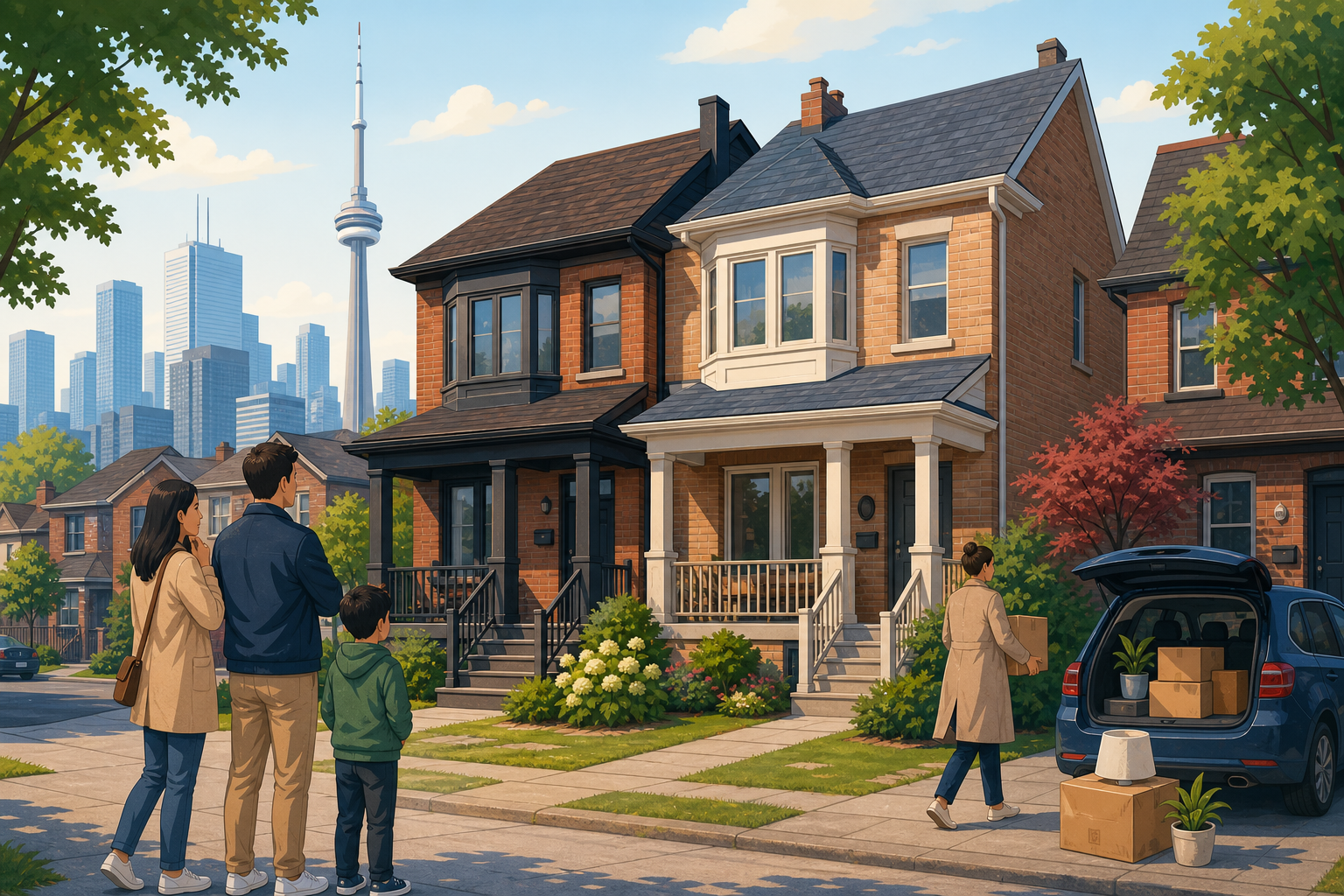
A $964,922 price tag for a semi-detached home in the Greater Toronto Area represents a 7.4% drop from the same month last year. That correction, the steepest among all freehold categories, arrives at the same time new listings are falling faster than sales, a combination that doesn't fit the usual recession playbook.
The Toronto Regional Real Estate Board's July 2026 numbers show 5.9% fewer semi-detached transactions than a year earlier. Townhouses followed with a 2.7% decline. Both segments sit in the middle of the Toronto ownership ladder, where families trading up from condos meet empty-nesters trading down from detached houses. When that engine stalls, it's usually because monthly debt service costs have squeezed buyers out of the market. The twist is that sellers aren't rushing in to fill the gap.
New listings dropped across the GTA in July, a reversal from the inventory surge earlier in 2026. That suggests homeowners who might have sold six months ago are now holding. The decision to wait makes sense if you believe prices have stopped falling and the next move is sideways or slightly up. It makes less sense if you're relying on sale proceeds to fund a move or retirement. What it signals is confidence returning, or at least the exhaustion of forced sales.
The inventory paradox
Lower sales usually mean weaker demand. Lower listings usually mean tighter supply. When both happen together, the market isn't collapsing or booming, it's freezing. Buyers wait for better affordability. Sellers wait for better pricing. The result is a standoff that can last months.
July's tightening dynamic matters because it changes the risk profile for anyone considering a fall purchase. If listings stay low and sales stabilize, the downward pressure on prices eases. Sellers regain leverage. The brief window where negotiations tilted heavily toward buyers starts to close.
The specifics vary by location. The GTA average masks wide variance between the 416 core and the 905 suburbs, and even within those zones certain pockets, Riverdale, High Park, parts of Etobicoke, are still seeing multiple offers on well-priced homes. But the broader pattern is consistent: the sellers who remain in the market are no longer desperate, and the buyers who remain are pickier than they were six months ago.
The semi-detached opportunity
A nearly 8% year-over-year price drop in semi-detached homes is the largest correction in that segment since the 2022-2023 pullback began. For families priced out of detached houses but finding townhomes too cramped, it's the first meaningful entry point in years. The question is whether that entry point stays open.
The answer depends on what the Bank of Canada does next. Mortgage rates remain elevated under a higher-for-longer stance, and until borrowing costs drop enough to unlock the move-up buyer, transaction volume in the middle segments will stay suppressed. Prices can stabilize without sales recovering if inventory stays tight. They can even drift upward in a low-volume environment if listings continue to dry up.
What won't happen is a return to 2022 pricing. The $964,922 average for a semi-detached home is still beyond the reach of most Toronto households earning median income. The correction has been real, but it hasn't solved the structural affordability problem. It's simply reset the baseline.
Homeowners who held through the worst of the correction now have less reason to sell at a discount. Buyers who waited for prices to crater are realizing the bottom may already be behind them. July's numbers don't announce a recovery. They mark the point where both sides stop expecting better terms and start working with what's available.



A $964,922 price tag for a semi-detached home in the Greater Toronto Area represents a 7.4% drop from the same month last year. That correction, the steepest among all freehold categories, arrives at the same time new listings are falling faster than sales, a combination that doesn't fit the usual recession playbook.
The Toronto Regional Real Estate Board's July 2026 numbers show 5.9% fewer semi-detached transactions than a year earlier. Townhouses followed with a 2.7% decline. Both segments sit in the middle of the Toronto ownership ladder, where families trading up from condos meet empty-nesters trading down from detached houses. When that engine stalls, it's usually because monthly debt service costs have squeezed buyers out of the market. The twist is that sellers aren't rushing in to fill the gap.
New listings dropped across the GTA in July, a reversal from the inventory surge earlier in 2026. That suggests homeowners who might have sold six months ago are now holding. The decision to wait makes sense if you believe prices have stopped falling and the next move is sideways or slightly up. It makes less sense if you're relying on sale proceeds to fund a move or retirement. What it signals is confidence returning, or at least the exhaustion of forced sales.
The inventory paradox
Lower sales usually mean weaker demand. Lower listings usually mean tighter supply. When both happen together, the market isn't collapsing or booming, it's freezing. Buyers wait for better affordability. Sellers wait for better pricing. The result is a standoff that can last months.
July's tightening dynamic matters because it changes the risk profile for anyone considering a fall purchase. If listings stay low and sales stabilize, the downward pressure on prices eases. Sellers regain leverage. The brief window where negotiations tilted heavily toward buyers starts to close.
The specifics vary by location. The GTA average masks wide variance between the 416 core and the 905 suburbs, and even within those zones certain pockets, Riverdale, High Park, parts of Etobicoke, are still seeing multiple offers on well-priced homes. But the broader pattern is consistent: the sellers who remain in the market are no longer desperate, and the buyers who remain are pickier than they were six months ago.
The semi-detached opportunity
A nearly 8% year-over-year price drop in semi-detached homes is the largest correction in that segment since the 2022-2023 pullback began. For families priced out of detached houses but finding townhomes too cramped, it's the first meaningful entry point in years. The question is whether that entry point stays open.
The answer depends on what the Bank of Canada does next. Mortgage rates remain elevated under a higher-for-longer stance, and until borrowing costs drop enough to unlock the move-up buyer, transaction volume in the middle segments will stay suppressed. Prices can stabilize without sales recovering if inventory stays tight. They can even drift upward in a low-volume environment if listings continue to dry up.
What won't happen is a return to 2022 pricing. The $964,922 average for a semi-detached home is still beyond the reach of most Toronto households earning median income. The correction has been real, but it hasn't solved the structural affordability problem. It's simply reset the baseline.
Homeowners who held through the worst of the correction now have less reason to sell at a discount. Buyers who waited for prices to crater are realizing the bottom may already be behind them. July's numbers don't announce a recovery. They mark the point where both sides stop expecting better terms and start working with what's available.
Read Next
Why One in Four Working Canadians Run Out of Money Every Month
In Nearly All 50 Major U.S. Cities, Minimum Wage No Longer Covers a One-Bedroom Apartment
Builders Can't Finance Tiny Homes Fast Enough to Meet Canadian Demand
5 Identity Theft Threats Coming in 2026 and What to Do Now