Michaels Grew Market Share While Hobby Lobby Stalled, Here's the Playbook Apollo Used
When Apollo Global Management bought Michaels for $5 billion in 2021, the deal looked like a standard private equity obituary waiting to happen. Retail bankruptcies were accelerating, discretionary spending was collapsing, and tariffs had just finished hammering the supply chain of a business that sourced 70% of its inventory from China. Three years later, Michaels holds over 15% of the specialized arts and crafts market and runs 1,290 stores while Joann Inc. liquidated and A.C. Moore shuttered in 2019. The turnaround wasn't cost-cutting theater. It was operational surgery.
Apollo Rewired the Supply Chain Before the Crisis Hit
The first move was invisible to customers but critical. Between 2021 and 2023, Michaels shifted a substantial portion of production out of China into South Asia and Southeast Asia. That diversification insulated the company when tariff volatility returned in 2024. Hobby Lobby, by contrast, kept its existing sourcing footprint and absorbed the margin hit. The decision wasn't ideological. It was arithmetic. Apollo had seen tariff exposure kill margins at other portfolio companies and moved early.
The second structural change was private label expansion. Michaels already carried house brands like Recollections and Loops & Threads, but Apollo pushed them to the center of the assortment. Private label now drives a material portion of revenue and commands higher margins than third-party branded goods. When a customer picks up store-brand cardstock instead of a national brand, Michaels keeps an extra 18 to 22 points of margin. That's the difference between surviving a bad quarter and closing stores.
The Marketplace Play Turned Stores Into Showrooms
The physical stores stopped being inventory warehouses and became discovery engines. A typical Michaels location carries roughly 40,000 SKUs. The online marketplace now lists over 1 million. The model is borrowed from Amazon and Etsy but applied to a category where tactile browsing still matters. Customers come in to touch yarn textures or compare paint pigments, then buy online where selection is deeper and per-unit logistics costs are lower for the seller.
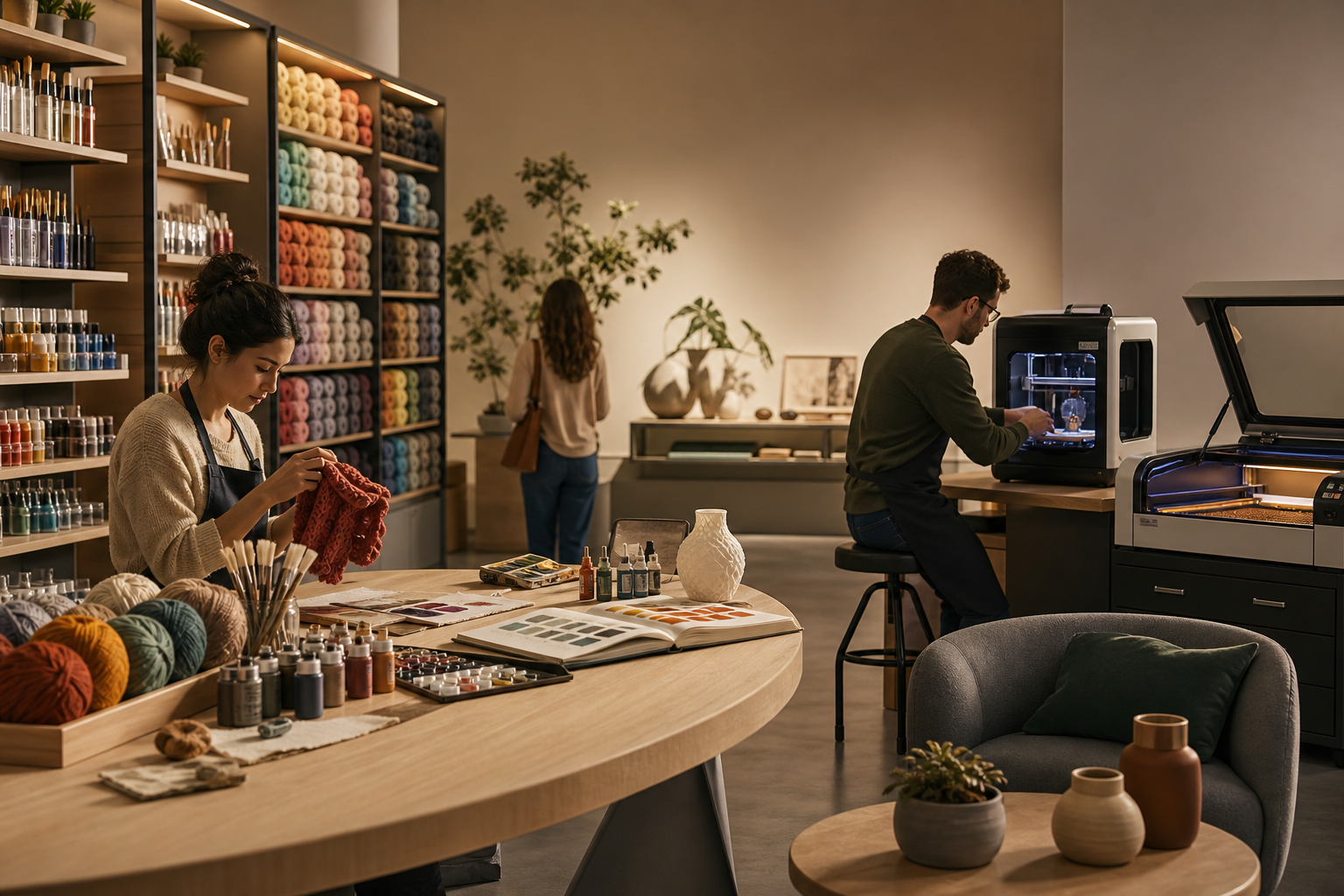
The shift also turned Michaels into a de facto showroom for the "maker tech" ecosystem. Cricut machines, 3D printers, and laser cutters now sit on the sales floor, surrounded by the consumables those machines require: vinyl sheets, cutting mats, specialty filaments. The hardware is often a break-even sale. The recurring consumables are where gross margin lives. A customer who buys a Cricut becomes a subscription customer without a subscription.
Store-in-Store Services Justified the Footprint
Apollo added professional custom framing and third-party shipping hubs inside stores. Both are high-margin services that require physical locations. Framing, in particular, is difficult to displace with e-commerce. A customer who brings in a poster to be framed is often browsing while they wait, which converts foot traffic into incremental basket spend. The shipping hubs capitalized on real estate that was already paid for, turning unused square footage into revenue without adding headcount.
The pandemic "hobby bump" helped. From 2020 to 2022, DIY interest spiked across knitting, home decor, and project-based crafts, giving Michaels a cash cushion during the early transition. But the structural moves, supply chain, private label, marketplace, services, are what held the gains when discretionary spending softened in 2023 and 2024.
The counterargument is that Michaels still carries significant debt, which makes the company vulnerable to interest rate exposure in 2025 and 2026. The Joann bankruptcy proves the maker market is fragile when consumer budgets tighten. But the Apollo playbook wasn't about eliminating risk. It was about earning margin where competitors couldn't and capturing share while they collapsed. That's not a permanent moat. It's operational leverage applied at exactly the right moment.



When Apollo Global Management bought Michaels for $5 billion in 2021, the deal looked like a standard private equity obituary waiting to happen. Retail bankruptcies were accelerating, discretionary spending was collapsing, and tariffs had just finished hammering the supply chain of a business that sourced 70% of its inventory from China. Three years later, Michaels holds over 15% of the specialized arts and crafts market and runs 1,290 stores while Joann Inc. liquidated and A.C. Moore shuttered in 2019. The turnaround wasn't cost-cutting theater. It was operational surgery.
Apollo Rewired the Supply Chain Before the Crisis Hit
The first move was invisible to customers but critical. Between 2021 and 2023, Michaels shifted a substantial portion of production out of China into South Asia and Southeast Asia. That diversification insulated the company when tariff volatility returned in 2024. Hobby Lobby, by contrast, kept its existing sourcing footprint and absorbed the margin hit. The decision wasn't ideological. It was arithmetic. Apollo had seen tariff exposure kill margins at other portfolio companies and moved early.
The second structural change was private label expansion. Michaels already carried house brands like Recollections and Loops & Threads, but Apollo pushed them to the center of the assortment. Private label now drives a material portion of revenue and commands higher margins than third-party branded goods. When a customer picks up store-brand cardstock instead of a national brand, Michaels keeps an extra 18 to 22 points of margin. That's the difference between surviving a bad quarter and closing stores.
The Marketplace Play Turned Stores Into Showrooms
The physical stores stopped being inventory warehouses and became discovery engines. A typical Michaels location carries roughly 40,000 SKUs. The online marketplace now lists over 1 million. The model is borrowed from Amazon and Etsy but applied to a category where tactile browsing still matters. Customers come in to touch yarn textures or compare paint pigments, then buy online where selection is deeper and per-unit logistics costs are lower for the seller.
The shift also turned Michaels into a de facto showroom for the "maker tech" ecosystem. Cricut machines, 3D printers, and laser cutters now sit on the sales floor, surrounded by the consumables those machines require: vinyl sheets, cutting mats, specialty filaments. The hardware is often a break-even sale. The recurring consumables are where gross margin lives. A customer who buys a Cricut becomes a subscription customer without a subscription.
Store-in-Store Services Justified the Footprint
Apollo added professional custom framing and third-party shipping hubs inside stores. Both are high-margin services that require physical locations. Framing, in particular, is difficult to displace with e-commerce. A customer who brings in a poster to be framed is often browsing while they wait, which converts foot traffic into incremental basket spend. The shipping hubs capitalized on real estate that was already paid for, turning unused square footage into revenue without adding headcount.
The pandemic "hobby bump" helped. From 2020 to 2022, DIY interest spiked across knitting, home decor, and project-based crafts, giving Michaels a cash cushion during the early transition. But the structural moves, supply chain, private label, marketplace, services, are what held the gains when discretionary spending softened in 2023 and 2024.
The counterargument is that Michaels still carries significant debt, which makes the company vulnerable to interest rate exposure in 2025 and 2026. The Joann bankruptcy proves the maker market is fragile when consumer budgets tighten. But the Apollo playbook wasn't about eliminating risk. It was about earning margin where competitors couldn't and capturing share while they collapsed. That's not a permanent moat. It's operational leverage applied at exactly the right moment.
Read Next
GIC rates stall as bonds retreat: why deposit accounts still lag
Why Your Employer's Life Insurance Probably Covers Less Than You Think
August Sales Fell 6.9%: What CREA's Numbers Actually Reveal About Buyer Hesitation
Canada's Resource Advantage: What Global Investors Are Betting On in 2026