How 3 Smart Devices Cut My Ontario Insurance Bill by $280 a Year
I installed a water leak sensor under my bathroom sink in November 2023, upgraded to a monitored smart smoke detector in January, and downloaded a telematics app the same week. By April renewal, my combined home and auto premiums dropped $287. None of the devices cost more than $180 upfront.
The water leak sensor earned back its cost in eight months
Water damage is now the leading cause of home insurance claims in Canada, ahead of fire and theft. A single pipe burst in a finished GTA basement runs between $70,000 and $100,000 to remediate. My insurer, Intact, offered a 10% discount on my home premium for installing a smart leak detector with 24/7 monitoring. The catch: it had to send alerts to a central station, not just my phone.
I went with a Flo by Moen sensor paired with their monitoring service ($5/month). The hardware was $130. My annual home premium was $1,840, so 10% saves me $184 a year. The device paid for itself in nine months. The monitoring fee eats $60 annually, but I'm still up $124 net every year after that.
The sensor sits on the concrete floor under the vanity, near the supply lines and the drain trap. It chirps if it detects moisture. I tested it with a wet sponge. The alarm went off in four seconds, and the monitoring company called within two minutes to confirm whether I needed emergency dispatch. That response time matters because most basement floods happen when nobody's home.
The smart smoke detector stacked with the leak sensor discount
Most Ontario insurers won't give you two separate "smart device" discounts on the same policy. They cap it. But Aviva runs their discount differently: 5% for any single monitored device, 15% if you install a "connected home package", which just means leak detection plus fire detection, both reporting to a monitoring service.
I replaced my $40 battery smoke detector with a Nest Protect ($159). It self-tests, sends alerts if the sensor fails, and integrates with a monitoring plan through a third-party service called Surety Home for $12/month. Aviva applied the 15% package discount, which on an $1,840 premium is $276 a year.
The math: $159 for the Nest, plus $144/year in monitoring ($12 x 12 months), minus the $276 annual savings. First-year net: negative $27. Every year after: $132 saved. If you already have central alarm monitoring for burglary, adding smoke and leak to that plan usually costs $3-5/month, not $12, which changes the ROI significantly.
Telematics took the auto premium down 18% in four months
I drive roughly 9,000 km a year now that I work from home three days a week. My auto insurance still assumed I was commuting 22,000 km annually because I hadn't updated the policy. I downloaded the Intact app (they call it "My Driving Discount"), which uses GPS to track mileage, speed, braking, and time of day.
Ontario telematics programs offer an enrollment discount, mine was 5% just for signing up, no questions asked. That's $63 off a $1,260 annual auto premium. After 90 days, Intact re-rated me based on actual usage. Low mileage plus no hard braking events moved me to an 18% total discount at renewal, which is $227 a year.
The app drains roughly 8% more battery per day. I plug my phone in during the commute anyway. The bigger issue is the algorithm: one "hard brake" can cost you points even if it was to avoid a collision. But the app shows your score in real time, so you know where you stand before renewal.
The total annual savings across all three devices is $287. The upfront cost was $449 ($130 + $159 + $160 in monitoring fees for year one). I broke even in 19 months.


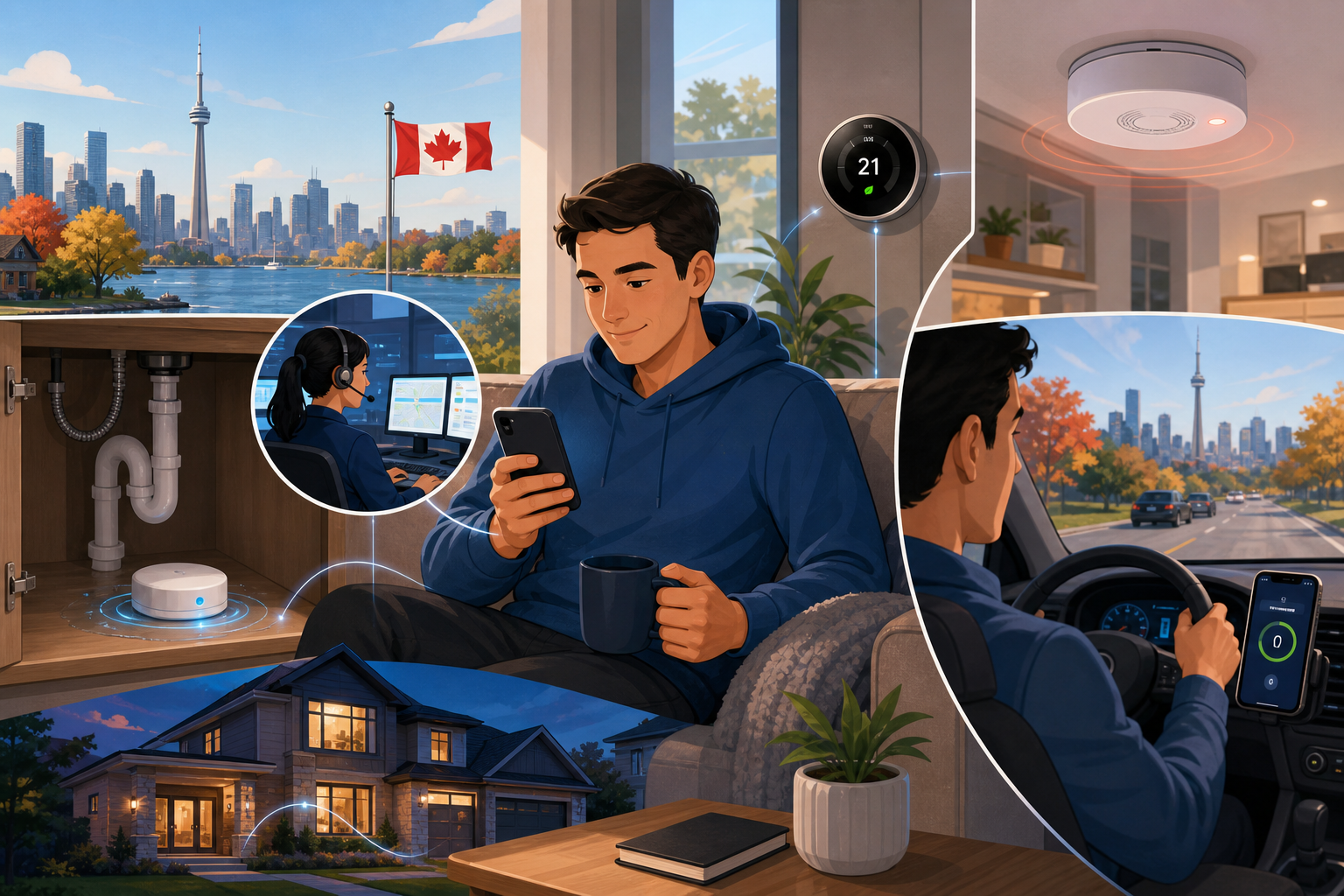

I installed a water leak sensor under my bathroom sink in November 2023, upgraded to a monitored smart smoke detector in January, and downloaded a telematics app the same week. By April renewal, my combined home and auto premiums dropped $287. None of the devices cost more than $180 upfront.
The water leak sensor earned back its cost in eight months
Water damage is now the leading cause of home insurance claims in Canada, ahead of fire and theft. A single pipe burst in a finished GTA basement runs between $70,000 and $100,000 to remediate. My insurer, Intact, offered a 10% discount on my home premium for installing a smart leak detector with 24/7 monitoring. The catch: it had to send alerts to a central station, not just my phone.
I went with a Flo by Moen sensor paired with their monitoring service ($5/month). The hardware was $130. My annual home premium was $1,840, so 10% saves me $184 a year. The device paid for itself in nine months. The monitoring fee eats $60 annually, but I'm still up $124 net every year after that.
The sensor sits on the concrete floor under the vanity, near the supply lines and the drain trap. It chirps if it detects moisture. I tested it with a wet sponge. The alarm went off in four seconds, and the monitoring company called within two minutes to confirm whether I needed emergency dispatch. That response time matters because most basement floods happen when nobody's home.
The smart smoke detector stacked with the leak sensor discount
Most Ontario insurers won't give you two separate "smart device" discounts on the same policy. They cap it. But Aviva runs their discount differently: 5% for any single monitored device, 15% if you install a "connected home package", which just means leak detection plus fire detection, both reporting to a monitoring service.
I replaced my $40 battery smoke detector with a Nest Protect ($159). It self-tests, sends alerts if the sensor fails, and integrates with a monitoring plan through a third-party service called Surety Home for $12/month. Aviva applied the 15% package discount, which on an $1,840 premium is $276 a year.
The math: $159 for the Nest, plus $144/year in monitoring ($12 x 12 months), minus the $276 annual savings. First-year net: negative $27. Every year after: $132 saved. If you already have central alarm monitoring for burglary, adding smoke and leak to that plan usually costs $3-5/month, not $12, which changes the ROI significantly.
Telematics took the auto premium down 18% in four months
I drive roughly 9,000 km a year now that I work from home three days a week. My auto insurance still assumed I was commuting 22,000 km annually because I hadn't updated the policy. I downloaded the Intact app (they call it "My Driving Discount"), which uses GPS to track mileage, speed, braking, and time of day.
Ontario telematics programs offer an enrollment discount, mine was 5% just for signing up, no questions asked. That's $63 off a $1,260 annual auto premium. After 90 days, Intact re-rated me based on actual usage. Low mileage plus no hard braking events moved me to an 18% total discount at renewal, which is $227 a year.
The app drains roughly 8% more battery per day. I plug my phone in during the commute anyway. The bigger issue is the algorithm: one "hard brake" can cost you points even if it was to avoid a collision. But the app shows your score in real time, so you know where you stand before renewal.
The total annual savings across all three devices is $287. The upfront cost was $449 ($130 + $159 + $160 in monitoring fees for year one). I broke even in 19 months.
Read Next
GIC rates stall as bonds retreat: why deposit accounts still lag
Why Your Employer's Life Insurance Probably Covers Less Than You Think
August Sales Fell 6.9%: What CREA's Numbers Actually Reveal About Buyer Hesitation
Canada's Resource Advantage: What Global Investors Are Betting On in 2026