Canada's $27.6-Billion Retaliation: Which Industries Pay First, Which Wait
Steel and aluminum took the first hit in March 2026. The federal government slapped a 25% surtax on roughly C$15.6 billion worth of American metals entering Canada, effective immediately. Manufacturing, energy products, and consumer goods waited. The tariff list is a lever, not a manifesto, and Ottawa pulls levers in stages when the goal is negotiation rather than economic suicide.
The announced C$27.6-billion total represents Canada's counter to equivalent U.S. duties imposed weeks earlier. But "announced" and "in place" are different verbs. As of mid-2026, the full package remains partially activated. Steel and aluminum duties are live. The rest, automotive parts, certain chemicals, prepared foods, bourbon, orange juice, sit on a list the Department of Finance can activate whenever political leverage demands it. The structure is deliberate: maximum declared value to signal resolve, phased implementation to preserve flexibility.
The Dollar-for-Dollar Math and Why It Matters
Canada imports roughly $266 billion worth of U.S. goods annually, according to UN COMTRADE data through early 2026. A C$27.6-billion retaliation hits about 10% of that flow. The U.S., in contrast, imports over $400 billion from Canada each year. Proportionally, Canada's tariff bites harder on its own economy than the reverse. It raises costs for Canadian manufacturers sourcing American intermediate goods, and it functions as a tax increase on any consumer product that crosses the border with U.S. content.
The "dollar-for-dollar" framing is political positioning. What it signals to Washington: you impose $1 of duties, we impose $1 back, and we are willing to absorb the domestic cost to make you feel it in swing congressional districts. The list targets products from states that matter electorally, bourbon from Kentucky, citrus from Florida, steel from Pennsylvania. Canada doesn't pick tariffs to maximize revenue. It picks them to maximize pressure on specific U.S. legislators.
What Actually Moved First
Metals went first because the Canadian steel and aluminum sectors employ concentrated workforces in Ontario and Quebec, provinces with political clout, and because countervailing a "national security" tariff with immediate reciprocal duties is cleaner under WTO rules than waiting. It also sent a clear message: the government wasn't going to let a multi-billion-dollar U.S. surtax sit unanswered while it drafted policy papers.
Manufacturing and energy stayed on the shelf longer because the calculus is trickier. Tariffs on automotive parts hurt Canadian automakers who source transmissions, electronics, and engines from the U.S. and then export finished vehicles back south. Energy duties, targeting certain refined petroleum products, risk raising costs for Canadian refiners dependent on cross-border crude flows. These aren't clean retaliations. They're economically messy, which is why the federal government announced them as "ready to activate" but held off pulling the trigger unless U.S. escalation continued.
The Aid Package and Who It Actually Reaches
Alongside the tariffs, Ottawa announced financial support for affected businesses and workers. Historically, these packages favor large employers with dedicated government-relations teams. During the 2018 steel dispute, a C$2-billion aid program moved faster to established manufacturers than to small job shops struggling with order cancellations.
The current relief structure reportedly focuses on steel, aluminum, and manufacturing sectors, with provisions for worker retraining and bridge loans. What it doesn't address well: small importers whose costs just jumped 25%, or retailers carrying U.S.-sourced consumer goods who now face either margin compression or price hikes that customers won't tolerate. Aid flows to producers. It rarely flows to distributors, and almost never to the end buyer paying more for yogurt or coffee because 30% of the supply chain touched Ohio.
The Trade-War Endgame No One Says Out Loud
The official line is that tariffs force the U.S. back to the negotiating table. Canada is betting American industry will pressure Congress faster than Canadian consumers will pressure Parliament. That works only if cross-border supply chains are genuinely interdependent, and only if the pain lands in districts where it flips votes.
If the U.S. administration views Canada's retaliation as justification for further "Buy American" provisions rather than a deterrent, the bet fails. And every month the tariffs stay in place, Canadian businesses adjust by finding non-U.S. suppliers or raising prices domestically, which makes the tariffs stickier and the eventual removal politically harder. The timeline matters more than the list.


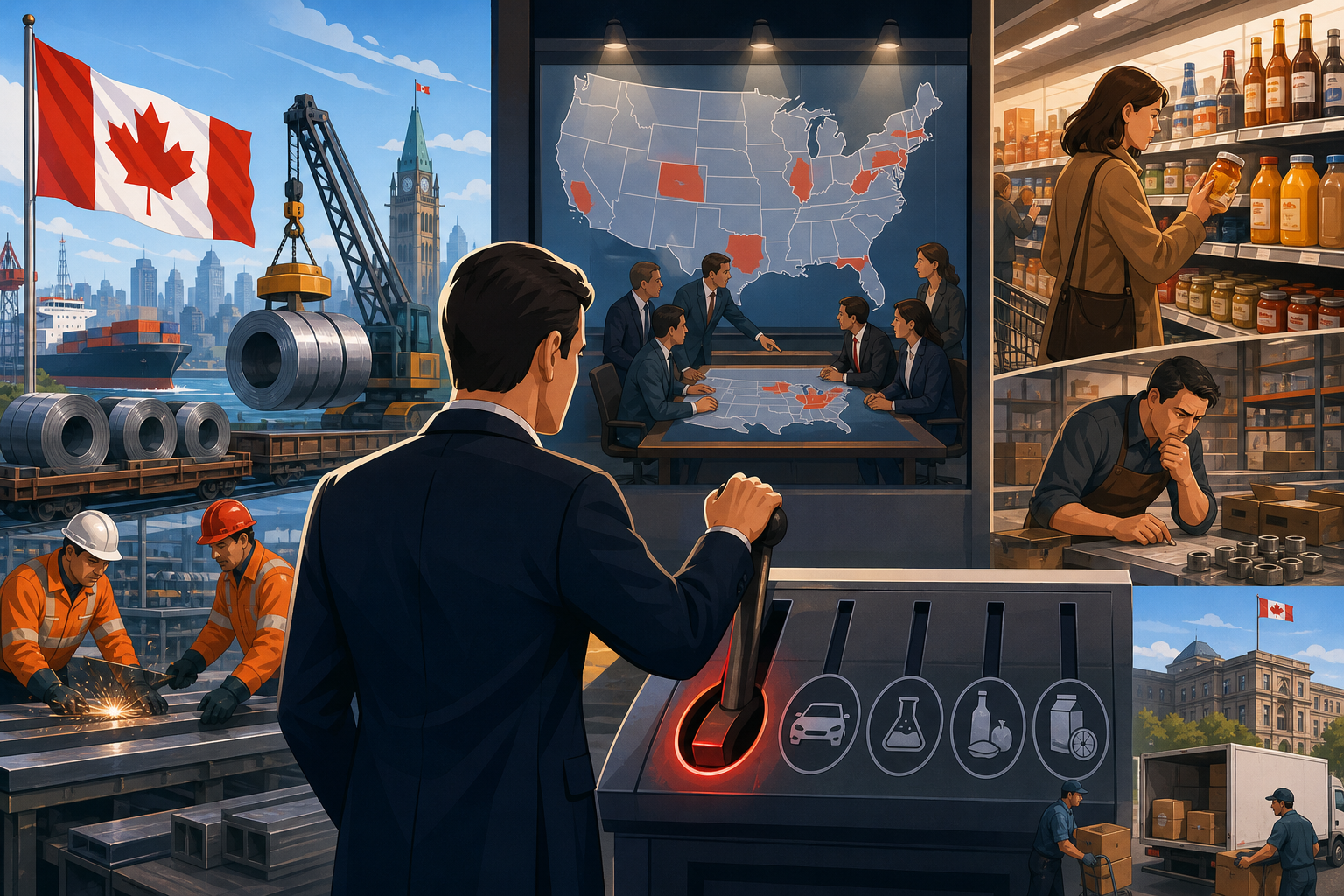

Steel and aluminum took the first hit in March 2026. The federal government slapped a 25% surtax on roughly C$15.6 billion worth of American metals entering Canada, effective immediately. Manufacturing, energy products, and consumer goods waited. The tariff list is a lever, not a manifesto, and Ottawa pulls levers in stages when the goal is negotiation rather than economic suicide.
The announced C$27.6-billion total represents Canada's counter to equivalent U.S. duties imposed weeks earlier. But "announced" and "in place" are different verbs. As of mid-2026, the full package remains partially activated. Steel and aluminum duties are live. The rest, automotive parts, certain chemicals, prepared foods, bourbon, orange juice, sit on a list the Department of Finance can activate whenever political leverage demands it. The structure is deliberate: maximum declared value to signal resolve, phased implementation to preserve flexibility.
The Dollar-for-Dollar Math and Why It Matters
Canada imports roughly $266 billion worth of U.S. goods annually, according to UN COMTRADE data through early 2026. A C$27.6-billion retaliation hits about 10% of that flow. The U.S., in contrast, imports over $400 billion from Canada each year. Proportionally, Canada's tariff bites harder on its own economy than the reverse. It raises costs for Canadian manufacturers sourcing American intermediate goods, and it functions as a tax increase on any consumer product that crosses the border with U.S. content.
The "dollar-for-dollar" framing is political positioning. What it signals to Washington: you impose $1 of duties, we impose $1 back, and we are willing to absorb the domestic cost to make you feel it in swing congressional districts. The list targets products from states that matter electorally, bourbon from Kentucky, citrus from Florida, steel from Pennsylvania. Canada doesn't pick tariffs to maximize revenue. It picks them to maximize pressure on specific U.S. legislators.
What Actually Moved First
Metals went first because the Canadian steel and aluminum sectors employ concentrated workforces in Ontario and Quebec, provinces with political clout, and because countervailing a "national security" tariff with immediate reciprocal duties is cleaner under WTO rules than waiting. It also sent a clear message: the government wasn't going to let a multi-billion-dollar U.S. surtax sit unanswered while it drafted policy papers.
Manufacturing and energy stayed on the shelf longer because the calculus is trickier. Tariffs on automotive parts hurt Canadian automakers who source transmissions, electronics, and engines from the U.S. and then export finished vehicles back south. Energy duties, targeting certain refined petroleum products, risk raising costs for Canadian refiners dependent on cross-border crude flows. These aren't clean retaliations. They're economically messy, which is why the federal government announced them as "ready to activate" but held off pulling the trigger unless U.S. escalation continued.
The Aid Package and Who It Actually Reaches
Alongside the tariffs, Ottawa announced financial support for affected businesses and workers. Historically, these packages favor large employers with dedicated government-relations teams. During the 2018 steel dispute, a C$2-billion aid program moved faster to established manufacturers than to small job shops struggling with order cancellations.
The current relief structure reportedly focuses on steel, aluminum, and manufacturing sectors, with provisions for worker retraining and bridge loans. What it doesn't address well: small importers whose costs just jumped 25%, or retailers carrying U.S.-sourced consumer goods who now face either margin compression or price hikes that customers won't tolerate. Aid flows to producers. It rarely flows to distributors, and almost never to the end buyer paying more for yogurt or coffee because 30% of the supply chain touched Ohio.
The Trade-War Endgame No One Says Out Loud
The official line is that tariffs force the U.S. back to the negotiating table. Canada is betting American industry will pressure Congress faster than Canadian consumers will pressure Parliament. That works only if cross-border supply chains are genuinely interdependent, and only if the pain lands in districts where it flips votes.
If the U.S. administration views Canada's retaliation as justification for further "Buy American" provisions rather than a deterrent, the bet fails. And every month the tariffs stay in place, Canadian businesses adjust by finding non-U.S. suppliers or raising prices domestically, which makes the tariffs stickier and the eventual removal politically harder. The timeline matters more than the list.
Read Next
GIC rates stall as bonds retreat: why deposit accounts still lag
Why Your Employer's Life Insurance Probably Covers Less Than You Think
August Sales Fell 6.9%: What CREA's Numbers Actually Reveal About Buyer Hesitation
Canada's Resource Advantage: What Global Investors Are Betting On in 2026