Birch Hill builds a regional aviation network in British Columbia through Harbour Air's Pacific Coastal acquisition
The deal closes on twenty-five communities and a landing strip problem that has quietly shaped air travel in the province for decades. Birch Hill Equity Partners, through its majority stake in Harbour Air, has acquired Pacific Coastal Airlines, merging BC's largest floatplane operator with its second-busiest regional land carrier. The result is a network lock: one company now controls the terminal slots, brand recognition, and customer base across both floatplane and land-based segments in the province.
Pacific Coastal operates out of the Vancouver International Airport South Terminal and serves routes across the province that the major carriers abandoned years ago. Harbour Air runs downtown-to-downtown seaplane routes from the Vancouver Harbour Flight Centre and Victoria Inner Harbour, moving passengers who would otherwise sit in traffic or drive three hours to catch a WestJet connection. Neither company competed directly. That was the point.
The geometry of the rollup
Birch Hill, which manages approximately $5 billion in capital, has spent the last several years assembling what amounts to a closed-loop transit system for BC's rugged geography. Harbour Air's forty-plus aircraft, mostly De Havilland Beavers, Otters, and Twin Otters, handle water-based hops where road access does not exist or is impractical. Pacific Coastal's Saab 340s and Beechcraft 1900s serve longer land-based legs to interior and coastal communities where volumes are too thin for Air Canada or WestJet to bother. The combined entity now serves 25 destinations across British Columbia, many of which have no other scheduled air service.
The structure creates a hub-and-spoke model where Harbour Air feeds Pacific Coastal's YVR operations and vice versa. A passenger flying from a remote interior mining site to downtown Vancouver can now move under one corporate umbrella, with the transfer handled at YVR South or the harbour terminal. This merger consolidates the regional network: one owner now controls both the floatplane and land-based segments, the terminal slots, and the customer base that determines which routes are viable.
What consolidation actually buys
The immediate effect is defensive. New regional entrants, whether Cascadia Air or Iskwew Air, now face a competitor that controls the most lucrative terminal slots, the dominant brand recognition in both floatplane and land-based segments, and the customer base that determines which routes are viable. By owning both the seaplane network and the regional land carrier, Birch Hill has made the economics of entry worse: a new competitor would have to replicate both segments to compete meaningfully.
The longer play is an exit. Private equity firms typically hold assets for five to ten years. Birch Hill bought into Harbour Air knowing it would need to build something larger to sell. A standalone floatplane operator, even a profitable one, is a niche asset. A regional aviation group serving 25 communities with combined fleets of 59 aircraft and dual operational certifications is an asset a large infrastructure fund or global transport conglomerate would pay for.
The tension no one is naming
Harbour Air has spent years building a sustainability brand. It flew the first all-electric commercial aircraft in 2019 and continues testing electric propulsion through 2026. Pacific Coastal operates heavier, fuel-burning turboprops on longer routes where battery technology is not yet viable. The question is whether Birch Hill plans to export Harbour Air's R&D to Pacific Coastal's shorter land legs, or whether the acquisition quietly shelves the electric pivot in favour of near-term cash flow from a fuel-based fleet.
The Competition Bureau may review the deal if specific milk-run routes now have only one carrier. The structural question runs deeper: BC's regional aviation market was never built to support competition. Thin routes, high fuel costs, and a pilot shortage that has regional carriers losing crew to Air Canada the moment they log enough hours, none of that changes with consolidation. What changes is who captures the margin when the system works, and who absorbs the loss when it does not.


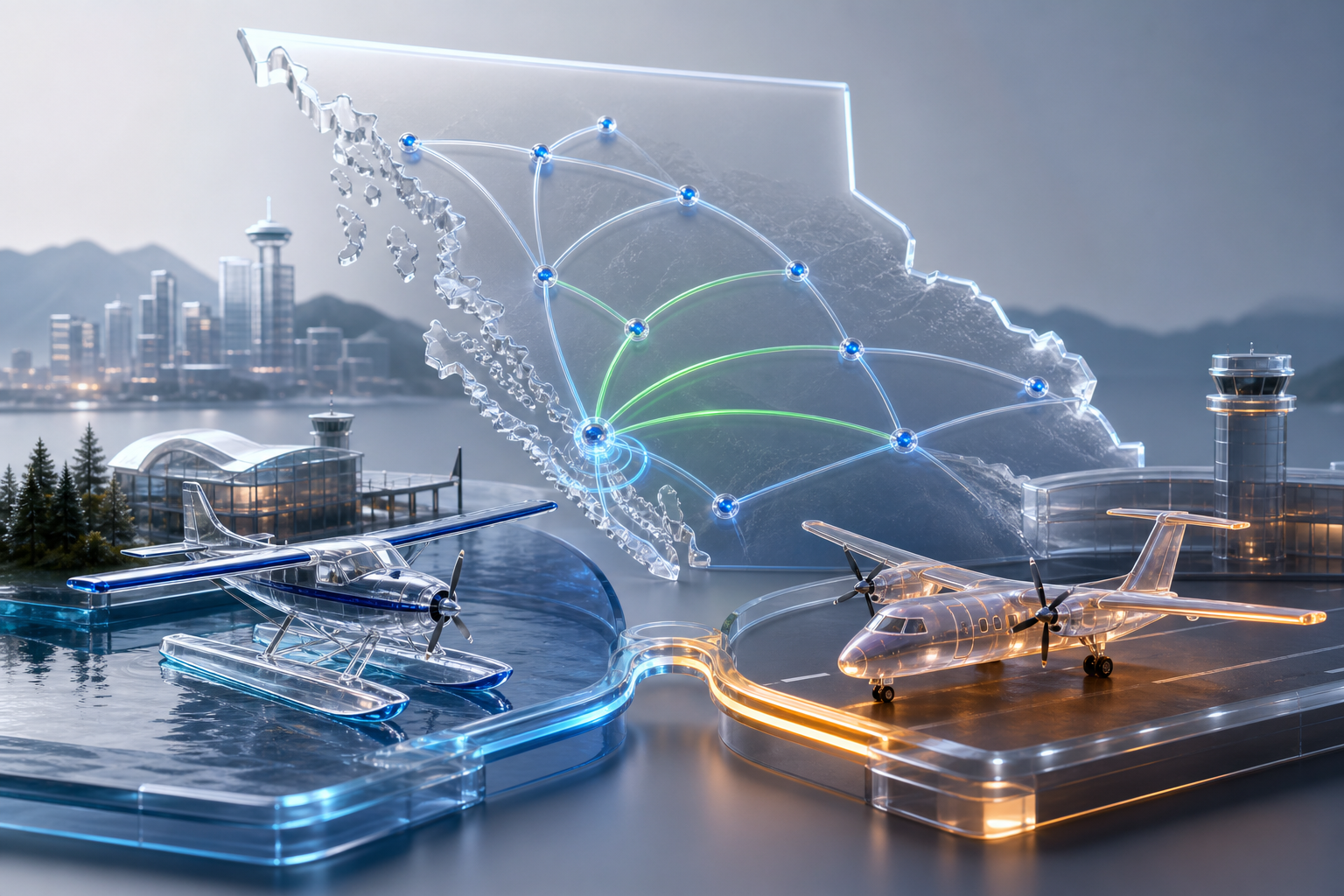

The deal closes on twenty-five communities and a landing strip problem that has quietly shaped air travel in the province for decades. Birch Hill Equity Partners, through its majority stake in Harbour Air, has acquired Pacific Coastal Airlines, merging BC's largest floatplane operator with its second-busiest regional land carrier. The result is a network lock: one company now controls the terminal slots, brand recognition, and customer base across both floatplane and land-based segments in the province.
Pacific Coastal operates out of the Vancouver International Airport South Terminal and serves routes across the province that the major carriers abandoned years ago. Harbour Air runs downtown-to-downtown seaplane routes from the Vancouver Harbour Flight Centre and Victoria Inner Harbour, moving passengers who would otherwise sit in traffic or drive three hours to catch a WestJet connection. Neither company competed directly. That was the point.
The geometry of the rollup
Birch Hill, which manages approximately $5 billion in capital, has spent the last several years assembling what amounts to a closed-loop transit system for BC's rugged geography. Harbour Air's forty-plus aircraft, mostly De Havilland Beavers, Otters, and Twin Otters, handle water-based hops where road access does not exist or is impractical. Pacific Coastal's Saab 340s and Beechcraft 1900s serve longer land-based legs to interior and coastal communities where volumes are too thin for Air Canada or WestJet to bother. The combined entity now serves 25 destinations across British Columbia, many of which have no other scheduled air service.
The structure creates a hub-and-spoke model where Harbour Air feeds Pacific Coastal's YVR operations and vice versa. A passenger flying from a remote interior mining site to downtown Vancouver can now move under one corporate umbrella, with the transfer handled at YVR South or the harbour terminal. This merger consolidates the regional network: one owner now controls both the floatplane and land-based segments, the terminal slots, and the customer base that determines which routes are viable.
What consolidation actually buys
The immediate effect is defensive. New regional entrants, whether Cascadia Air or Iskwew Air, now face a competitor that controls the most lucrative terminal slots, the dominant brand recognition in both floatplane and land-based segments, and the customer base that determines which routes are viable. By owning both the seaplane network and the regional land carrier, Birch Hill has made the economics of entry worse: a new competitor would have to replicate both segments to compete meaningfully.
The longer play is an exit. Private equity firms typically hold assets for five to ten years. Birch Hill bought into Harbour Air knowing it would need to build something larger to sell. A standalone floatplane operator, even a profitable one, is a niche asset. A regional aviation group serving 25 communities with combined fleets of 59 aircraft and dual operational certifications is an asset a large infrastructure fund or global transport conglomerate would pay for.
The tension no one is naming
Harbour Air has spent years building a sustainability brand. It flew the first all-electric commercial aircraft in 2019 and continues testing electric propulsion through 2026. Pacific Coastal operates heavier, fuel-burning turboprops on longer routes where battery technology is not yet viable. The question is whether Birch Hill plans to export Harbour Air's R&D to Pacific Coastal's shorter land legs, or whether the acquisition quietly shelves the electric pivot in favour of near-term cash flow from a fuel-based fleet.
The Competition Bureau may review the deal if specific milk-run routes now have only one carrier. The structural question runs deeper: BC's regional aviation market was never built to support competition. Thin routes, high fuel costs, and a pilot shortage that has regional carriers losing crew to Air Canada the moment they log enough hours, none of that changes with consolidation. What changes is who captures the margin when the system works, and who absorbs the loss when it does not.
Sources
Read Next
CMHC's Latest Housing Supply Gap Report Shows Construction Slowing Faster Than Demand
South Korea's Stock Market Has Become a National Liability
Tech CEOs Walk the Investor Tightrope: Signal AI Risk Without Cutting Off Billions in Funding
Canada Child Benefit Payments Arrive Early This September, Here's What Changed in July