Bank of Canada Signals Rate Hike Risk if Gas Prices Stay High
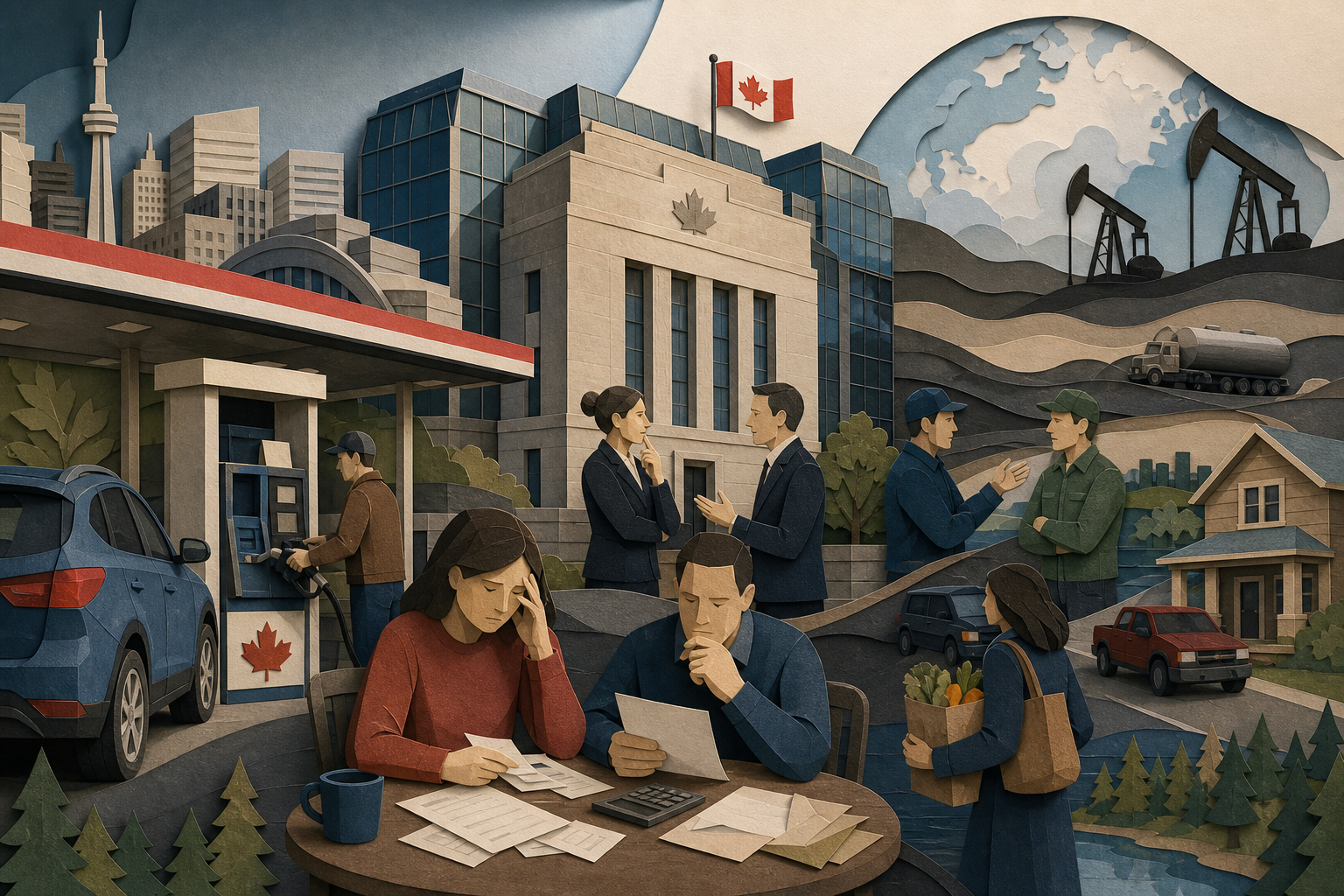
Governing council minutes from the Bank of Canada's September meeting include a blunt note: fuel costs that linger above trend for months rather than weeks change how businesses set prices, not just what consumers pay at the pump.
The warning lands at an uncomfortable moment. Gasoline prices in Vancouver and the Greater Toronto Area have held above $1.70 per litre throughout the summer of 2026, sustaining upward pressure on the Consumer Price Index even as other components have cooled. The central bank's primary mandate remains getting inflation back to the 2% target. Persistent energy costs complicate that path in a way that single-month spikes do not.
The Bank of Canada cannot lower global oil prices. Monetary policy is a blunt instrument designed to dampen domestic demand, offsetting supply-side shocks by making borrowing more expensive and saving more attractive. When fuel costs stay high long enough, though, the pass-through risk becomes structural. Logistics companies adjust their rate cards. Manufacturers build higher input costs into annual contracts. Consumers, expecting prices to keep climbing, demand wage increases. The central bank calls this the "second-round effect," and it is the scenario they are monitoring most closely.
Why the lag matters
Changes in the Bank of Canada's policy rate take 18 to 24 months to fully filter through the economy. The Governing Council is acting now to prevent the inflation that today's gas prices could cause in 2027, if businesses and households bake high energy costs into their longer-term expectations.
Energy typically accounts for 6 to 9% of the Canadian CPI basket, but its influence on "all-items" inflation runs higher because of the country's vast geography and reliance on road transport for supply chains. A trucking company that pays $1.75 per litre instead of $1.40 does not absorb the difference. It passes the cost to every retailer it serves, who then passes it to every customer. The price increase shows up in categories that have nothing to do with fuel.
This is the paradox the Bank of Canada is managing. High gas prices already function as a tax on disposable income, reducing how much households have left to spend on other goods. The central bank's tool, raising interest rates, reduces disposable income further. For Canadian homeowners, the threat carries weight. Roughly 40% of mortgages have reset or will reset at significantly higher rates between 2024 and 2026. Another hike would tighten the squeeze.
The self-correcting argument
Some economists argue that high prices contain their own cure. When gasoline costs enough, consumers drive less, consolidate trips, delay discretionary purchases. Demand falls, and prices eventually follow. If that natural correction happens quickly enough, the Bank of Canada's work gets done without further rate increases.
The counterargument is that "eventually" is doing a lot of work in that sentence. If gasoline prices stay elevated for a full quarter, businesses treat the increase as permanent and adjust their models accordingly. Once those adjustments are made, they do not reverse easily. Inflation becomes sticky.
The Governing Council's language in September was careful but clear. They are watching the data on fuel costs and adjusting their approach as new numbers arrive rather than committing to a fixed schedule. If fuel costs drop, the path to rate cuts in early 2027 stays open. If they persist, the Bank of Canada has signaled it will act, even knowing that the tool available to them increases mortgage costs, a major CPI component, in the short term. A transitory shock is manageable. A sustained one forces the central bank's hand.



Governing council minutes from the Bank of Canada's September meeting include a blunt note: fuel costs that linger above trend for months rather than weeks change how businesses set prices, not just what consumers pay at the pump.
The warning lands at an uncomfortable moment. Gasoline prices in Vancouver and the Greater Toronto Area have held above $1.70 per litre throughout the summer of 2026, sustaining upward pressure on the Consumer Price Index even as other components have cooled. The central bank's primary mandate remains getting inflation back to the 2% target. Persistent energy costs complicate that path in a way that single-month spikes do not.
The Bank of Canada cannot lower global oil prices. Monetary policy is a blunt instrument designed to dampen domestic demand, offsetting supply-side shocks by making borrowing more expensive and saving more attractive. When fuel costs stay high long enough, though, the pass-through risk becomes structural. Logistics companies adjust their rate cards. Manufacturers build higher input costs into annual contracts. Consumers, expecting prices to keep climbing, demand wage increases. The central bank calls this the "second-round effect," and it is the scenario they are monitoring most closely.
Why the lag matters
Changes in the Bank of Canada's policy rate take 18 to 24 months to fully filter through the economy. The Governing Council is acting now to prevent the inflation that today's gas prices could cause in 2027, if businesses and households bake high energy costs into their longer-term expectations.
Energy typically accounts for 6 to 9% of the Canadian CPI basket, but its influence on "all-items" inflation runs higher because of the country's vast geography and reliance on road transport for supply chains. A trucking company that pays $1.75 per litre instead of $1.40 does not absorb the difference. It passes the cost to every retailer it serves, who then passes it to every customer. The price increase shows up in categories that have nothing to do with fuel.
This is the paradox the Bank of Canada is managing. High gas prices already function as a tax on disposable income, reducing how much households have left to spend on other goods. The central bank's tool, raising interest rates, reduces disposable income further. For Canadian homeowners, the threat carries weight. Roughly 40% of mortgages have reset or will reset at significantly higher rates between 2024 and 2026. Another hike would tighten the squeeze.
The self-correcting argument
Some economists argue that high prices contain their own cure. When gasoline costs enough, consumers drive less, consolidate trips, delay discretionary purchases. Demand falls, and prices eventually follow. If that natural correction happens quickly enough, the Bank of Canada's work gets done without further rate increases.
The counterargument is that "eventually" is doing a lot of work in that sentence. If gasoline prices stay elevated for a full quarter, businesses treat the increase as permanent and adjust their models accordingly. Once those adjustments are made, they do not reverse easily. Inflation becomes sticky.
The Governing Council's language in September was careful but clear. They are watching the data on fuel costs and adjusting their approach as new numbers arrive rather than committing to a fixed schedule. If fuel costs drop, the path to rate cuts in early 2027 stays open. If they persist, the Bank of Canada has signaled it will act, even knowing that the tool available to them increases mortgage costs, a major CPI component, in the short term. A transitory shock is manageable. A sustained one forces the central bank's hand.
Sources
Read Next
Birch Hill builds a regional aviation network in British Columbia through Harbour Air's Pacific Coastal acquisition
South Korea's Stock Market Has Become a National Liability
Tech CEOs Walk the Investor Tightrope: Signal AI Risk Without Cutting Off Billions in Funding
Canada Child Benefit Payments Arrive Early This September, Here's What Changed in July