7 Costs Canadian Homebuyers Miss When They Calculate Affordability
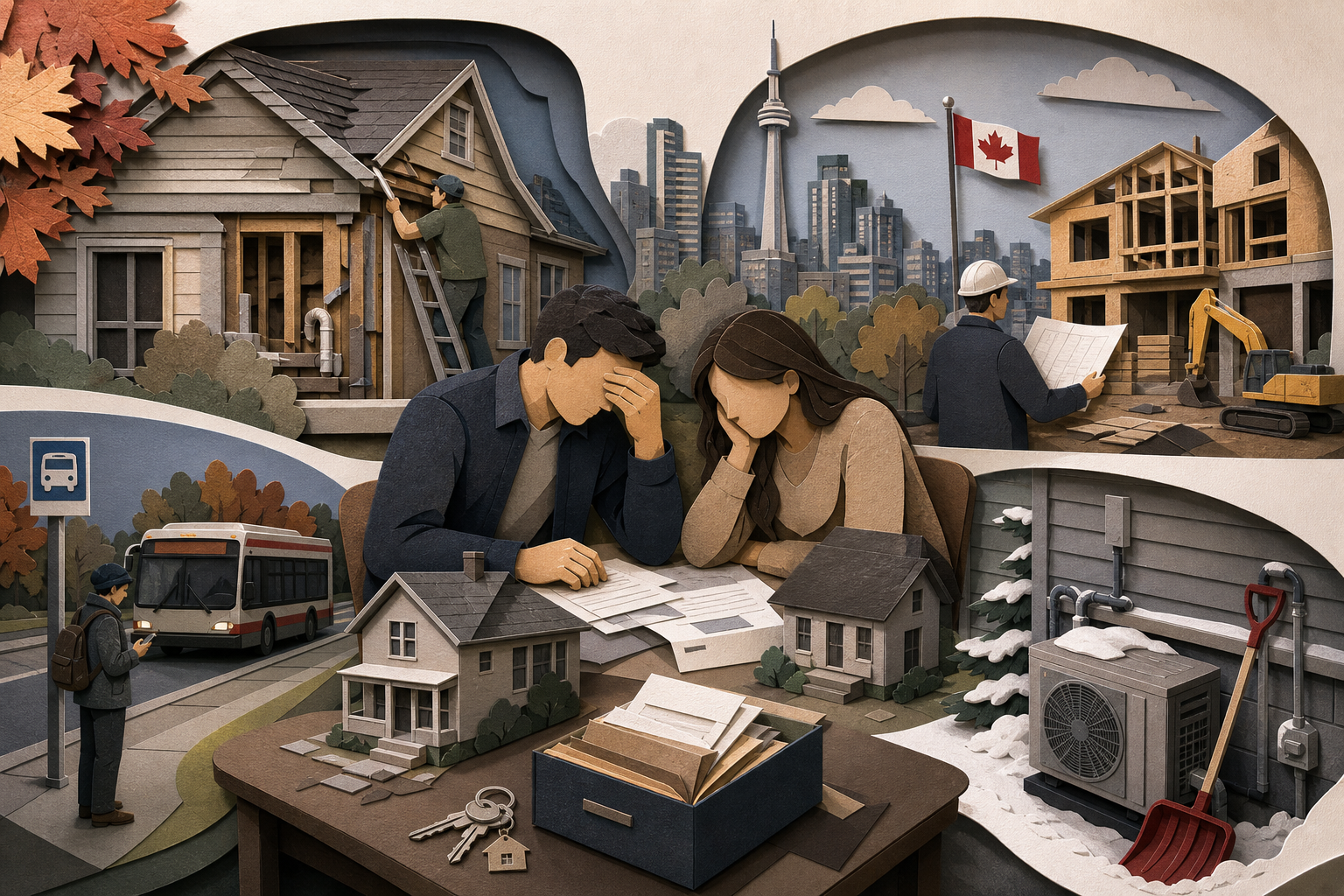
A Toronto couple with a $650,000 pre-approval just lost their offer because they had $18,000 in cash saved for closing, and they needed $29,000. They weren't outbid. They couldn't close.
The mortgage stress test tells you whether you can carry the monthly payment. It doesn't ask whether you can write cheques on closing day for costs you cannot finance. Most first-time buyers in Canada know about the down payment. Seven other bills routinely blindside them.
Cash You Must Have at Closing
1. PST on CMHC insurance (if you put down less than 20%).
The mortgage default insurance premium gets rolled into your mortgage principal. The provincial sales tax on that premium does not. In Ontario, Quebec, and Saskatchewan, you pay this in cash at closing. On a $500,000 home with 10% down, the CMHC premium is roughly $14,400. The PST in Ontario is 8%, or $1,152, due in full at the lawyer's office. Most buyers learn about this 72 hours before closing.
2. Municipal land transfer tax (Toronto and some BC municipalities).
Ontario charges a provincial land transfer tax. Toronto charges a second one. On a $650,000 home, the provincial tax is $8,475. The Toronto municipal tax is another $8,475. Total: $16,950, both due at closing. First-time buyers get a rebate of up to $4,000 on each, dropping the bill to roughly $9,000, still cash you need that day. Vancouver doesn't double-charge, but the BC land transfer tax alone on the same property runs $11,000.
3. Property tax and utility adjustments.
Sellers prepay property taxes quarterly or annually. You reimburse them at closing for the portion they've paid past your possession date. On a $600,000 home in Mississauga with a July closing, expect $1,800, $2,500. Add another $200, $600 if the seller prepaid water, fuel oil, or condo fees. Your lawyer calculates this on the statement of adjustments, which you see two days before closing.
4. Title insurance.
Lenders require it. The policy protects against fraud, prior liens, zoning violations, and survey issues. Cost for a $500,000 home: $250, $400. Cost for a $1 million home: $400, $700. One-time fee, paid at closing. Some buyers think this is optional if they ordered a survey. It isn't.
5. Legal fees and disbursements.
Your real estate lawyer handles title searches, deed registration, mortgage registration, and trust accounting. Standard fees in Ontario run $1,500, $2,500 including disbursements. Quebec uses notaries instead of lawyers; fees are similar. Alberta and Saskatchewan skew slightly lower. This is not rolled into the mortgage.
6. Home inspection (before the offer goes firm).
Not a closing cost, but it comes out of pocket during the conditional period. Inspections run $400, $700 for a detached home, more for older or larger properties. You pay whether or not the deal closes. Skipping this to save $500 routinely costs buyers $15,000, $50,000 in year-one repairs.
7. The day-one maintenance reserve nobody budgets.
You move in, and within six months the furnace dies, the roof leaks, or the deck fails inspection. Maintenance reserves are not a closing cost. They are a liquidity requirement. Budget 2% to 4% of the home's value annually. On a $600,000 home, that's $12,000, $24,000 per year. If you spent every dollar getting to closing, the first repair becomes a credit card problem.
The one buyers skip most often is the PST on CMHC insurance, because it doesn't appear on the mortgage estimate, only on the final closing statement.



A Toronto couple with a $650,000 pre-approval just lost their offer because they had $18,000 in cash saved for closing, and they needed $29,000. They weren't outbid. They couldn't close.
The mortgage stress test tells you whether you can carry the monthly payment. It doesn't ask whether you can write cheques on closing day for costs you cannot finance. Most first-time buyers in Canada know about the down payment. Seven other bills routinely blindside them.
Cash You Must Have at Closing
1. PST on CMHC insurance (if you put down less than 20%).
The mortgage default insurance premium gets rolled into your mortgage principal. The provincial sales tax on that premium does not. In Ontario, Quebec, and Saskatchewan, you pay this in cash at closing. On a $500,000 home with 10% down, the CMHC premium is roughly $14,400. The PST in Ontario is 8%, or $1,152, due in full at the lawyer's office. Most buyers learn about this 72 hours before closing.
2. Municipal land transfer tax (Toronto and some BC municipalities).
Ontario charges a provincial land transfer tax. Toronto charges a second one. On a $650,000 home, the provincial tax is $8,475. The Toronto municipal tax is another $8,475. Total: $16,950, both due at closing. First-time buyers get a rebate of up to $4,000 on each, dropping the bill to roughly $9,000, still cash you need that day. Vancouver doesn't double-charge, but the BC land transfer tax alone on the same property runs $11,000.
3. Property tax and utility adjustments.
Sellers prepay property taxes quarterly or annually. You reimburse them at closing for the portion they've paid past your possession date. On a $600,000 home in Mississauga with a July closing, expect $1,800, $2,500. Add another $200, $600 if the seller prepaid water, fuel oil, or condo fees. Your lawyer calculates this on the statement of adjustments, which you see two days before closing.
4. Title insurance.
Lenders require it. The policy protects against fraud, prior liens, zoning violations, and survey issues. Cost for a $500,000 home: $250, $400. Cost for a $1 million home: $400, $700. One-time fee, paid at closing. Some buyers think this is optional if they ordered a survey. It isn't.
5. Legal fees and disbursements.
Your real estate lawyer handles title searches, deed registration, mortgage registration, and trust accounting. Standard fees in Ontario run $1,500, $2,500 including disbursements. Quebec uses notaries instead of lawyers; fees are similar. Alberta and Saskatchewan skew slightly lower. This is not rolled into the mortgage.
6. Home inspection (before the offer goes firm).
Not a closing cost, but it comes out of pocket during the conditional period. Inspections run $400, $700 for a detached home, more for older or larger properties. You pay whether or not the deal closes. Skipping this to save $500 routinely costs buyers $15,000, $50,000 in year-one repairs.
7. The day-one maintenance reserve nobody budgets.
You move in, and within six months the furnace dies, the roof leaks, or the deck fails inspection. Maintenance reserves are not a closing cost. They are a liquidity requirement. Budget 2% to 4% of the home's value annually. On a $600,000 home, that's $12,000, $24,000 per year. If you spent every dollar getting to closing, the first repair becomes a credit card problem.
The one buyers skip most often is the PST on CMHC insurance, because it doesn't appear on the mortgage estimate, only on the final closing statement.
Read Next
GIC rates stall as bonds retreat: why deposit accounts still lag
Why Your Employer's Life Insurance Probably Covers Less Than You Think
August Sales Fell 6.9%: What CREA's Numbers Actually Reveal About Buyer Hesitation
Canada's Resource Advantage: What Global Investors Are Betting On in 2026