Which TSX Energy Stocks Stand to Gain Most From the Pacific Link Pipeline
Before you buy anything on a Pacific Link headline, know that the pipeline is a proposal, and projects like it in Canada often take 5 to 10 years to get from application to oil flowing. The stocks worth owning are the ones that get paid before the first barrel moves, so this screen is built around that.
Start with who gets paid
1. Find out who owns the feeder lines into the Edmonton hub
Pull each company's asset list and look for gathering and feeder pipe, not just the main line. Edmonton is the staging point where product is stored and handed off, so the companies owning the connecting pipe collect toll-style fees on every extra barrel. A company with a stake in the headline pipeline but nothing feeding it gets less from the same volume.
2. Read the contract terms in the annual information filing
Look for the words "take-or-pay" and the contract length. Shippers under these contracts pay for pipe space whether or not they use it. New Western Canadian pipe has typically been backed by contracts running 10 to 15 years, which is why midstream cash flow holds up when oil prices drop. If a company doesn't disclose how much of its revenue is contracted, treat that as an answer.
3. Check the debt maturity schedule, not just the debt total
Open the debt note and list what comes due in 2027 and 2028. These companies borrow heavily to build, so refinancing at higher interest rates can eat the cash that pays the dividend. A company with most of its debt locked in for a decade is in a very different spot from one that has to refinance next year.
Test the dividend, not the story
4. Screen for dividend growth history
Start with the S&P/TSX Canadian Dividend Aristocrats list. According to S&P Dow Jones Indices (as of May 2026), a company needs at least 5 consecutive years of dividend increases to qualify. Five years proves the payout survived at least one rough patch. It doesn't prove it will survive the next one.
5. Compare sustaining capital to cash flow
Look at how much a company spends each year just to keep volumes flat. A producer has to keep drilling to hold output. Once the pipe is in the ground, a pipeline company spends far less to maintain it, so more of each dollar can go to shareholders. This gap is the quiet reason many income investors prefer midstream over producers.
Where the thesis can break
6. Look up what the company's last big project did to its budget
Search the company's past construction updates for "cost estimate." Trans Mountain is the cautionary example: budgets climbed well beyond the original plan, and builders' share prices felt it during construction. A company that finished its last project close to budget has earned more trust than one that didn't.
7. Don't assume a new pipeline closes the oil price gap
Check where the product actually sells. Western Canadian Select has long traded below West Texas Intermediate because of limited pipeline space. But if American refiners buy less, Alberta crude can stay discounted even with more pipe. Coastal access helps most when it opens buyers beyond the U.S., and with a 50% U.S. tariff on certain Canadian goods in place since August 2026 (per the Government of Canada), reliance on one customer carries real risk.
8. Ask how the company handles Alberta's carbon costs
Search the filing for TIER, Alberta's Technology Innovation and Emissions Reduction system. Pump stations and processing sites emit, and those costs show up somewhere. Some operators are also designing new lines to carry hydrogen or CO2 later. That's a possible hedge if oil demand fades, but treat it as a bonus, not the reason to buy.
One last filter
Run these eight checks on the Alberta midstream names you already follow, such as Pembina or Enbridge, and compare the answers side by side. No pipeline stock is guaranteed to pay out as planned.
If you only do one this week, do #2. The contract terms tell you more than any press release.


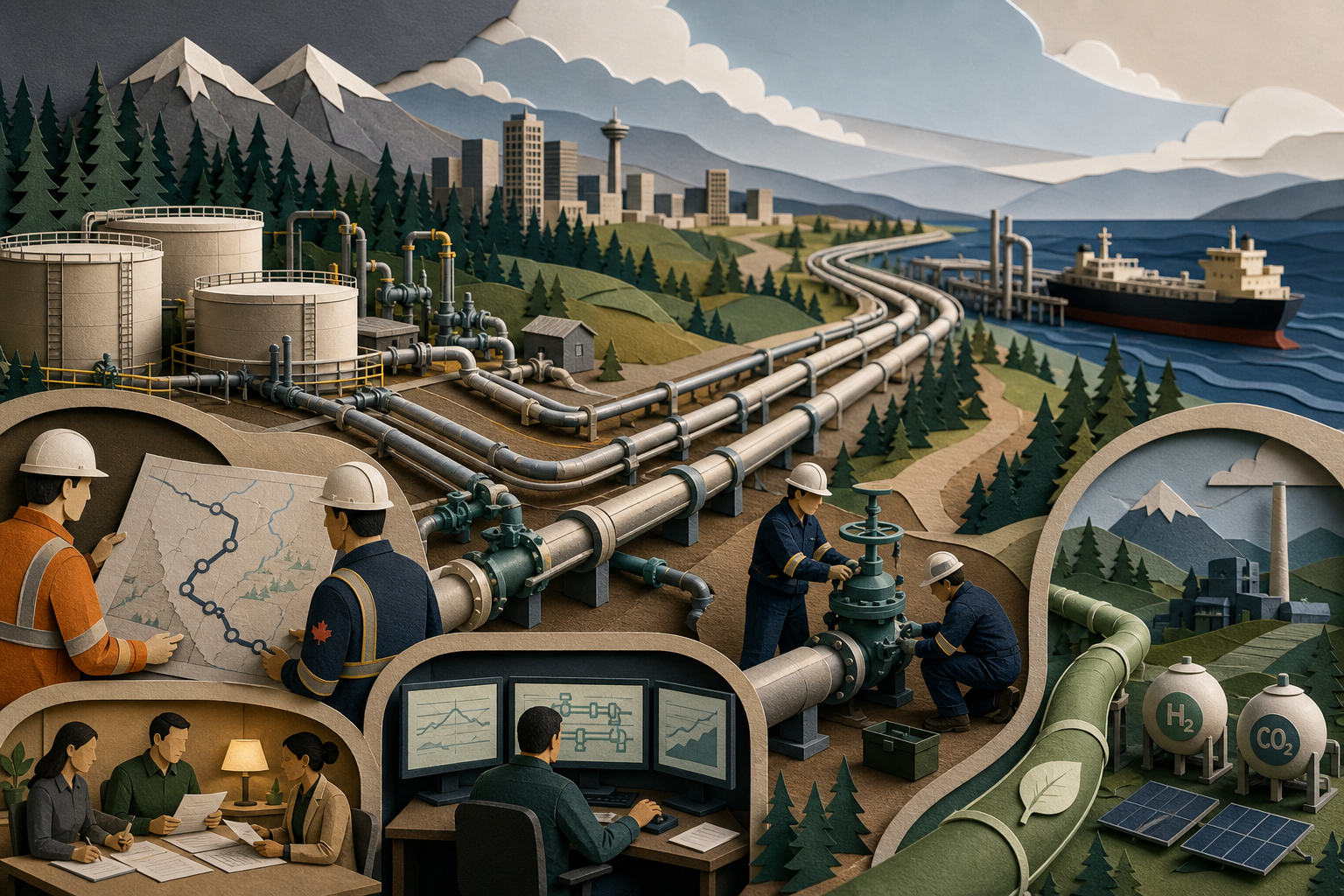

Before you buy anything on a Pacific Link headline, know that the pipeline is a proposal, and projects like it in Canada often take 5 to 10 years to get from application to oil flowing. The stocks worth owning are the ones that get paid before the first barrel moves, so this screen is built around that.
Start with who gets paid
1. Find out who owns the feeder lines into the Edmonton hub
Pull each company's asset list and look for gathering and feeder pipe, not just the main line. Edmonton is the staging point where product is stored and handed off, so the companies owning the connecting pipe collect toll-style fees on every extra barrel. A company with a stake in the headline pipeline but nothing feeding it gets less from the same volume.
2. Read the contract terms in the annual information filing
Look for the words "take-or-pay" and the contract length. Shippers under these contracts pay for pipe space whether or not they use it. New Western Canadian pipe has typically been backed by contracts running 10 to 15 years, which is why midstream cash flow holds up when oil prices drop. If a company doesn't disclose how much of its revenue is contracted, treat that as an answer.
3. Check the debt maturity schedule, not just the debt total
Open the debt note and list what comes due in 2027 and 2028. These companies borrow heavily to build, so refinancing at higher interest rates can eat the cash that pays the dividend. A company with most of its debt locked in for a decade is in a very different spot from one that has to refinance next year.
Test the dividend, not the story
4. Screen for dividend growth history
Start with the S&P/TSX Canadian Dividend Aristocrats list. According to S&P Dow Jones Indices (as of May 2026), a company needs at least 5 consecutive years of dividend increases to qualify. Five years proves the payout survived at least one rough patch. It doesn't prove it will survive the next one.
5. Compare sustaining capital to cash flow
Look at how much a company spends each year just to keep volumes flat. A producer has to keep drilling to hold output. Once the pipe is in the ground, a pipeline company spends far less to maintain it, so more of each dollar can go to shareholders. This gap is the quiet reason many income investors prefer midstream over producers.
Where the thesis can break
6. Look up what the company's last big project did to its budget
Search the company's past construction updates for "cost estimate." Trans Mountain is the cautionary example: budgets climbed well beyond the original plan, and builders' share prices felt it during construction. A company that finished its last project close to budget has earned more trust than one that didn't.
7. Don't assume a new pipeline closes the oil price gap
Check where the product actually sells. Western Canadian Select has long traded below West Texas Intermediate because of limited pipeline space. But if American refiners buy less, Alberta crude can stay discounted even with more pipe. Coastal access helps most when it opens buyers beyond the U.S., and with a 50% U.S. tariff on certain Canadian goods in place since August 2026 (per the Government of Canada), reliance on one customer carries real risk.
8. Ask how the company handles Alberta's carbon costs
Search the filing for TIER, Alberta's Technology Innovation and Emissions Reduction system. Pump stations and processing sites emit, and those costs show up somewhere. Some operators are also designing new lines to carry hydrogen or CO2 later. That's a possible hedge if oil demand fades, but treat it as a bonus, not the reason to buy.
One last filter
Run these eight checks on the Alberta midstream names you already follow, such as Pembina or Enbridge, and compare the answers side by side. No pipeline stock is guaranteed to pay out as planned.
If you only do one this week, do #2. The contract terms tell you more than any press release.
Read Next
Canada's Productivity Problem Starts in a Tax Code Nobody Can Read
Cancel or Keep the Card? Closing It Can Spike Your Credit Utilization
The Easiest Tax Return in Canada Could Cost Low-Income Filers the Most
India's Biggest Banking Deal Had No Major Investment Bank Behind It