What a General Inspection Misses: 7 Furnace Checks Before Your Fall Offer
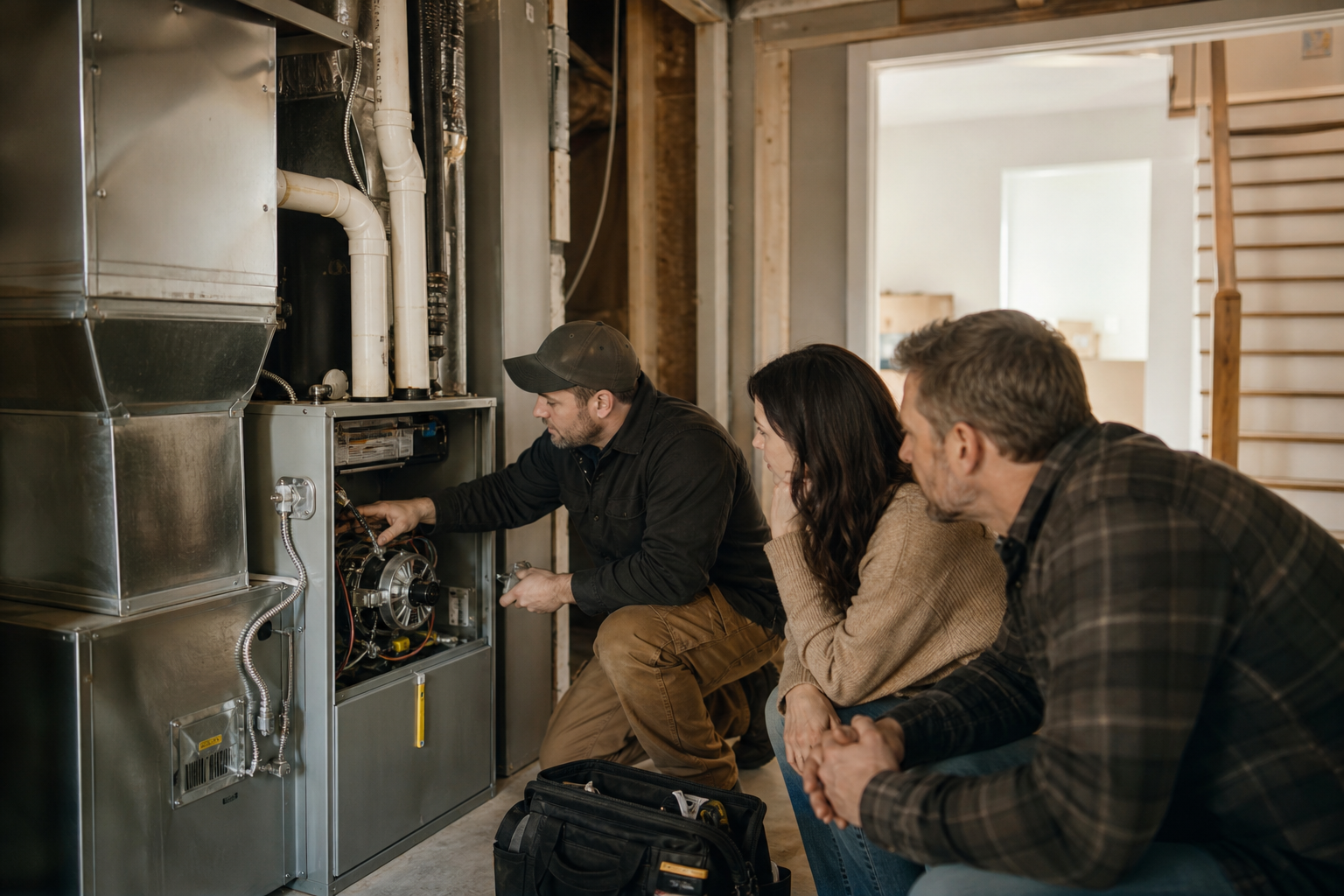
Most buyers pay for one home inspection and assume the furnace was part of it. In Alberta, it mostly isn't. A general home inspector gives the furnace a visual look, and isn't required to open it up or run a mechanical diagnostic. On a mild October afternoon, that usually means confirming it turns on and blows warm air.
That's a thin check for the system that has to carry an Edmonton house through a minus 30 cold snap. Natural Resources Canada estimates space heating makes up about 61% of the energy used in the average Canadian home. If the furnace fails in your first winter, replacing a high-efficiency unit in a typical Edmonton detached home runs roughly $4,500 to $8,500 in 2026, installed. That bill tends to arrive right after your down payment and closing costs have emptied your savings. A dedicated furnace check during your condition period lets you find that cost while you can still negotiate it.
Ask for the furnace's age and service records. People skip this because it feels pushy. The manufacture date is usually on the rating plate inside the unit's panel. Most high-efficiency furnaces last 15 to 20 years, and once a unit passes about 12, many brokers and realtors suggest a specialist look. A file of yearly service receipts tells you more than any listing description. The Government of Canada recommends servicing heating systems at least once a year.
Book a licensed HVAC technician as a separate inspection, and make it a condition. Buyers resist paying twice. In Edmonton a standard furnace inspection typically costs $100 to $200, more if it includes a camera. Write the furnace check into your inspection condition so the results land while you still have room to act.
Request a camera look at the heat exchanger. This is the part that separates the flame from the air you breathe. A crack can leak carbon monoxide, and you can't see it from outside the cabinet. It's the main safety problem fall inspections turn up, and the one a quick visual check is least likely to catch.
Have the technician run a full heating cycle and test the blower motor. A system that's comfortable at 0°C can fail under the strain of a deep freeze. Ask the tech to explain the difference between a tune-up (cleaning and adjusting) and a diagnostic (finding worn or broken parts). You want both before you buy.
Pull the filter and look at it. It takes ten seconds and almost nobody does it. A clogged filter makes the blower motor work hot, which can wear out even a five-year-old furnace early. A clean, well-kept unit can run up to 15% more efficiently than a neglected one, and that difference shows up on every gas bill. For investors, a documented service history also means fewer midwinter emergency calls from tenants.
Test the carbon monoxide alarms. Press the test button on each one and check there's an alarm on every level with a bedroom. It's a two-minute job buyers leave for move-in day, which is also the day they're carrying boxes and least likely to remember.
Price the replacement before you waive conditions. If the report finds a cracked heat exchanger or a failing motor, you can ask the seller for a price reduction, a credit or a new unit before closing. Some sellers will refuse, especially when offers are competing. In that case you're deciding with a real number in hand: set aside $4,500 to $8,500 or keep looking. If the furnace is older, also call your insurer, since some Alberta providers ask for proof of recent maintenance on heating systems past 20 years.
A clean report is a snapshot of the furnace's health on one day, so it won't guarantee the unit survives the winter. What it gives you is timing. HVAC technicians in Alberta are busiest from October through January, and booking early in autumn can cost 10% to 15% less than a midwinter emergency call. The cheapest time to learn what a furnace needs is the week before you own it.



Most buyers pay for one home inspection and assume the furnace was part of it. In Alberta, it mostly isn't. A general home inspector gives the furnace a visual look, and isn't required to open it up or run a mechanical diagnostic. On a mild October afternoon, that usually means confirming it turns on and blows warm air.
That's a thin check for the system that has to carry an Edmonton house through a minus 30 cold snap. Natural Resources Canada estimates space heating makes up about 61% of the energy used in the average Canadian home. If the furnace fails in your first winter, replacing a high-efficiency unit in a typical Edmonton detached home runs roughly $4,500 to $8,500 in 2026, installed. That bill tends to arrive right after your down payment and closing costs have emptied your savings. A dedicated furnace check during your condition period lets you find that cost while you can still negotiate it.
Ask for the furnace's age and service records. People skip this because it feels pushy. The manufacture date is usually on the rating plate inside the unit's panel. Most high-efficiency furnaces last 15 to 20 years, and once a unit passes about 12, many brokers and realtors suggest a specialist look. A file of yearly service receipts tells you more than any listing description. The Government of Canada recommends servicing heating systems at least once a year.
Book a licensed HVAC technician as a separate inspection, and make it a condition. Buyers resist paying twice. In Edmonton a standard furnace inspection typically costs $100 to $200, more if it includes a camera. Write the furnace check into your inspection condition so the results land while you still have room to act.
Request a camera look at the heat exchanger. This is the part that separates the flame from the air you breathe. A crack can leak carbon monoxide, and you can't see it from outside the cabinet. It's the main safety problem fall inspections turn up, and the one a quick visual check is least likely to catch.
Have the technician run a full heating cycle and test the blower motor. A system that's comfortable at 0°C can fail under the strain of a deep freeze. Ask the tech to explain the difference between a tune-up (cleaning and adjusting) and a diagnostic (finding worn or broken parts). You want both before you buy.
Pull the filter and look at it. It takes ten seconds and almost nobody does it. A clogged filter makes the blower motor work hot, which can wear out even a five-year-old furnace early. A clean, well-kept unit can run up to 15% more efficiently than a neglected one, and that difference shows up on every gas bill. For investors, a documented service history also means fewer midwinter emergency calls from tenants.
Test the carbon monoxide alarms. Press the test button on each one and check there's an alarm on every level with a bedroom. It's a two-minute job buyers leave for move-in day, which is also the day they're carrying boxes and least likely to remember.
Price the replacement before you waive conditions. If the report finds a cracked heat exchanger or a failing motor, you can ask the seller for a price reduction, a credit or a new unit before closing. Some sellers will refuse, especially when offers are competing. In that case you're deciding with a real number in hand: set aside $4,500 to $8,500 or keep looking. If the furnace is older, also call your insurer, since some Alberta providers ask for proof of recent maintenance on heating systems past 20 years.
A clean report is a snapshot of the furnace's health on one day, so it won't guarantee the unit survives the winter. What it gives you is timing. HVAC technicians in Alberta are busiest from October through January, and booking early in autumn can cost 10% to 15% less than a midwinter emergency call. The cheapest time to learn what a furnace needs is the week before you own it.
Read Next
A 7-Step Bank Fee Audit to Find the Charges Your Statement Buries
Gray Sees Data Centres, Griffin Sees Prices: Where AI's Capital Risk Sits
Lenders Want Growth in 2027, but Funding Costs and AI Will Decide Who Gets It
Buying Tylenol on Credit: Kimberly-Clark Tests Its Investment Grade Cushion