Wall Street downgrades Netflix because engagement stopped growing, not because guidance changed
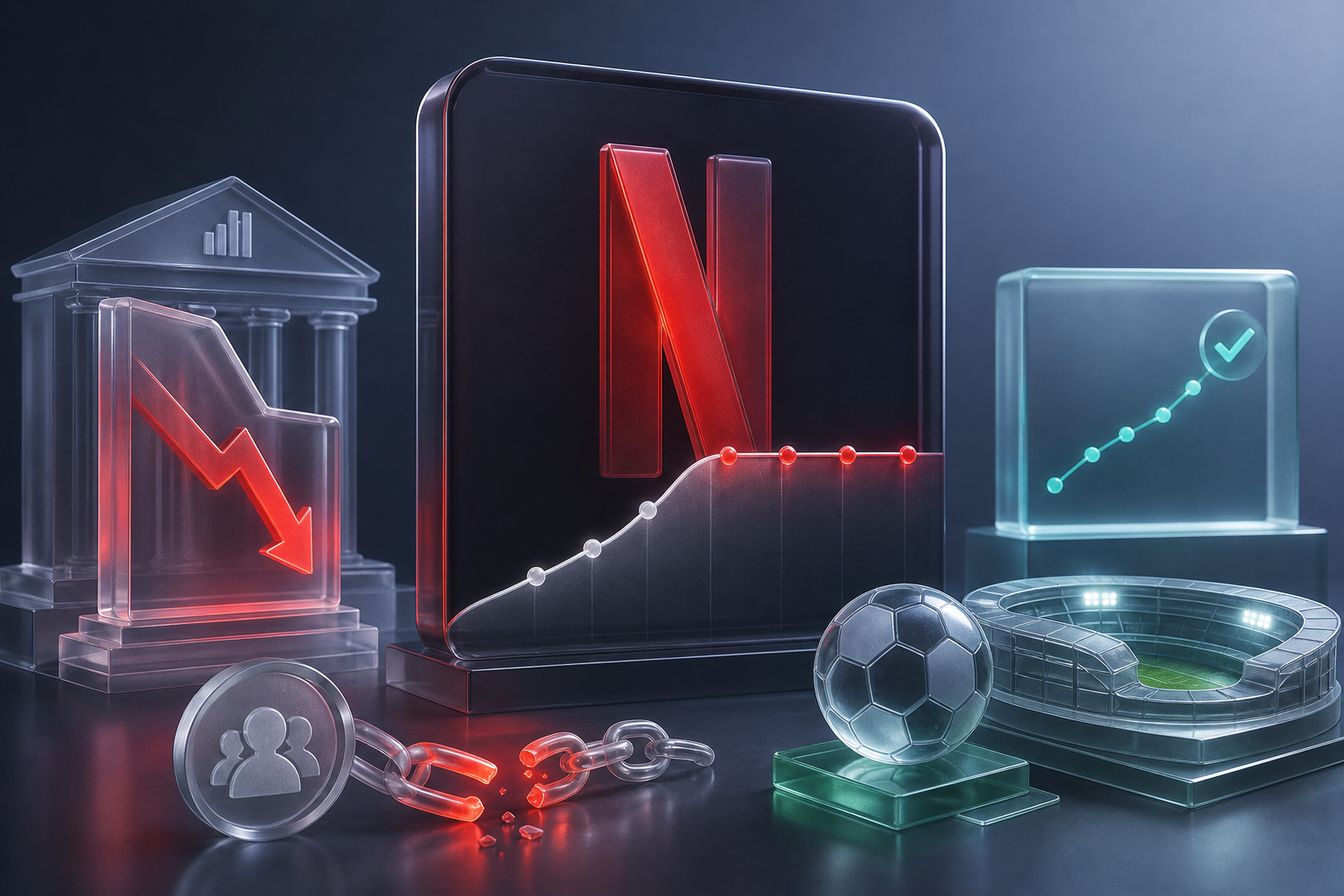
Barclays downgraded Netflix from Equalweight to Underweight on Monday, and the published note didn't mention subscriber guidance, revenue forecasts, or next quarter's content slate. It mentioned hours watched. Specifically, that those hours have plateaued after the password-sharing surge ran out.
That's the real story behind the recent string of downgrades from Barclays, Evercore, and several others. The stock got expensive because Wall Street priced in perpetual expansion. The expansion stopped. Subscribers are still signing up, just slower. The ad tier is growing, but not fast enough to paper over the engagement ceiling. And when a stock trades at around 22 times earnings on the assumption that total viewing time will compound annually, a flat curve is a valuation emergency even if the business itself is fine.
The password crackdown was a one-time gift
Netflix forced roughly 100 million freeloaders onto paid plans between mid-2023 and early 2025. That added approximately 50 million net subscribers since May 2023, the fastest growth the company had seen since the pandemic bump. Analysts called it a structural unlock. It wasn't. It was a backlog, and backlogs run out.
By late 2025, most of the low-hanging fruit was picked. The households that were going to convert had converted. The ones that weren't didn't. North America, Netflix's most profitable region, is now at saturation. To grow from here, the company has to pull subscribers from international markets where average revenue per member runs $6 to $9, not the $17 UCAN delivers. Lower revenue per add, same content budget.
The problem isn't that Netflix is shrinking. The problem is that a $280 billion market cap assumes it isn't done growing, and the engagement data says it is.
Live content keeps existing subscribers from leaving
Netflix is pivoting hard into live sports and events, WWE Raw starting January 6, 2025, two NFL games on Christmas 2024, a Mike Tyson boxing match that broke streaming records. That content keeps existing subscribers from leaving.
Live rights get priced by how many people might watch them. The NFL charged Netflix $150 million total for the two games. WWE's ten-year deal is worth $5 billion. These are retention expenses. The downgrades reflect the understanding that Netflix is now spending to defend market share.
Sports also introduce margin pressure. Netflix's operating margin improved to 27% in 2025 by ruthlessly optimizing its content spend per hour of engagement. Live sports don't optimize. You pay the league what the league wants, and you eat the cost whether ten million people watch or fifty million do.
Advertising won't save the multiple
The ad-supported tier accounted for 45% of new sign-ups in markets where it launched, and Netflix is finally building the sales systems to sell premium video ads at scale. But advertising revenue in streaming grows slowly. It took Hulu a decade to build a $4 billion ad business. Netflix is starting from nearly zero, in a market where TikTok and YouTube already own the performance budget and traditional TV is collapsing.
Even if Netflix doubles its ad revenue annually for three years, it's still a low-single-digit percentage of total revenue by 2028. That doesn't move the valuation needle for a company this size.
The bull case for Netflix has always rested on the idea that streaming would follow the cable trajectory, long, stable, compounding growth in a quasi-monopoly position. Cable had that. Netflix doesn't. It competes with Disney, Amazon, TikTok, and gaming for the same evening hours. The ceiling is lower, and Wall Street just figured that out.



Barclays downgraded Netflix from Equalweight to Underweight on Monday, and the published note didn't mention subscriber guidance, revenue forecasts, or next quarter's content slate. It mentioned hours watched. Specifically, that those hours have plateaued after the password-sharing surge ran out.
That's the real story behind the recent string of downgrades from Barclays, Evercore, and several others. The stock got expensive because Wall Street priced in perpetual expansion. The expansion stopped. Subscribers are still signing up, just slower. The ad tier is growing, but not fast enough to paper over the engagement ceiling. And when a stock trades at around 22 times earnings on the assumption that total viewing time will compound annually, a flat curve is a valuation emergency even if the business itself is fine.
The password crackdown was a one-time gift
Netflix forced roughly 100 million freeloaders onto paid plans between mid-2023 and early 2025. That added approximately 50 million net subscribers since May 2023, the fastest growth the company had seen since the pandemic bump. Analysts called it a structural unlock. It wasn't. It was a backlog, and backlogs run out.
By late 2025, most of the low-hanging fruit was picked. The households that were going to convert had converted. The ones that weren't didn't. North America, Netflix's most profitable region, is now at saturation. To grow from here, the company has to pull subscribers from international markets where average revenue per member runs $6 to $9, not the $17 UCAN delivers. Lower revenue per add, same content budget.
The problem isn't that Netflix is shrinking. The problem is that a $280 billion market cap assumes it isn't done growing, and the engagement data says it is.
Live content keeps existing subscribers from leaving
Netflix is pivoting hard into live sports and events, WWE Raw starting January 6, 2025, two NFL games on Christmas 2024, a Mike Tyson boxing match that broke streaming records. That content keeps existing subscribers from leaving.
Live rights get priced by how many people might watch them. The NFL charged Netflix $150 million total for the two games. WWE's ten-year deal is worth $5 billion. These are retention expenses. The downgrades reflect the understanding that Netflix is now spending to defend market share.
Sports also introduce margin pressure. Netflix's operating margin improved to 27% in 2025 by ruthlessly optimizing its content spend per hour of engagement. Live sports don't optimize. You pay the league what the league wants, and you eat the cost whether ten million people watch or fifty million do.
Advertising won't save the multiple
The ad-supported tier accounted for 45% of new sign-ups in markets where it launched, and Netflix is finally building the sales systems to sell premium video ads at scale. But advertising revenue in streaming grows slowly. It took Hulu a decade to build a $4 billion ad business. Netflix is starting from nearly zero, in a market where TikTok and YouTube already own the performance budget and traditional TV is collapsing.
Even if Netflix doubles its ad revenue annually for three years, it's still a low-single-digit percentage of total revenue by 2028. That doesn't move the valuation needle for a company this size.
The bull case for Netflix has always rested on the idea that streaming would follow the cable trajectory, long, stable, compounding growth in a quasi-monopoly position. Cable had that. Netflix doesn't. It competes with Disney, Amazon, TikTok, and gaming for the same evening hours. The ceiling is lower, and Wall Street just figured that out.
Sources
Read Next
Why Federal Housing Funds Sit Unspent While Wait Lists Grow
Why Jumbo Corporate Deals Are Widening Credit Spreads Right Now
Mortgage fraud in Canada fell to 0.2%, what that tells us about underwriting and buyer behaviour
TD Bank Commits $10 Billion to Share Buyback After OSFI Lowers Capital Buffer to 3.0%