Trump's Canada Tariffs Will Cost U.S. Alcohol Producers More Than They Can Pass On
Kentucky bourbon distiller Mike Reavley spent eighteen months negotiating a placement deal with the LCBO in 2024. His mid-sized distillery, which produces about 12,000 barrels a year, finally secured shelf space in 220 Ontario stores that January. The contract assumed a retail price of CAD $48 per bottle, which worked at the existing tariff structure. By March 2026, that price had jumped to CAD $61, and the LCBO had quietly replaced his brand with a Scottish single malt in 140 of those locations.
The math that broke Reavley's deal is breaking deals across the industry. When Canada retaliates against Trump's renewed tariff push, the standard playbook puts a 10-25% levy on American whiskey, wine, and craft spirits. That percentage lands on top of existing duties, shipping costs, and provincial markups. For a $40 wholesale bourbon, the final consumer price can rise $15-20. Reavley can absorb maybe $3 of that by cutting his margin. The rest either gets passed to the buyer, who stops buying, or the product disappears from shelves entirely.
The revenue cliff happens before the tariff does
Canada bought $506 million worth of U.S. distilled spirits in the twelve months ending January 2026, making it the largest single export market for American whiskey. But that figure measures what already shipped, not what happens next. The moment a credible tariff threat appears, Canadian liquor boards start shifting orders. They have domestic rye, they have Scotch, and they have Irish whiskey, all of which become comparatively cheaper the day a 15% retaliatory duty gets announced.
The Distilled Spirits Council has been tracking this since the 2018 round. Back then, Canada imposed a 10% tariff on U.S. whiskey in response to steel and aluminum duties. Exports to Canada dropped 30% within six months, and it took three years to recover half that volume. The brands that lost LCBO placement during that window mostly never got it back. Shelf space is finite. Once a provincial board replaces Kentucky bourbon with Alberta rye, the local distributor builds relationships around the new product. When the tariff lifts, the American brand has to re-pitch from scratch, often at a higher cost basis than before.
Wine producers face the same structural trap but with even less room to maneuver. The U.S. exports roughly 60% of its international wine volume to Canada and the EU combined. A 20% tariff doesn't just raise the price; it moves the product into a different pricing tier where it competes against French and Italian bottles it was never designed to compete against. A $28 Oregon Pinot Noir that jumps to $35 is now sitting next to Burgundy.
The cost you can't pass is the cost you've already spent
Distilleries don't operate on fast inventory cycles. Bourbon legally requires a minimum two years in barrel; most premium labels age four to twelve. A barrel filled in 2023, intended for Canadian export in 2027, represents capital already deployed. If that market evaporates in 2026, the barrel still sits in the warehouse, still ties up cash, and still incurs storage cost. The distiller can try to move it domestically, but the U.S. craft spirits market is close to saturation. Fifteen hundred new distilleries opened between 2019 and 2025. Shelf space at home is as competitive as shelf space in Ontario.
The industry's hope in 2026 is that the USMCA review, scheduled for later this year, creates enough negotiating pressure to avoid the worst-case scenario. But USMCA also makes targeted retaliation easier to justify. Canada doesn't need to break the treaty to make American whiskey expensive. It just needs to deploy the same playbook it used in 2018: pick products that matter to specific congressional districts, make the tariff painful enough that domestic producers lobby their own government, and wait.
Reavley is still shipping to the 80 LCBO stores that kept his brand. He's also talking to distributors in Texas and Florida, where he's never sold before. The margins are thinner. The competition is stiffer. But the orders don't depend on what happens in Ottawa.


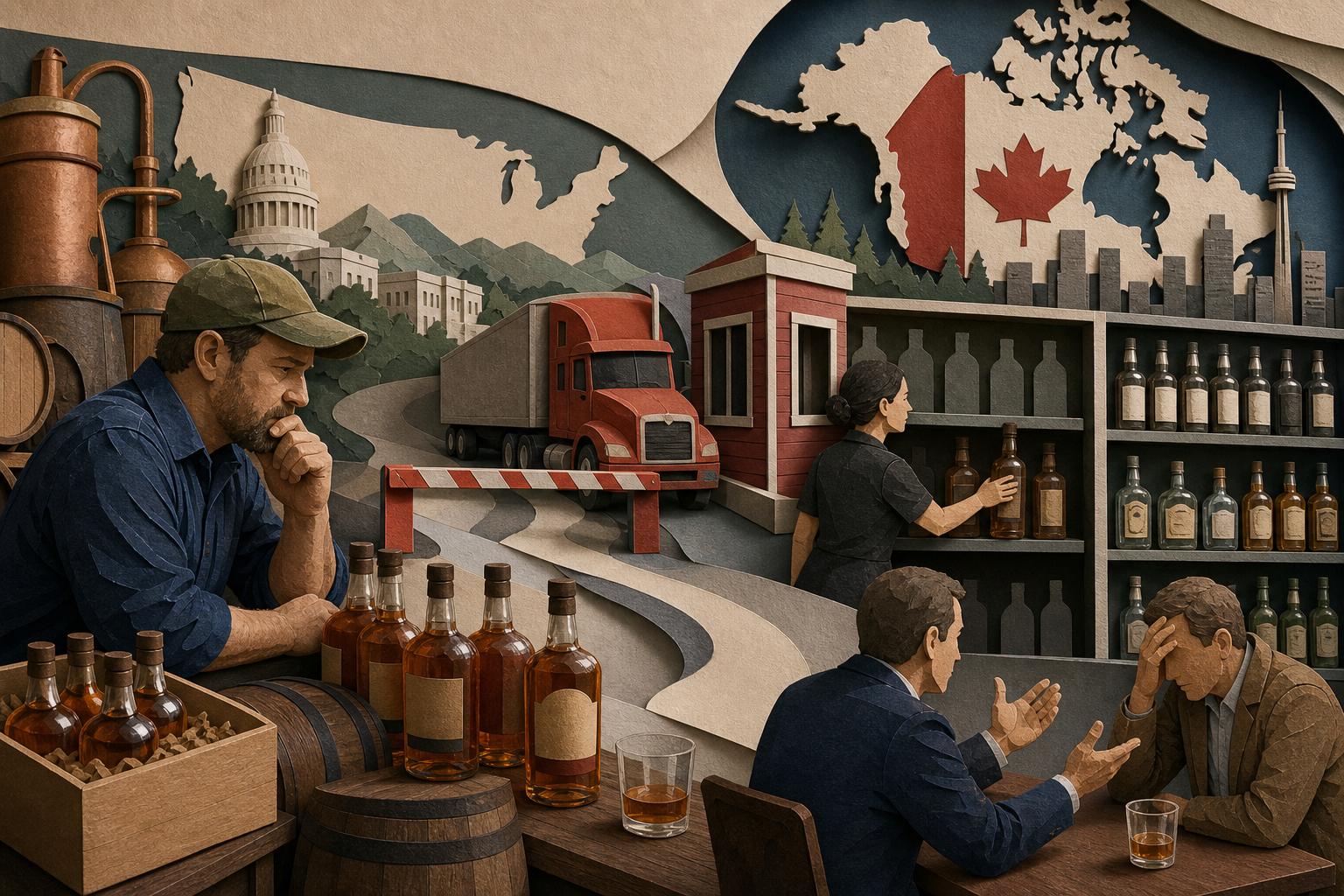

Kentucky bourbon distiller Mike Reavley spent eighteen months negotiating a placement deal with the LCBO in 2024. His mid-sized distillery, which produces about 12,000 barrels a year, finally secured shelf space in 220 Ontario stores that January. The contract assumed a retail price of CAD $48 per bottle, which worked at the existing tariff structure. By March 2026, that price had jumped to CAD $61, and the LCBO had quietly replaced his brand with a Scottish single malt in 140 of those locations.
The math that broke Reavley's deal is breaking deals across the industry. When Canada retaliates against Trump's renewed tariff push, the standard playbook puts a 10-25% levy on American whiskey, wine, and craft spirits. That percentage lands on top of existing duties, shipping costs, and provincial markups. For a $40 wholesale bourbon, the final consumer price can rise $15-20. Reavley can absorb maybe $3 of that by cutting his margin. The rest either gets passed to the buyer, who stops buying, or the product disappears from shelves entirely.
The revenue cliff happens before the tariff does
Canada bought $506 million worth of U.S. distilled spirits in the twelve months ending January 2026, making it the largest single export market for American whiskey. But that figure measures what already shipped, not what happens next. The moment a credible tariff threat appears, Canadian liquor boards start shifting orders. They have domestic rye, they have Scotch, and they have Irish whiskey, all of which become comparatively cheaper the day a 15% retaliatory duty gets announced.
The Distilled Spirits Council has been tracking this since the 2018 round. Back then, Canada imposed a 10% tariff on U.S. whiskey in response to steel and aluminum duties. Exports to Canada dropped 30% within six months, and it took three years to recover half that volume. The brands that lost LCBO placement during that window mostly never got it back. Shelf space is finite. Once a provincial board replaces Kentucky bourbon with Alberta rye, the local distributor builds relationships around the new product. When the tariff lifts, the American brand has to re-pitch from scratch, often at a higher cost basis than before.
Wine producers face the same structural trap but with even less room to maneuver. The U.S. exports roughly 60% of its international wine volume to Canada and the EU combined. A 20% tariff doesn't just raise the price; it moves the product into a different pricing tier where it competes against French and Italian bottles it was never designed to compete against. A $28 Oregon Pinot Noir that jumps to $35 is now sitting next to Burgundy.
The cost you can't pass is the cost you've already spent
Distilleries don't operate on fast inventory cycles. Bourbon legally requires a minimum two years in barrel; most premium labels age four to twelve. A barrel filled in 2023, intended for Canadian export in 2027, represents capital already deployed. If that market evaporates in 2026, the barrel still sits in the warehouse, still ties up cash, and still incurs storage cost. The distiller can try to move it domestically, but the U.S. craft spirits market is close to saturation. Fifteen hundred new distilleries opened between 2019 and 2025. Shelf space at home is as competitive as shelf space in Ontario.
The industry's hope in 2026 is that the USMCA review, scheduled for later this year, creates enough negotiating pressure to avoid the worst-case scenario. But USMCA also makes targeted retaliation easier to justify. Canada doesn't need to break the treaty to make American whiskey expensive. It just needs to deploy the same playbook it used in 2018: pick products that matter to specific congressional districts, make the tariff painful enough that domestic producers lobby their own government, and wait.
Reavley is still shipping to the 80 LCBO stores that kept his brand. He's also talking to distributors in Texas and Florida, where he's never sold before. The margins are thinner. The competition is stiffer. But the orders don't depend on what happens in Ottawa.
Read Next
Lenders Want Growth in 2027, but Funding Costs and AI Will Decide Who Gets It
Buying Tylenol on Credit: Kimberly-Clark Tests Its Investment Grade Cushion
Pricier oil helps Alberta, but it may delay relief for variable borrowers
Cashback Mortgages: When a Higher Rate and Clawbacks Outweigh the Upfront Rebate