Dental Work in Turkey, a Denied Tax Claim, and the CRA's Travel Rule
Consider an Edmonton homeowner who, in the spring of 2025, priced out a set of dental implants. The quotes from local clinics came back high enough to make her wince. A clinic in Istanbul, recommended by a coworker who had gone the year before, quoted a fraction of that, even after adding a return flight and ten days in a hotel. She booked it. The work went well. She came home with a folder of receipts and a reasonable plan to claim all of it as medical expenses on her return the next spring.
None of this was careless. Canada Revenue Agency rules do allow medical expenses paid outside the country, as long as the treatment would qualify if it were done here and was performed by a qualified practitioner. Dental implants qualify. Her folder had the clinic invoice, the airline receipt, the hotel bill, and a stack of restaurant slips. In her mind, the trip existed only because of the dental work, so the trip was part of the medical cost.
That is where the CRA saw it differently.
The letter
Some months after she filed, a review letter arrived. It did not question the implants. It asked her to show that substantially equivalent dental services were not available closer to home.
That phrase carries the whole rule. Under the medical expense provisions of the Income Tax Act, travel costs count only when the treatment you need is not reasonably available near where you live. If you travel at least 40 kilometres one way, you can claim transportation. If you travel at least 80 kilometres one way, you can also claim meals and accommodation. Distance is only the first hurdle. The second is availability, and the test looks at the procedure, not the price or the provider.
She lived in Edmonton, a city with oral surgeons, periodontists and implant specialists in nearly every quadrant. She had no letter from a local dentist saying the work could not be done here. She had no record of being turned away. What she had was a cheaper quote, and a cheaper quote is not evidence that a service is unavailable.
The CRA allowed the implants and denied the flight, the hotel and the meals.
Why the courts side with the CRA
Her situation follows a pattern the Tax Court of Canada has recently confirmed. In that case, a taxpayer had dental work done in Turkey and claimed the travel costs. The CRA denied them. The court upheld the denial because the taxpayer could not show that comparable treatment was unavailable in Canada. Choosing a lower-cost option abroad was treated as a personal decision, not a medical necessity. Preferring a particular clinic's reputation or technique does not change that when similar work is offered at home.
The burden falls entirely on the taxpayer. The CRA does not have to prove the service exists locally. You have to prove it does not.
Contrast that with someone in a remote corner of northern Alberta who drives several hundred kilometres to Edmonton for specialized surgery. Their gas, hotel and meals can qualify, because the service truly is not available where they live. In this case, the person flew out of the very city that the rural patient drives to.
What it touched next
For a salaried employee, a reassessment like this means a modest balance owing and some irritation. For a self-employed borrower, it can reach further. Lenders reviewing a self-employed mortgage application commonly ask for recent Notices of Assessment and confirmation that no taxes are owing to the CRA. An unpaid reassessment can show up at an inconvenient moment, such as in the middle of a purchase or refinance, when every document is being read closely. A denied personal claim can also invite a closer look at other deductions, including business travel.
In her case, she paid the balance before renewing her mortgage, so the assessment showed nothing owing by the time the lender asked. The implants are fine. The hotel receipts are still in the folder, now filed under personal expenses. The next time she considers treatment out of town, the first thing she plans to request from her Edmonton dentist is a written answer to one question: can this be done here?


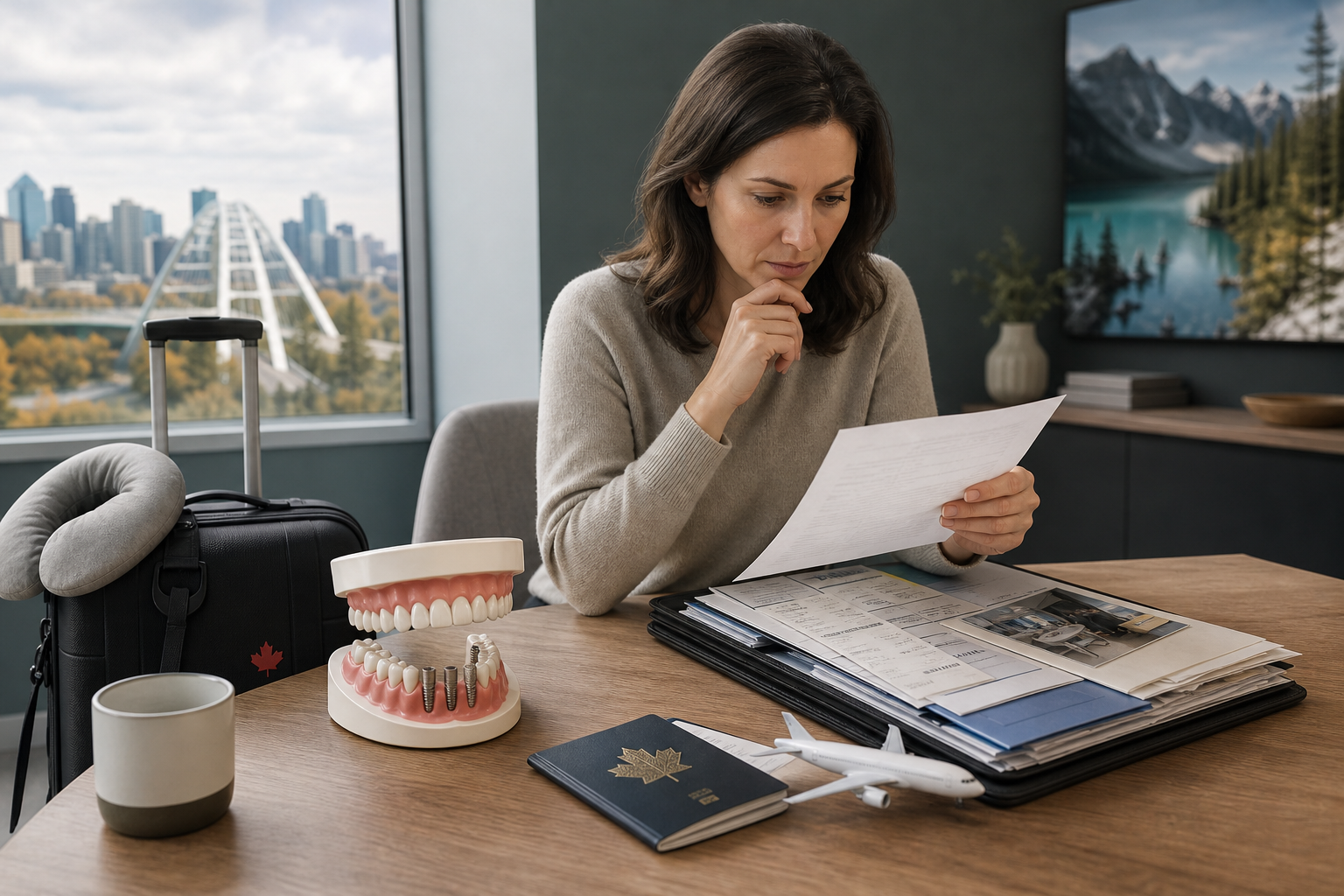
Consider an Edmonton homeowner who, in the spring of 2025, priced out a set of dental implants. The quotes from local clinics came back high enough to make her wince. A clinic in Istanbul, recommended by a coworker who had gone the year before, quoted a fraction of that, even after adding a return flight and ten days in a hotel. She booked it. The work went well. She came home with a folder of receipts and a reasonable plan to claim all of it as medical expenses on her return the next spring.
None of this was careless. Canada Revenue Agency rules do allow medical expenses paid outside the country, as long as the treatment would qualify if it were done here and was performed by a qualified practitioner. Dental implants qualify. Her folder had the clinic invoice, the airline receipt, the hotel bill, and a stack of restaurant slips. In her mind, the trip existed only because of the dental work, so the trip was part of the medical cost.
That is where the CRA saw it differently.
The letter
Some months after she filed, a review letter arrived. It did not question the implants. It asked her to show that substantially equivalent dental services were not available closer to home.
That phrase carries the whole rule. Under the medical expense provisions of the Income Tax Act, travel costs count only when the treatment you need is not reasonably available near where you live. If you travel at least 40 kilometres one way, you can claim transportation. If you travel at least 80 kilometres one way, you can also claim meals and accommodation. Distance is only the first hurdle. The second is availability, and the test looks at the procedure, not the price or the provider.
She lived in Edmonton, a city with oral surgeons, periodontists and implant specialists in nearly every quadrant. She had no letter from a local dentist saying the work could not be done here. She had no record of being turned away. What she had was a cheaper quote, and a cheaper quote is not evidence that a service is unavailable.
The CRA allowed the implants and denied the flight, the hotel and the meals.
Why the courts side with the CRA
Her situation follows a pattern the Tax Court of Canada has recently confirmed. In that case, a taxpayer had dental work done in Turkey and claimed the travel costs. The CRA denied them. The court upheld the denial because the taxpayer could not show that comparable treatment was unavailable in Canada. Choosing a lower-cost option abroad was treated as a personal decision, not a medical necessity. Preferring a particular clinic's reputation or technique does not change that when similar work is offered at home.
The burden falls entirely on the taxpayer. The CRA does not have to prove the service exists locally. You have to prove it does not.
Contrast that with someone in a remote corner of northern Alberta who drives several hundred kilometres to Edmonton for specialized surgery. Their gas, hotel and meals can qualify, because the service truly is not available where they live. In this case, the person flew out of the very city that the rural patient drives to.
What it touched next
For a salaried employee, a reassessment like this means a modest balance owing and some irritation. For a self-employed borrower, it can reach further. Lenders reviewing a self-employed mortgage application commonly ask for recent Notices of Assessment and confirmation that no taxes are owing to the CRA. An unpaid reassessment can show up at an inconvenient moment, such as in the middle of a purchase or refinance, when every document is being read closely. A denied personal claim can also invite a closer look at other deductions, including business travel.
In her case, she paid the balance before renewing her mortgage, so the assessment showed nothing owing by the time the lender asked. The implants are fine. The hotel receipts are still in the folder, now filed under personal expenses. The next time she considers treatment out of town, the first thing she plans to request from her Edmonton dentist is a written answer to one question: can this be done here?
Read Next
The Easiest Tax Return in Canada Could Cost Low-Income Filers the Most
India's Biggest Banking Deal Had No Major Investment Bank Behind It
Affordability Improved on Paper in September. Buyer Confidence Has Yet to Follow
When Every Rate Is a Search Away, Advice Becomes the Product