Closing the Cottage After Thanksgiving: A Winterizing Checklist to Prevent Costly Repairs
By the time you are hauling the dock in at Pigeon Lake or Sylvan Lake, the overnight lows have usually turned hard, and central Alberta winters can push well past -30°C. Do these jobs before you lock the door, and the cabin you open in May should look the way you left it.
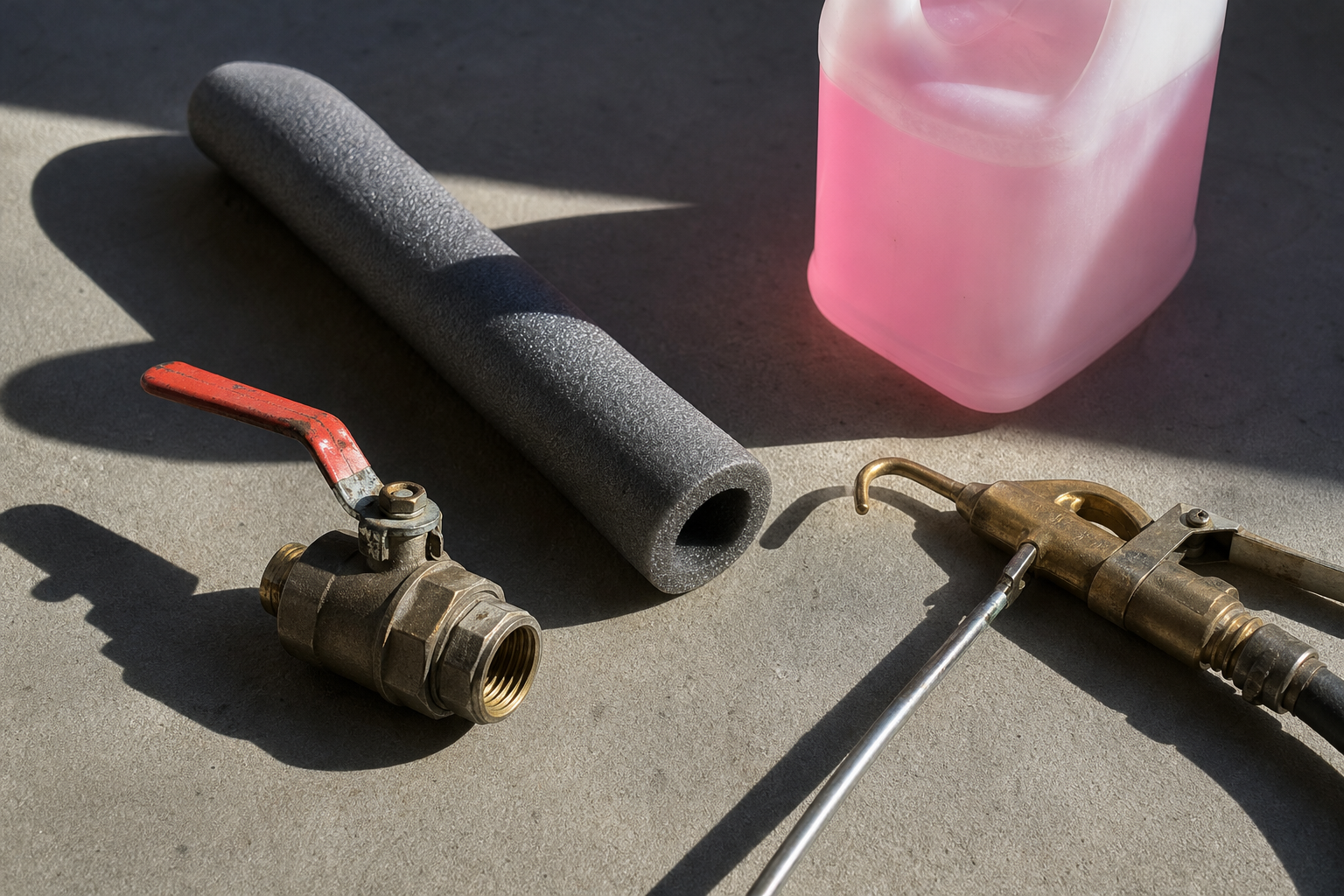
Shut off the main water valve, then drain every line. Open all taps, hot and cold, plus the lowest drain point in the system. If you have an air compressor, blow out the lines at low pressure. Water expands as it freezes, and that can split copper and PEX alike. Gravity alone often leaves water sitting in low spots.
Turn off the power or gas to the water heater before you drain it. A heater running empty can burn out its element. Open the drain valve at the bottom and a hot tap somewhere in the cabin so air can get in and the tank empties fully.
Pour plumbing antifreeze into every P-trap and toilet. The P-trap is the U-shaped pipe under each sink, tub and shower. It holds a little water that blocks sewer gas, so once the system is drained it needs antifreeze to keep doing that job. Use the pink, non-toxic plumbing or RV kind. Never use green or blue automotive antifreeze. It is toxic and it will damage a septic system.
Find the vacancy clause in your insurance policy and read it tonight. Most policies have conditions for a property left empty. Usually you either keep the heat on and have someone check the place on a set schedule, or you shut the water off and drain the system. Miss the condition and your frozen-pipe claim can be denied. If there is a mortgage on the cabin, your lender requires that coverage. A denied claim does not change what you owe. It just leaves the repair bill with you.
Decide now: low heat all winter or a full dry shutdown. Leaving the heat on makes spring easier, but you pay for gas or propane delivery all winter and you are tied to the visit schedule. A full shutdown costs less, but it only works if steps 1 to 3 were done properly. Pick one and line up the details: who visits and how often, or who checks the drain job.
Leave the sump pump on its own live circuit. If your basement or crawlspace has a sump pump, label the breaker and leave it on, even if the rest of the panel is off. Spring melt floods crawlspaces whether anyone is there or not.
Test remote sensors on cellular, not only on Wi-Fi. Smart thermostats and leak sensors are only as good as their connection, and rural internet in Alberta often drops during heavy snow. A sensor with a cellular backup, or a neighbour who can walk over, covers the gap Wi-Fi leaves.
Stuff steel wool into gaps around pipes and wiring, but leave the vents open. Mice and squirrels chew wiring, and chewed wiring can start a fire. Sealing every opening goes too far, though. A closed-up cabin traps moisture, and you can open the door in spring to mould.
Empty the fridge and prop its doors open. Take out anything that can freeze, burst or draw mice, including canned drinks, cleaning products and dry goods in cardboard.
Take the tech home if the cabin is your remote office. Bring laptops, backup drives and anything with a battery that hates the cold. If you run solar, set the battery bank for short winter days so it does not drain flat and get damaged.
Photograph the valves, the breaker panel and every room before you leave. It takes five minutes. It gives you a record for any insurance claim and a map for whoever opens the place in spring. If the property is a rental or an investment, those photos also help prove its condition when you refinance or sell.
Clear the eavestroughs and check the roof. Ice dams form when melt cannot drain. In southern Alberta, Chinooks bring repeated freeze-thaw cycles, and those are harder on roofs and foundations than one steady deep freeze.
The item people skip most is number 4. Nothing has gone wrong yet, so the policy stays in the drawer. Pull it out before the long weekend ends, and call your insurance broker if the vacancy wording is not clear.



By the time you are hauling the dock in at Pigeon Lake or Sylvan Lake, the overnight lows have usually turned hard, and central Alberta winters can push well past -30°C. Do these jobs before you lock the door, and the cabin you open in May should look the way you left it.
The item people skip most is number 4. Nothing has gone wrong yet, so the policy stays in the drawer. Pull it out before the long weekend ends, and call your insurance broker if the vacancy wording is not clear.
Read Next
The Easiest Tax Return in Canada Could Cost Low-Income Filers the Most
India's Biggest Banking Deal Had No Major Investment Bank Behind It
Affordability Improved on Paper in September. Buyer Confidence Has Yet to Follow
When Every Rate Is a Search Away, Advice Becomes the Product