Can $1.16 Million Actually Retire You at 63? The Two Numbers Tom Missed
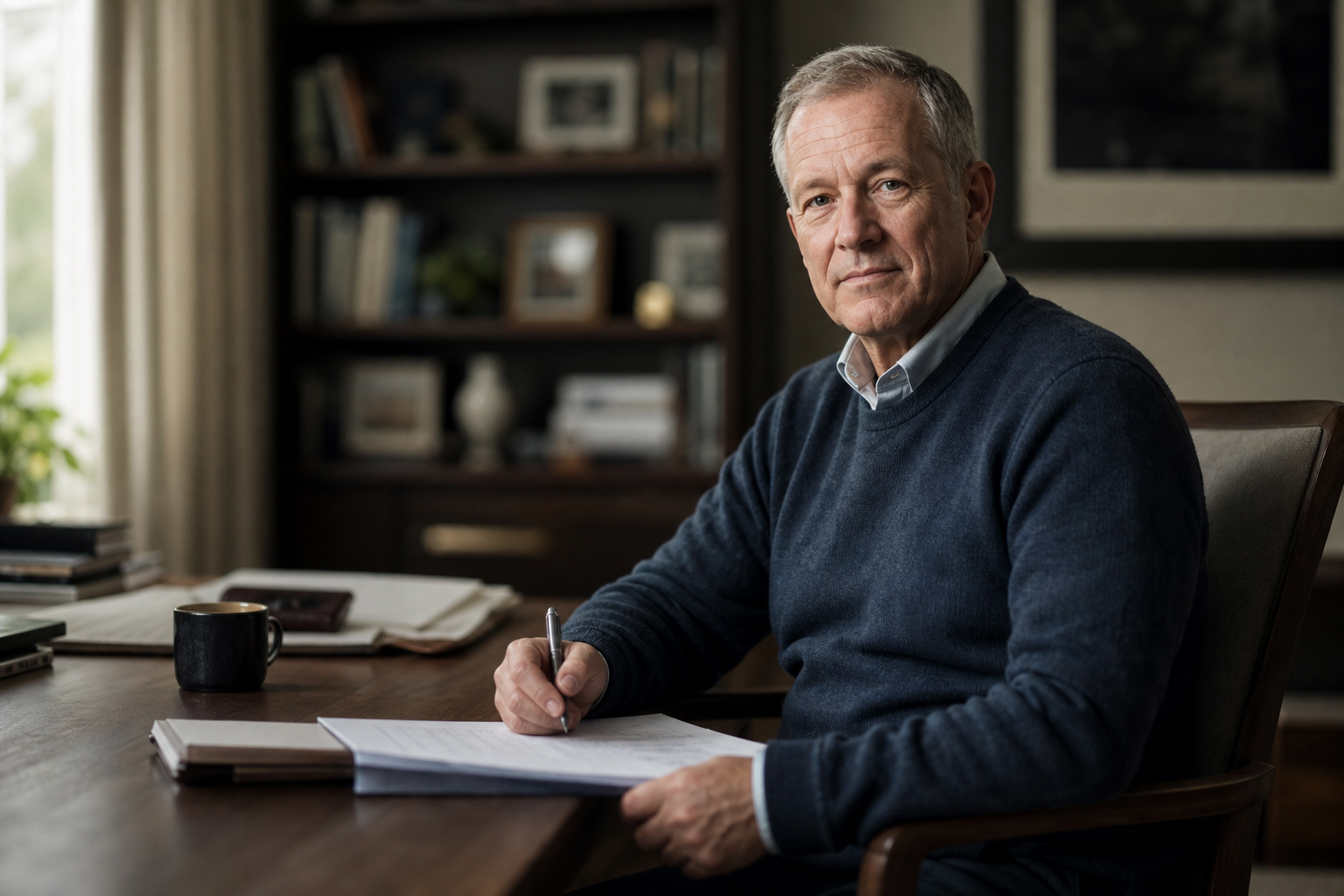
Tom and his spouse hold $1.16 million across RRSPs, TFSAs and non-registered accounts. At 63, he wants to stop working. The math looks simple: a 4% withdrawal gives him $46,400 a year. Add CPP and OAS later, and the couple should be fine.
The structure breaks at two points Tom hasn't accounted for. The first is the gap before government benefits arrive. The second is the tax liability embedded in his RRSPs.
The Two-Year Funding Gap Nobody Plans For
OAS doesn't begin until 65. If Tom retires at 63, his portfolio must cover the full cost of living for 24 months with no government help. That's not a 4% withdrawal year. It's closer to 6% or 7%, depending on spending.
CPP can start at 60, but taking it early reduces the monthly payment permanently by 36%. A recipient who would get $1,000 at 65 receives $640 at 60. That reduction compounds over a 30-year retirement. Bridging with portfolio withdrawals until 65 or even 70 produces a higher guaranteed lifetime income. The trade-off is simple: spend the portfolio now to buy a larger pension later.
Most couples planning early retirement miss this. They see the million-dollar figure and assume it can stretch passively. It can't. The first two years determine how much survives to compound.
The RRSP is Not All Yours
Tom's portfolio includes a substantial RRSP balance. That money is taxable as ordinary income on withdrawal. If the balance is $600,000, Tom doesn't have $600,000. He has $600,000 minus the CRA's share.
The bracket system makes this worse. Taking $80,000 from an RRSP in one year triggers a much higher effective tax rate than taking $40,000 in two separate years. The structure of Tom's withdrawals, not just the total amount, determines how much he keeps.
By age 71, RRSPs must convert to RRIFs, which mandate minimum annual withdrawals. Those minimums rise with age. A 75-year-old must withdraw 5.82% of the RRIF balance. A 90-year-old must withdraw 11.92%. If Tom waits until forced conversion to touch his RRSP, he loses control of the timing. Large mandatory withdrawals can push him into the OAS clawback zone, where every dollar over $95,323 in net income costs him 15 cents in OAS benefits.
The better structure is counter-intuitive: start withdrawing from the RRSP early, even while the portfolio could support spending from non-registered accounts. Smaller, voluntary RRSP draws at 63 keep Tom in a lower bracket and leave the TFSA intact for tax-free flexibility later.
What a Real Plan Looks Like
A sustainable strategy for Tom requires three adjustments. First, model the portfolio withdrawals year by year from 63 to 95, not as a flat 4% across three decades. The gap years require higher draws. The RRSP must be drawn down methodically starting now, not deferred. The TFSA stays untouched as long as possible.
Second, decide when to start CPP based on portfolio capacity, not psychology. If the couple can afford to delay CPP to 70, the 42% increase in monthly benefits is permanent inflation protection. That's a return the portfolio cannot reliably generate.
Third, stress-test the plan against a bear market in the first 24 months of retirement. Sequence of returns risk, the danger of selling equities during a crash to fund living expenses, is highest when the portfolio is largest and the withdrawal rate is most aggressive. A couple retiring in early 2022 with a 60/40 portfolio would have watched both stocks and bonds fall together. The 4% rule assumes average returns. Markets do not provide average returns on demand.
Tom's million dollars can work. But only if the plan accounts for what the number doesn't show: the years before the government pays, and the tax bill still embedded in the accounts.


Tom and his spouse hold $1.16 million across RRSPs, TFSAs and non-registered accounts. At 63, he wants to stop working. The math looks simple: a 4% withdrawal gives him $46,400 a year. Add CPP and OAS later, and the couple should be fine.
The structure breaks at two points Tom hasn't accounted for. The first is the gap before government benefits arrive. The second is the tax liability embedded in his RRSPs.
The Two-Year Funding Gap Nobody Plans For
OAS doesn't begin until 65. If Tom retires at 63, his portfolio must cover the full cost of living for 24 months with no government help. That's not a 4% withdrawal year. It's closer to 6% or 7%, depending on spending.
CPP can start at 60, but taking it early reduces the monthly payment permanently by 36%. A recipient who would get $1,000 at 65 receives $640 at 60. That reduction compounds over a 30-year retirement. Bridging with portfolio withdrawals until 65 or even 70 produces a higher guaranteed lifetime income. The trade-off is simple: spend the portfolio now to buy a larger pension later.
Most couples planning early retirement miss this. They see the million-dollar figure and assume it can stretch passively. It can't. The first two years determine how much survives to compound.
The RRSP is Not All Yours
Tom's portfolio includes a substantial RRSP balance. That money is taxable as ordinary income on withdrawal. If the balance is $600,000, Tom doesn't have $600,000. He has $600,000 minus the CRA's share.
The bracket system makes this worse. Taking $80,000 from an RRSP in one year triggers a much higher effective tax rate than taking $40,000 in two separate years. The structure of Tom's withdrawals, not just the total amount, determines how much he keeps.
By age 71, RRSPs must convert to RRIFs, which mandate minimum annual withdrawals. Those minimums rise with age. A 75-year-old must withdraw 5.82% of the RRIF balance. A 90-year-old must withdraw 11.92%. If Tom waits until forced conversion to touch his RRSP, he loses control of the timing. Large mandatory withdrawals can push him into the OAS clawback zone, where every dollar over $95,323 in net income costs him 15 cents in OAS benefits.
The better structure is counter-intuitive: start withdrawing from the RRSP early, even while the portfolio could support spending from non-registered accounts. Smaller, voluntary RRSP draws at 63 keep Tom in a lower bracket and leave the TFSA intact for tax-free flexibility later.
What a Real Plan Looks Like
A sustainable strategy for Tom requires three adjustments. First, model the portfolio withdrawals year by year from 63 to 95, not as a flat 4% across three decades. The gap years require higher draws. The RRSP must be drawn down methodically starting now, not deferred. The TFSA stays untouched as long as possible.
Second, decide when to start CPP based on portfolio capacity, not psychology. If the couple can afford to delay CPP to 70, the 42% increase in monthly benefits is permanent inflation protection. That's a return the portfolio cannot reliably generate.
Third, stress-test the plan against a bear market in the first 24 months of retirement. Sequence of returns risk, the danger of selling equities during a crash to fund living expenses, is highest when the portfolio is largest and the withdrawal rate is most aggressive. A couple retiring in early 2022 with a 60/40 portfolio would have watched both stocks and bonds fall together. The 4% rule assumes average returns. Markets do not provide average returns on demand.
Tom's million dollars can work. But only if the plan accounts for what the number doesn't show: the years before the government pays, and the tax bill still embedded in the accounts.
Sources
Read Next
5 Steps to Build a Financial Buffer Before You Need One
Canada's Apartment Debate: Industry Splits on Whether Construction Has Overshot Demand
GIC rates stall as bonds retreat: why deposit accounts still lag
Why Your Employer's Life Insurance Probably Covers Less Than You Think